Mini echeveria Care (Echeveria minima)

Mini echeveria

About Mini echeveria

Echeveria minima, often called mini echeveria, is a compact rosette-forming succulent from dry, rocky areas of Mexico. It stays naturally small, which makes it suitable for windowsills, desks, and mixed succulent bowls.

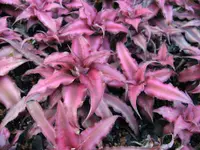
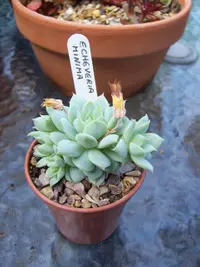
The plant forms tight blue-green rosettes with pink-tinted leaf edges, especially in bright light. It branches slowly to create small clusters rather than a single large rosette.

As a desert-adapted succulent, it stores water in its leaves, which makes it relatively forgiving of short dry spells but sensitive to excess moisture. It prefers strong light, very well-drained soil, and good air movement.

These traits make it straightforward to care for Mini echeveria when overwatering is avoided and light levels are adequate.

Main Plant Requirements

Care Difficulty

Easy Care

Light Preference

Full Sun

Water Requirements

Low Water

Temperature Preference

Tropical / Frost Sensitive

Hardiness Zone

9–11

Soil Texture

Sandy, Loamy, Rocky

Soil pH

Slightly acidic (6.5–7.0), Neutral (7.0)

Soil Drainage

Well-drained

Fertilization

Minimal (feed rarely)

Get Personalized Care Plan

Scan your plant to receive care tips personalized for your specific plant

Available on iOS and Android

How to Care for the Mini echeveria

This compact succulent needs strong light to stay tight and maintain its blue-green color.

  • Provide 4–6 hours of direct morning sun or bright light with some light afternoon shade, especially in hot, dry climates.
  • Mini echeveria tolerates light, dappled shade for part of the day, but prolonged low light causes stretching, faded color, and weak rosettes.
  • In summer, harden plants off before full outdoor sun to prevent sunburn; in winter, move closer to the brightest window or to a bright, cool greenhouse.

This species stores water in its leaves and prefers deep, infrequent watering in fast-draining soil.

  • Water only when the top 3–5 cm of soil are completely dry, then soak thoroughly and let all excess drain away.
  • In spring and summer, drying may happen every 5–10 days outdoors; in cooler or low-light seasons, intervals can extend to 2–4 weeks.
  • Wrinkling, soft leaves suggest underwatering, while mushy, translucent leaves and a sour smell indicate overwatering and possible root rot in Echeveria minima.

This succulent prefers warm, dry conditions and does poorly in prolonged cold or high humidity.

  • Aim for 65–80°F (18–27°C) during active growth, with good air movement to reduce fungal issues around the rosette.
  • Protect from frost; growth slows below 50°F (10°C), and damage occurs near 32°F (0°C), especially in wet soil.
  • In hot summers above 90°F (32°C), provide light afternoon shade and avoid heat-reflecting surfaces that can scorch leaves or overheat roots.

Humidity is rarely critical for Echeveria minima as long as air stays dry to moderately dry.

  • Aim for 30–50% humidity, similar to most heated or air-conditioned homes.
  • The plant tolerates very dry air but prolonged humidity above 60% encourages rot and fungal spots on leaves.
  • If air is extremely dry and leaf tips shrivel, increase humidity slightly by grouping plants nearby rather than misting Mini echeveria.

Echeveria minima prefers a very fast-draining, mineral-rich substrate that dries quickly between waterings.

  • Use a gritty mix such as 50–70% inorganic material (pumice, perlite, coarse sand) blended with 30–50% cactus potting mix.
  • Ensure the texture is loose and airy so water runs through in seconds and roots receive ample oxygen.
  • Target slightly acidic to neutral pH around 6.0–7.0, avoiding strongly acidic or alkaline mixes that reduce nutrient availability.
  • Avoid dense peat, clay, or high-compost blends that stay wet, and add extra pumice or perlite if the mix still feels heavy after watering.

This species is highly suitable for container growing due to its compact rosette habit.

  • Choose a shallow but wide pot to match the shallow root system and allow offsets to spread without overcrowding.
  • Select unglazed terracotta when possible, as it allows faster evaporation and helps prevent chronic wetness at the root zone.
  • Place the pot in a stable position where it cannot tip as rosettes offset on one side and gradually shift the weight balance.

This compact succulent benefits from light feeding during active growth but is sensitive to excess salts.

  • Use a balanced liquid fertilizer (around 10-10-10 or 20-20-20) diluted to 25–50% strength for Mini echeveria.
  • Apply every 4–6 weeks in spring and summer only, on already moist soil.
  • Skip feeding in fall and winter when growth slows, to prevent soft, weak tissues.
  • Avoid compost-heavy mixes or frequent slow-release pellets, which stay too rich for tight rosettes.

Echeveria minima needs only light grooming to stay compact and healthy.

  • Best time is late winter to early spring, before strong new growth starts.
  • Remove dead, dried, or damaged leaves from the lower rosette using clean fingers or small scissors.
  • Trim off leggy, stretched stems to encourage tighter, more compact new rosettes.
  • Cut spent flower stalks at the base after blooming to tidy the plant and direct energy back to growth.

This small succulent prefers infrequent repotting and tight containers with excellent drainage.

  • Repot every 2–3 years or when roots circle the pot, drainage slows, or growth stalls.
  • Plan repotting for spring, when Echeveria minima resumes active growth and recovers faster.
  • Use a slightly larger pot with multiple drainage holes and a gritty succulent mix.
  • Gently loosen roots, remove old soil, replant at the same depth, then keep soil barely moist for 7–10 days to limit stress.

New plants are most often produced from offsets and leaf cuttings around the main rosette.

  • Best season is spring to early summer when temperatures are warm and light is bright.
  • Gently separate offsets with some roots attached and plant in a dry, gritty succulent mix.
  • For leaf cuttings, twist off healthy leaves, air-dry 1–3 days, then place on the surface to root.
  • Provide bright indirect light, 70–80°F warmth, and very light misting or sparing bottom-watering until new roots and rosettes form.

This succulent is not frost hardy and needs protection in regions with freezing winters.

  • Move containers indoors before temperatures drop below 35–40°F, giving bright, cool light.
  • In mild climates, grow in raised, very well-drained beds and avoid winter rain pooling around roots.
  • Reduce watering sharply in winter to keep soil almost dry and limit rot risk.
  • Avoid overhead watering on cold days so leaves remain dry and less prone to damage.

Care Tips

Strategic offset removal

Remove and replant crowded offsets in late spring so the mother rosette keeps its compact form and airflow improves, which reduces rot and fungal issues.

Dry winter rest

In regions with cool, bright winters, give the plant a drier, slightly cooler rest period to encourage tighter rosette growth and stronger coloration in the next season.

Top-dressing with grit

Apply a 0.5–1 cm layer of coarse horticultural grit or pumice on the soil surface to keep lower leaves dry, reduce fungus gnat breeding, and visually define the rosette.

Controlled outdoor hardening

When moving the plant outdoors for summer, increase sun exposure gradually over 7–10 days to avoid sunscald while still encouraging compact, colorful growth when you grow Echeveria minima.

Targeted pest checks

Inspect the tight leaf bases and undersides monthly with a hand lens, and spot-treat any early mealybug or scale patches with cotton swabs dipped in 70% isopropyl alcohol before populations build up.

Common Pests and Diseases

Mealybugs

This pest feeds on leaf sap and often hides in the tight rosette center and between lower leaves. Symptoms include white cottony clusters, sticky honeydew, and distorted or stunted growth.

Solution

Isolate the plant, then dab visible insects with cotton swabs dipped in 70% isopropyl alcohol, repeating weekly until gone. Rinse the rosette gently with a strong but controlled stream of water, remove badly infested leaves, and improve light and airflow; for heavy infestations, use a labeled systemic insecticide for succulents according to the product instructions.

Soft scale

These insects appear as small, dome-shaped brown or tan bumps on leaves and stems, often along the lower rosette and leaf undersides. Symptoms include sticky honeydew, sooty mold, and gradual decline in vigor.

Solution

Scrape or wipe off individual insects with a soft cloth or cotton swab dipped in 70% isopropyl alcohol, then rinse the plant to remove honeydew and mold. Increase light and airflow, avoid overfertilizing, and if the infestation is persistent, apply a systemic insecticide suitable for succulents following label directions.

Aphids

These insects cluster on young growth, bloom stalks, and flower buds, sucking sap and causing distortion. Symptoms include curled or sticky leaves and sometimes black sooty mold on the honeydew they excrete.

Solution

Cut off heavily infested flower stalks, then wash remaining aphids off with a firm stream of water, focusing on tight leaf axils. For ongoing problems, treat the plant with insecticidal soap or a neem oil solution in the evening, repeating every 7–10 days while monitoring for reinfestation.

Edema

This disorder occurs when succulent tissues take up water faster than they can transpire, which can happen after sudden heavy watering or rapid humidity changes. Symptoms include corky, blister-like spots or rough patches on leaves, often on lower or older foliage.

Solution

Allow the soil to dry more thoroughly between waterings, especially in cool or low-light conditions, and avoid sudden drenching after long dry periods. Provide bright light, good airflow, and a gritty, fast-draining succulent mix to stabilize water uptake and prevent future damage, noting that existing marks will not disappear.

Fungal leaf spots

This disease is favored by overhead watering into the rosette and prolonged leaf wetness. Symptoms include small brown, tan, or dark spots on leaves that may enlarge, coalesce, and cause localized tissue collapse, especially in crowded, humid conditions.

Solution

Remove and discard affected leaves, then water at the soil level to keep the rosette dry and improve spacing and airflow around the plant. In stubborn or spreading cases, use a copper-based or other labeled ornamental fungicide as a preventive spray, applied in dry, mild weather according to the package directions for Echeveria minima care.

Interesting Facts

Miniature rosette size

This species naturally stays very small, often forming rosettes only around 3–5 cm wide, which is unusually compact even compared with many other echeverias.

Cluster-forming growth

It readily produces many offsets from the base, forming tight cushion-like clumps rather than a few scattered rosettes, which makes mature plants look like dense, blue-green mats.

Pink leaf margins

Under strong light and cooler, drier conditions, the normally blue-green leaves often develop distinct pink to red edging, a stress response that also serves as a protective pigment against intense sunlight.

Botan icon

Did you know?

Echeveria minima is naturally endemic to a limited area of northeastern Mexico, where it grows on rocky slopes in semi-arid conditions, making wild populations vulnerable to habitat disturbance and over-collection.

FAQs about Mini echeveria

Brown leaves usually result from sun scorch, underwatering, or cold damage. Check for dry, crispy tips (thirst or heat) versus soft, dark patches (rot). Remove damaged leaves and adjust light exposure, watering rhythm, and temperature stress.

Grow Healthy Plants with Botan Care

Keep your plants happy and healthy with plant identification, disease detection, and easy care guidance.

Botan plant care app — identify plants on mobile

Explore More Plants