Pot rim spacing
Leave a 1–2 cm gap between the leaf rosettes and the pot rim so air can circulate around the leaf edges and reduce the risk of fungal spotting on the felted leaf surface.

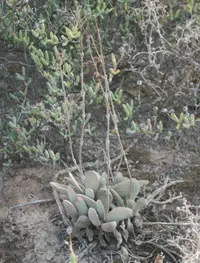
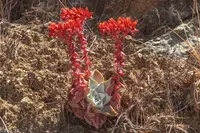
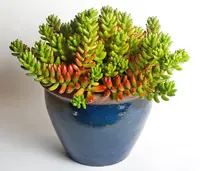
Fat stonecrop, Crassula cotyledonis, is a compact succulent from arid regions of South Africa and Namibia. It forms low rosettes of thick, oval leaves covered with fine hairs. Leaves are usually gray‑green with reddish edges in strong light, giving the plant a distinctive, velvety look. Short flower stalks appear above the foliage with small, starry blooms. This species stays small and slow-growing, which suits windowsills and small containers. It tolerates heat, sun, and drought well, so it suits growers who prefer low-maintenance plants. Understanding how to care for Fat Stonecrop mainly involves providing bright light, very sharp drainage, and infrequent watering.

Care Difficulty
Easy Care

Light Preference
Full Sun

Water Requirements
Low Water

Temperature Preference
Tropical / Frost Sensitive

Hardiness Zone
10–11

Soil Texture
Sandy, Loamy, Rocky

Soil pH
Slightly acidic (6.5–7.0), Neutral (7.0)

Soil Drainage
Well-drained

Fertilization
Minimal (feed rarely)
Scan your plant to receive care tips personalized for your specific plant
Available on iOS and Android
This compact succulent prefers bright, dry conditions similar to its native rocky habitat.
Watering should mimic brief desert rain followed by a thorough dry period.
This species prefers warm, dry air and does poorly in prolonged cold or damp conditions.
This succulent tolerates a wide humidity range and rarely needs special humidity management indoors.
Crassula cotyledonis needs a fast-draining, mineral-rich mix that prevents waterlogging around the roots.
This compact species suits container growing very well when the pot supports its shallow, spreading root system.
Crassula cotyledonis is a low-feeding succulent that benefits from light, controlled nutrition in active growth.
Crassula cotyledonis needs only light, corrective pruning to stay compact and tidy.
Crassula cotyledonis grows slowly and prefers slightly tight containers, so repotting is infrequent.
Crassula cotyledonis is commonly propagated from leaf or stem cuttings under warm, bright conditions.
Crassula cotyledonis is frost-sensitive and needs protection in regions with freezing winters.

Plant Health Check
Not sure what's wrong with your plant? Check your plant's health inside the app.
The leaves form a dense fringe of fine hairs along their margins and surfaces, creating a silvery felt that helps reduce water loss and reflects intense light in their native South African habitats.
This species grows as a low, flat rosette pressed close to the ground, a growth form that reduces exposure to drying winds and helps shade the root zone in its rocky, semi-arid environment.
Like many stonecrops, it uses crassulacean acid metabolism (CAM), an adaptation where stomata open mostly at night to take in CO₂, allowing it to conserve water during hot, dry days.
Sparse or absent flowering usually comes from insufficient light, lack of cool winter rest, or recent heavy repotting. Provide bright conditions, avoid high nitrogen fertilizer, and keep it slightly cooler and drier in winter to encourage buds.
Keep your plants happy and healthy with plant identification, disease detection, and easy care guidance.