


Support heavy inflorescences
Use thin, unobtrusive stakes to support flower stalks once they elongate, tying them loosely with soft plant ties to prevent bending or snapping under the weight of large spadices.

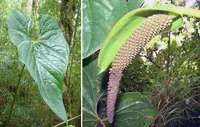
Anthurium formosum is a tropical aroid grown mainly for its upright, glossy foliage and showy white to cream inflorescences. It is usually an epiphytic or semi-epiphytic plant, anchoring to trees or loose, airy substrates rather than dense soil.
In nature, it occurs in humid montane forests of Central and South America, where it receives bright but filtered light and steady moisture. Its preference for high humidity and good air circulation means it is moderately challenging indoors, especially in dry homes.
Those who learn how to care for Anthurium formosum usually focus on stable warmth, soft indirect light, and a very well-draining, chunky mix that never stays waterlogged.

Care Difficulty
Moderate Care

Light Preference
Bright Indirect Light

Water Requirements
Keep Soil Moist

Temperature Preference
Tropical / Frost Sensitive

Hardiness Zone
11–12

Soil Texture
Loamy, Peaty, Organic-rich

Soil pH
Acidic (5.5–6.5)

Soil Drainage
Moist but well-drained

Fertilization
Light (every 4–6 weeks)
Scan your plant to receive care tips personalized for your specific plant
Available on iOS and Android
This species prefers bright, filtered light that mimics a forest understory.
Moist but never waterlogged conditions support healthy root and leaf growth.
Stable, warm temperatures help this tropical species maintain steady growth.
This species benefits from consistently high humidity to keep foliage and roots healthy.
Anthurium formosum prefers a loose, airy, organic-rich mix that drains quickly yet holds some moisture.
This species is well suited to container growing when the pot supports its epiphytic-like root system.
Consistent, light feeding supports steady growth and flowering in Anthurium formosum.
Light pruning keeps Anthurium formosum tidy and encourages healthier foliage and blooms.
Periodic repotting maintains root health and supports long-term vigor for Anthurium formosum in containers.
Division is the most practical method for expanding a collection of Anthurium formosum.
Cool-season care for Anthurium formosum focuses on avoiding cold damage and overly wet roots.

Plant Health Check
Not sure what's wrong with your plant? Check your plant's health inside the app.
This species is notable in the genus for its unusually strong, sweet fragrance produced mainly at night or early morning, which is linked to attracting specific pollinating insects in its native cloud forests.
It naturally grows as an epiphyte or semi-epiphyte in humid montane cloud forests of Central and northwestern South America, where it anchors on trees or mossy substrates rather than rooting deeply in soil.
The inflorescence has a thick, often pale to yellow spadix covered with closely packed flowers that give it a grainy or bumpy texture, making it visually different from many more commonly cultivated Anthurium species.
Leaf browning usually comes from low humidity, excess direct sun, fertilizer burn, or a buildup of salts in the potting mix. Check for crispy edges, flush the substrate with water, adjust light, and maintain stable humidity to improve appearance.
Keep your plants happy and healthy with plant identification, disease detection, and easy care guidance.

 POPULAR
Sea Milkball
Euphorbia flanaganii
velvet bean
Mucuna pruriens

Costus zamoranus
Costus zamoranus
peanut cactus
Chamaecereus silvestrii
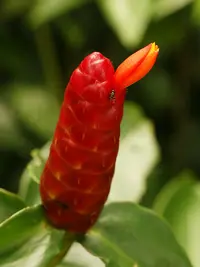
Red Button Ginger
Costus woodsonii
rainforest spinach
Elatostema reticulatum
Wax Plant
Hoya carnosa 'Chelsea'
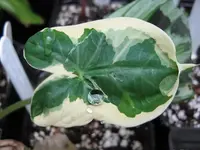
Variegated Upright Elephant Ear
Alocasia macrorrhizos 'Variegata'