Host pine selection
Choose compatible 2–5-year-old pine hosts such as lodgepole or ponderosa pine and avoid heavily fertilized or container-stressed trees, since healthy but not overfed roots form much stronger mycorrhizal partnerships.

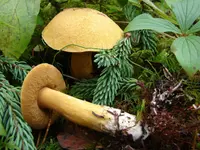
Blue-staining Slippery Jack, Suillus tomentosus, is a mycorrhizal mushroom that partners with conifer roots, especially lodgepole and ponderosa pine. It is not a houseplant but a forest-dwelling fungus.
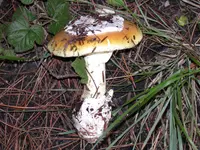
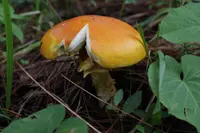
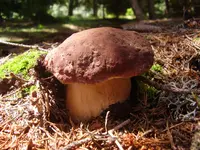
The caps are yellow to brown, slimy when wet, with a spongy pore surface that quickly bruises dark blue when handled or cut. Stout stems and often a ring zone complete its compact appearance.
This species occurs mainly in North American pine forests, often fruiting in groups in sandy or disturbed soils. Its reliance on living pine roots makes it difficult to cultivate intentionally, so attempts to care for Blue-staining Slippery Jack focus on supporting suitable host trees rather than the fungus itself.
It favors cool to mild temperatures, moist but not waterlogged soil, and open woodland light rather than deep shade.

Care Difficulty
Moderate Care

Light Preference
Partial Shade

Water Requirements
Regular Water

Temperature Preference
Cold Hardy

Hardiness Zone
3–8

Soil Texture
Sandy, Loamy, Organic-rich

Soil pH
Acidic (5.5–6.5)

Soil Drainage
Moist but well-drained

Fertilization
Minimal (feed rarely)
Scan your plant to receive care tips personalized for your specific plant
Available on iOS and Android
This ectomycorrhizal fungus prefers bright, cool forest conditions rather than intense open sun.
Suillus tomentosus depends on consistently moist, not saturated, soil around its host tree roots.
This species is adapted to cool, temperate climates with pronounced seasonal variation.
Humidity control is not important for Suillus tomentosus, which naturally grows in relatively dry, open pine habitats.
Suillus tomentosus grows best in light, well-drained, slightly acidic soil under conifers.
This species is not suitable for container growing because it depends on forming extensive mycorrhizal associations with pine roots in open ground.
This ectomycorrhizal mushroom relies mainly on its conifer host, so direct fertilization is usually unnecessary for caring for Blue-staining Slippery Jack.
Suillus tomentosus does not require conventional pruning, since its main body is a hidden fungal network in the soil.
Suillus tomentosus is best established outdoors by introducing it to suitable conifer roots rather than by classic pot repotting.
Propagation of Suillus tomentosus is specialized and usually left to natural spore spread and root colonization.
Established outdoor colonies of Suillus tomentosus in suitable climates are naturally cold hardy and need no special winter care.

Plant Health Check
Not sure what's wrong with your plant? Check your plant's health inside the app.
When its flesh is damaged, this mushroom rapidly stains dark blue, a color change thought to result from oxidation of specific pigmented compounds and to act as a visual deterrent to some grazers.
It forms ectomycorrhizal associations with pines, especially lodgepole pine, wrapping the tree’s fine roots in a fungal sheath that improves water and nutrient uptake in exchange for sugars.
This species is often found in pine stands with disturbed or resin-rich soils, where it can tolerate conditions that are stressful for many other ectomycorrhizal fungi, including high resin and low organic matter levels.

In some conifer forests of western North America, fruiting of this species can be strongly stimulated after logging or soil disturbance, making it one of the early and conspicuous ectomycorrhizal mushrooms to recolonize regenerating lodgepole pine stands.
This species is considered edible when properly cooked, though quality is often rated as mediocre. Always confirm identification with a reliable field guide or expert, remove the slimy cuticle, cook thoroughly, and avoid collecting from polluted areas.
Keep your plants happy and healthy with plant identification, disease detection, and easy care guidance.