Pad handling safety
Use long tongs or thick, smooth leather gloves when moving or repotting pads to avoid breaking joints and to protect skin from the tiny glochids that detach easily.

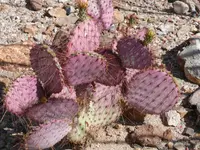
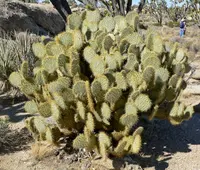
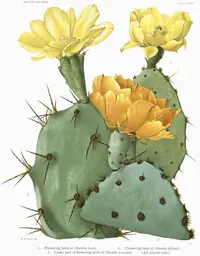
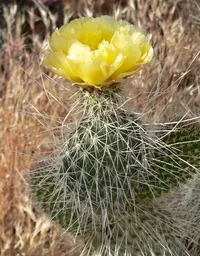
Violet pricklypear (Opuntia gosseliniana) is a clump-forming cactus known for its flat pads that flush purple or violet, especially in bright sun and cooler weather. The pads are segmented, often round to oval, and carry scattered spines and small barbed hairs called glochids that can irritate skin.
This species is native to arid regions of the Sonoran Desert in the southwestern United States and northern Mexico. It is adapted to heat, intense light, and dry, rocky soils.
Its drought tolerance and slow, compact growth habit make it relatively low-maintenance, though good drainage and plenty of sun are important. Understanding how to care for violet pricklypear mainly involves avoiding overwatering and handling the pads carefully.

Care Difficulty
Easy Care

Light Preference
Full Sun

Water Requirements
Low Water

Temperature Preference
Warm Climate

Hardiness Zone
8–11

Soil Texture
Sandy, Loamy, Rocky

Soil pH
Slightly acidic (6.5–7.0), Neutral (7.0)

Soil Drainage
Well-drained

Fertilization
Minimal (feed rarely)
Scan your plant to receive care tips personalized for your specific plant
Available on iOS and Android
This desert cactus thrives in strong, direct light and needs plenty of sun to maintain its purple pads.
This species prefers infrequent, deep watering and very fast-draining soil.
This cactus is adapted to hot, dry climates but still has clear temperature limits.
This cactus thrives in dry air and rarely needs special humidity management indoors or outdoors.
This species needs very fast-draining, mineral-rich soil to prevent root and pad rot.
This species adapts well to container growing when the pot and substrate prevent waterlogging and instability.
This cactus needs only light feeding to support steady growth without forcing soft, weak pads.
Pruning Opuntia gosseliniana is mainly done for safety, shape, and plant health rather than flowering improvement.
This species is slow-growing and usually needs repotting or transplanting only occasionally when clearly root-bound or overcrowded.
New plants are most often produced from pad cuttings, which root reliably in warm, dry conditions.
This cactus is moderately cold hardy but still benefits from thoughtful winter care, especially in containers or very wet climates.

Plant Health Check
Not sure what's wrong with your plant? Check your plant's health inside the app.
This cactus develops striking violet to bluish pads, especially in strong sun and cool, dry conditions, due to high levels of protective pigments called betalains that help shield tissues from intense light and temperature stress.
Unlike many desert cacti, this species can tolerate brief light frosts and cooler winter temperatures, which allows it to survive in higher, slightly colder parts of the Sonoran Desert.
The pads typically carry both long, rigid spines and tiny barbed hairs called glochids, an unusual combination that provides extra defense against herbivores while still allowing efficient photosynthesis in the pad surface.

Horticulturists value this species as a parent in breeding programs because its naturally purple pigmentation and relative cold tolerance can be passed on to hybrids, leading to new ornamental prickly pear cultivars with enhanced color and resilience.
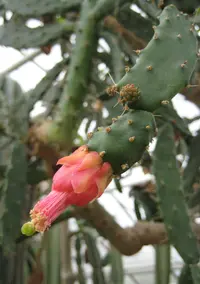
Lack of flowers usually comes from insufficient light, plants that are still too young, or stress from cold, root disturbance, or recent repotting. Stable, bright outdoor conditions and time to mature encourage regular spring to early-summer blooming.
Keep your plants happy and healthy with plant identification, disease detection, and easy care guidance.