netleaf white oak Care (Quercus polymorpha)

Also known as: Mexican White Oak
netleaf white oak

About netleaf white oak

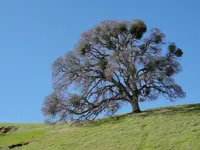
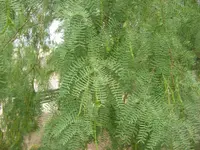
Netleaf white oak (Quercus polymorpha) is an evergreen to semi-evergreen oak tree, typically forming a rounded to spreading crown with dense, leathery foliage. Leaves are dark green with a slightly netted texture on the underside, giving the species its common name.

This tree is native to northeastern Mexico and parts of Texas, where it grows in canyons, rocky slopes, and along streams. It tolerates heat, drought, and variable soils, which makes it relatively adaptable in cultivation.

For those learning how to care for netleaf white oak, its main needs are full sun, well-drained soil, and moderate moisture while young, with increasing drought tolerance as it matures.

Main Plant Requirements

Care Difficulty

Moderate Care

Light Preference

Full Sun

Water Requirements

Moderate Water

Temperature Preference

Warm Climate

Hardiness Zone

7–11

Soil Texture

Sandy, Loamy, Rocky

Soil pH

Slightly acidic (6.5–7.0), Neutral (7.0)

Soil Drainage

Well-drained

Fertilization

Minimal (feed rarely)

Get Personalized Care Plan

Scan your plant to receive care tips personalized for your specific plant

Available on iOS and Android

How to Care for the netleaf white oak

This oak prefers full sun but adapts to some shade in hotter climates.

  • Provide 6–8 hours of direct sun daily; in hot regions, aim for full morning sun with light afternoon shade to reduce leaf scorch.
  • Young netleaf white oak trees establish best with slight protection from harsh, late-afternoon sun during their first 2–3 years.
  • In dense partial shade, growth slows and crowns thin; prune nearby plants or structures to increase light, especially in spring and early summer.

This species prefers deep, infrequent watering once established.

  • For in-ground trees, allow the top 5–8 cm of soil to dry, then water slowly and deeply so moisture reaches 30–45 cm into the root zone.
  • Increase watering frequency during the first 2–3 growing seasons and in prolonged heat or drought; leaves that curl and brown at edges suggest underwatering.
  • Ensure well-drained soil; standing water, soft bark at the base, and yellowing leaves with no wilting indicate overwatering for Quercus polymorpha.

This oak thrives in warm to hot climates with mild winters.

  • Optimal growth occurs around 70–90°F (21–32°C); sustained warmth supports continuous or extended leaf retention in many regions.
  • Mature trees tolerate brief drops near 15–20°F (-9 to -6°C), but young plants are more cold-sensitive and benefit from protection during hard freezes.
  • Heat tolerance is high, withstanding 100–110°F (38–43°C) if soil moisture is adequate; avoid planting in frost pockets or low spots with cold air accumulation.

This species handles a wide humidity range and usually does not need special humidity control outdoors.

  • Target 30–60% humidity; typical outdoor conditions in most temperate regions are adequate for netleaf white oak.
  • Dry air is generally tolerated, but prolonged hot, very dry winds can crisp new leaves at the margins.
  • If foliage shows browning tips during extreme dryness, reduce heat stress with wind protection or temporary shade rather than misting.

Quercus polymorpha prefers deep, well-drained mineral soils that still retain moderate moisture.

  • Use a loamy or sandy loam soil with some organic matter, allowing firm anchorage but free drainage around the root zone.
  • Aim for slightly acidic to neutral pH, roughly 6.0–7.5, which supports nutrient availability and healthy root activity.
  • Blend native soil with 20–30% compost and, in heavier sites, 10–20% coarse sand or fine gravel to improve aeration and percolation.
  • Avoid compacted clay, standing water, or construction fill, which restrict gas exchange and promote root rot or stunted growth.

This oak can be grown in containers when young, mainly for temporary or patio cultivation rather than long-term confinement.

  • Choose a tall, heavy container that resists tipping as the trunk elongates and the canopy becomes wind-exposed.
  • Select a pot volume that allows a broad, spreading root plate, not a narrow, deep tube that encourages circling roots.
  • Use a rigid, non-flexing container material to keep the root ball stable in strong winds and reduce mechanical stress on anchoring roots.

This oak grows well in average soil but benefits from light feeding in poor or disturbed sites.

  • Use a balanced slow-release NPK fertilizer or well-rotted compost in early spring for young netleaf white oak trees.
  • Apply once per year during the main growing season if growth is weak or foliage is pale.
  • Use at 50–75% of the label rate to avoid salt buildup and root burn.
  • Avoid feeding in late fall or winter to prevent tender, frost-prone growth.

Quercus polymorpha needs modest, well-timed pruning to maintain structure and safety.

  • Carry out main pruning in late winter to very early spring, before active growth.
  • Remove dead, diseased, or storm-damaged branches using clean, sharp bypass pruners or a pruning saw.
  • Thin crowded interior branches to improve light penetration and airflow, not to create heavy lion-tailing.
  • Guide young trees with selective cuts to establish a single strong leader and balanced scaffold branches.

This oak is usually grown in the ground, so transplanting young trees correctly is more important than repotting.

  • Move container-grown plants or field-grown saplings during late fall or very early spring while dormant.
  • Look for circling roots or slowed growth in containers as signs a larger pot or planting out is needed.
  • Handle the root ball gently, loosening only lightly, and keep roots moist from lifting to replanting.
  • Plant at the same soil level, water deeply, then mulch 5–8 cm to reduce root stress and moisture loss.

This species is mainly propagated from seed, as vegetative methods are slow and unreliable.

  • Collect acorns in fall when brown and mature, discarding any that float in water.
  • Sow seeds outdoors in fall or stratify for 6–8 weeks at 34–41°F, then plant in deep containers.
  • Use a well-drained mix and keep evenly moist, not waterlogged, to prevent rot.
  • Protect emerging seedlings from rodents, heavy foot traffic, and intense, direct midday sun.

Mature trees are reasonably cold tolerant in mild-winter regions and generally need little winter intervention.

  • In areas below this oak’s hardiness range, use 5–8 cm of mulch over the root zone, keeping it off the trunk.
  • For young or container plants, move pots into a sheltered, unheated but frost-moderated space if possible.
  • Shield newly planted saplings from drying winter winds with a breathable windbreak until well established.

Care Tips

Deep root establishment

During the first 2–3 years, use slow, infrequent soakings that wet the soil 45–60 cm deep to encourage a deep root system that improves drought tolerance and wind stability.


Trunk protection strategy

Install a light-colored, breathable trunk guard or use a loose tree wrap from the soil line to the first branches in the first 3–5 years to reduce sunscald and mechanical damage from tools or animals.

Structured formative pruning

In late winter, remove or shorten competing leaders and narrow V-shaped crotches while the tree is young to build a single strong central leader and wide branch angles that resist breakage.

Mulch management zone

Maintain a 60–90 cm wide mulch ring that is 5–8 cm deep and kept 5–8 cm away from the trunk to moderate soil temperature, protect surface roots, and reduce mower and string-trimmer injury.

Acorn and seedling control

If unwanted seedlings appear under mature trees, remove them while small or use a sharp spade to sever at the base annually, which keeps paths and beds clear without stressing the parent tree when growing netleaf white oak.

Common Pests and Diseases

Oak leaf blister

This disease causes raised, blister-like, thickened patches on leaves that may become pale, yellow, or brown and can lead to early leaf drop in wet springs.

Solution

Prune and destroy heavily affected leaves and small twigs during dry weather, and avoid overhead irrigation that keeps foliage wet. In landscapes with repeated severe outbreaks, apply a labeled copper-based fungicide just as new leaves emerge, following local extension guidance for Quercus polymorpha care instructions.

Oak leaf scorch

This disease leads to browning and drying of leaf margins and tips, often starting on the upper canopy and progressing inward, with affected leaves remaining attached.

Solution

Reduce drought stress by deep, infrequent watering during dry periods and apply mulch 5–8 cm deep over the root zone, keeping it away from the trunk. Prune out dead branches, avoid root damage from construction or soil compaction, and consult an arborist if symptoms progress across large portions of the crown.

Oak anthracnose

This disease causes irregular tan to dark brown leaf spots, distorted new leaves, and dieback of small twigs, especially during cool, wet springs.

Solution

Rake and dispose of fallen leaves and small infected twigs to reduce fungal spores, and improve airflow by selective thinning of dense inner branches. In sites with a history of serious damage, a preventive fungicide spray at bud break and shortly after leaf expansion can be considered under guidance from a certified arborist.

Oak leafroller

These insects roll or tie young leaves with silk and feed inside, creating ragged foliage and defoliation that can weaken young trees when populations are high.

Solution

Hand-pick and destroy rolled leaves on small trees early in the season and encourage natural predators by minimizing broad-spectrum insecticide use. For heavier infestations, apply a Bacillus thuringiensis (Bt) product timed to early larval stages, coating young foliage thoroughly according to label directions.

Oak gall wasps

These insects induce small to large galls on leaves, petioles, or twigs; galls look like bumps, balls, or spiky structures but usually cause more cosmetic than life-threatening damage on mature trees.

Solution

Prune and discard heavily gall-covered twigs and rake up gall-bearing leaf litter to slightly reduce future populations. Avoid unnecessary fertilization that stimulates lush, attractive new growth, and reserve insecticide treatments for rare, severe cases under advice from a tree care professional, since most infestations are best managed by natural enemies and general tree health.

Interesting Facts

Semi-evergreen oak

This species often keeps a significant portion of its leaves through winter, especially in mild climates, making it functionally semi-evergreen even though it can shed leaves in drier or colder conditions.

Heat and drought specialist

Native to northeastern Mexico and parts of Texas, it is adapted to hot, dry environments and rocky slopes, where its thick, leathery leaves reduce water loss and allow it to withstand extended drought.

Broad elevation range

In its native range it grows from lowlands up into montane canyons, showing high ecological flexibility by tolerating both warm valley sites and cooler, higher-elevation habitats.

Botan icon

Did you know?

Genetic and field studies show that this oak readily hybridizes with several related white oak species in Texas and northern Mexico, creating complex hybrid swarms that make it challenging for botanists to identify individual trees purely by appearance.

FAQs about netleaf white oak

This species grows at a moderate to fast rate once established, often adding 30–60 cm of height per year in good conditions. Growth is slower the first few years while the root system develops.

Grow Healthy Plants with Botan Care

Keep your plants happy and healthy with plant identification, disease detection, and easy care guidance.

Botan plant care app — identify plants on mobile

Explore More Plants