Gooseberry Care (Ribes uva-crispa)

Also known as: European gooseberry
Gooseberry

About Gooseberry

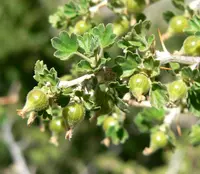
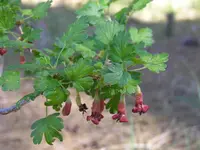
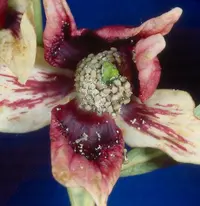
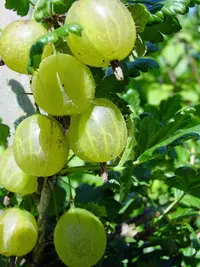
Gooseberry, Ribes uva-crispa, is a compact, deciduous fruiting shrub grown for its tart, translucent berries and thorny, branching stems. It forms a dense, rounded shape with lobed green leaves and small, inconspicuous flowers that develop into green, red, or yellow fruits.

This species is native to Europe and western Asia but is now widely cultivated in temperate regions for home gardens and small orchards. It is considered relatively easy to manage, although the thorns and susceptibility to some fungal diseases can add minor challenges.

The plant prefers cool to mild climates, moderate moisture, and well-drained soil in sun to light shade. Understanding how to care for Gooseberry helps maintain healthy growth and reliable crops over many years.

Main Plant Requirements

Care Difficulty

Moderate Care

Light Preference

Full Sun

Water Requirements

Regular Water

Temperature Preference

Cold Hardy

Hardiness Zone

3–8

Soil Texture

Loamy, Sandy, Organic-rich

Soil pH

Acidic (5.5–6.5), Slightly acidic (6.5–7.0)

Soil Drainage

Moist but well-drained

Fertilization

Minimal (feed rarely)

Get Personalized Care Plan

Scan your plant to receive care tips personalized for your specific plant

Available on iOS and Android

How to Care for the Gooseberry

Ribes uva-crispa fruits and flowers best with consistent, moderate sunlight exposure.

  • Provide 4–6 hours of direct sun daily, with a preference for gentle morning sun and light afternoon shade in hotter regions.
  • Allow partial shade, especially after 2–3 pm, since intense summer afternoon sun can scorch leaves and reduce fruit quality on Gooseberry shrubs.
  • In cooler climates, choose an open, south- or west-facing site; in hot summers, use dappled light from nearby trees to reduce heat stress.

Ribes uva-crispa prefers steadily moist, well-drained soil rather than frequent, shallow watering.

  • Water when the top 3–5 cm of soil feels dry, aiming to moisten the root zone 15–20 cm deep without leaving puddles.
  • Increase watering during flowering and fruiting, then reduce once harvest ends, watching for soft, yellowing leaves as a sign of overwatering.
  • Use soil rich in organic matter with good drainage; drooping, dry leaves and shriveling fruit indicate the shrub is staying too dry between waterings.

This shrub thrives in cool to mild climates and tolerates significant winter cold once established.

  • Aim for active growth in spring and early summer at 55–75°F (13–24°C), which supports strong shoots and good fruit set.
  • Dormant plants tolerate lows down to about -20°F (-29°C), but young shrubs benefit from mulch to protect roots in colder spells.
  • High summer heat above 85°F (29°C) can stress plants; provide mulch and light afternoon shade to limit heat stress and leaf scorch.

Humidity is rarely a limiting factor for Ribes uva-crispa, which copes well with typical outdoor conditions in temperate climates.

  • Performs reliably at 30–60% humidity, matching most outdoor ranges in its hardiness zones.
  • Tolerates relatively dry air if soil moisture is kept consistent and roots do not dry out fully.
  • Humidity stress appears mainly as marginal leaf browning during hot, dry winds; use windbreaks or mulching rather than misting when caring for Gooseberry.

Ribes uva-crispa prefers a cool, moist, well-aerated root zone with structured, free-draining soil.

  • Aim for a deep, loamy soil with plenty of organic matter that holds moisture yet does not stay waterlogged.
  • Target a slightly acidic to neutral pH of 6.0–7.0, avoiding strongly alkaline or salty conditions that restrict nutrient uptake.
  • In beds or large containers, mix garden loam with 25–40% compost and 10–20% sharp sand to improve structure and drainage.
  • Avoid compacted clay, heavy shade under trees, or spots where water stands after rain; add coarse organic material to increase aeration.

This species can grow successfully in containers when the pot is large, stable, and drains efficiently.

  • Use a heavy, wide-based container to reduce wind rock and support the spreading, fruit-laden branches.
  • Choose a pot at least 40–50 cm deep so the fibrous root system can develop evenly and resist drought stress.
  • Select a thicker-walled pot material (wood or heavy ceramic) to buffer rapid moisture and temperature swings around the root zone.

Ribes uva-crispa responds well to moderate feeding that supports steady growth and fruiting without excessive leafiness.

  • Apply a balanced NPK granular or slow-release fertilizer in early spring as new growth starts, following label rates rather than overapplying.
  • Supplement with a thin layer of compost around the drip line 1–2 times during the growing season to maintain soil structure and micronutrients.
  • Use liquid feed at half-strength no more than every 4–6 weeks in containers, ensuring soil is moist before application to avoid root burn.
  • Stop fertilizing Gooseberry in late summer and do not feed during winter dormancy, allowing stems to harden and plants to rest.

Pruning Ribes uva-crispa maintains an open, productive framework and supports good airflow around the branches.

  • Carry out main pruning in late winter to very early spring, before buds break, while the plant is still dormant.
  • Remove dead, diseased, crossing, or inward-growing shoots first, then thin crowded stems to reduce shading and humidity.
  • Shorten older fruited branches to a young outward-facing shoot, encouraging new fruiting wood and a balanced, bowl-shaped bush.
  • Use clean, sharp bypass secateurs and make angled cuts just above buds to limit tissue damage and disease entry.

Gooseberry is more often grown in the ground, but young container plants or crowded bushes benefit from careful transplanting.

  • Plan transplanting or shifting to a larger container for late fall or early spring, when growth is slow and conditions are cool and moist.
  • Look for signs such as roots circling the pot, rapid drying of the soil, or slow, weak growth despite good care.
  • Move plants into a hole or container only 1–2 sizes larger, setting the crown at the same soil level and backfilling with well-drained, organic-rich soil.
  • Water deeply after planting, apply mulch around the root zone, and shade from intense sun for 7–10 days to limit transplant shock.

Ribes uva-crispa is commonly propagated vegetatively to maintain variety traits and reliable fruit quality.

  • Take hardwood cuttings in late fall to winter from pencil-thick, current-season shoots, 15–20 cm long with several buds.
  • Insert cuttings into well-drained, gritty soil or a sand-compost mix, leaving 2 buds above the surface and keeping the medium just moist.
  • Use simple layering in early spring by pegging a low, flexible shoot to the soil, wounding the underside slightly to stimulate rooting.
  • Leave layered shoots attached for 1 growing season, then sever and transplant the rooted section during dormancy into its final position.

This shrub is generally cold hardy, but thoughtful winter care helps maintain long-term vigor and reliable cropping.

  • Tolerates typical winter frosts in most temperate regions, though very young plants benefit from a more sheltered site.
  • Apply 5–8 cm of organic mulch around, but not against, the stems to insulate roots and reduce freeze–thaw heave.
  • Avoid heavy pruning or high-nitrogen feeding late in the season so new growth hardens before sustained freezing temperatures.
  • For container plants, group pots together in a sheltered spot or move them into an unheated garage or cold frame to limit root freezing.

Care Tips

Summer cane selection

Right after harvest, mark 3–5 of the strongest new shoots per plant and remove the rest at ground level so the bush keeps an open structure and concentrates energy into high-yield canes for next year.

Simple branch support

Install a circular wire or rope support around the bush at about 40–60 cm height before fruit sets to keep heavily loaded branches from bending or snapping under the weight of ripening berries.

Prevent mildew with airflow

Space plants so branches from neighboring bushes do not touch, and thin out inner shoots each year to maintain a light, airy center that reduces American gooseberry powdery mildew pressure.

Mulch for clean fruit

Apply a 5–8 cm layer of straw or wood chip mulch under the canopy before fruiting so berries that hang low stay clean, soil splash is reduced, and moisture remains more stable.

Timed netting protection

Drape bird netting over a simple frame only once fruit begins to blush and remove it right after harvest to protect the crop without restricting pollinators during flowering when growing Gooseberry.

Common Pests and Diseases

American gooseberry mildew

This disease causes white, powdery fungal growth on young shoots, leaves, and fruit, which later turns brown and felt-like. Symptoms include distorted new growth and rough, cracked fruit skins.

Solution

Prune out and discard affected shoot tips as soon as symptoms appear, and keep the bush open by regular thinning to improve airflow. Avoid overhead watering, apply a sulfur-based or potassium bicarbonate fungicide labeled for powdery mildew at the first signs in spring, and choose resistant cultivars when planting as part of long-term Ribes uva-crispa care instructions.

Gooseberry sawfly

These insects are green, caterpillar-like larvae that can rapidly strip leaves from bushes, often starting low inside the plant. Symptoms include skeletonized leaves and almost bare stems by early summer if infestations are heavy.

Solution

Inspect plants from spring onward, especially the inner lower branches, and hand-pick or shake larvae onto a sheet to remove them. Encourage birds, avoid heavy nitrogen feeding, and if needed use a targeted biological control such as Bacillus thuringiensis (Bt) or a soap-based insecticide, applied thoroughly to leaf undersides while larvae are small.

Aphids

These pests are small soft-bodied insects that cluster on shoot tips and leaf undersides, sucking sap. Symptoms include curled, sticky leaves and distorted new growth, often with ants present on the stems.

Solution

Spray colonies off with a firm jet of water and pinch out heavily infested shoot tips. For persistent problems, use insecticidal soap or horticultural oil, making sure to cover undersides of leaves, and reduce excess nitrogen fertilizer that promotes very soft growth.

Leaf spot

This disease causes small dark spots on leaves that may enlarge, merge, and lead to yellowing and early leaf drop. Symptoms include a thinning canopy in mid to late summer and spotted fallen leaves around the base of the bush.

Solution

Collect and dispose of fallen leaves to reduce overwintering spores, and thin branches to allow better air circulation. In wet seasons, a preventive fungicide labeled for leaf spot on currants and gooseberries can be applied from leaf break, and overhead watering should be avoided to keep foliage as dry as possible.

Gooseberry blister mite

This pest causes raised, blister-like red or yellow patches on leaves as mites feed inside the tissue. Symptoms include distorted leaves with discolored blisters, but usually little direct damage to fruit.

Solution

Remove and discard heavily affected leaves early in the season to lower mite numbers. Maintain good pruning to open the bush, avoid moving infested plant material to clean areas, and where infestations are severe use a dormant-season horticultural oil spray to reduce overwintering mites on buds.

Interesting Facts

Ancient European domesticate

European gooseberry shrubs were domesticated from wild populations in Eurasia and have been cultivated for many centuries, especially in Britain, for pies, preserves, and wines due to their high acidity and complex flavor.

Powdery mildew resistance breeding

Older European gooseberry cultivars were highly susceptible to American gooseberry mildew, a fungal disease, so modern breeding programs have focused on crossing them with resistant relatives to create cultivars that better tolerate this pathogen.

Spines as herbivore defense

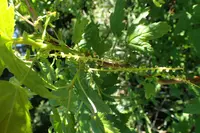
European gooseberry stems often bear sharp spines at the nodes, which are modified shoots that help protect the plant’s nutrient‑rich leaves and fruits from browsing animals.

Botan icon

Did you know?

In 19th‑ and early 20th‑century Britain, competitive gooseberry clubs selected and exhibited fruits of Ribes uva-crispa that could exceed 50 g per berry, leading to specially named giant-fruited cultivars and detailed record books documenting prize-winning weights.

FAQs about Gooseberry

Yellowing leaves often result from nutrient deficiency, especially low nitrogen or magnesium, or from waterlogging around the roots. Check drainage, avoid overwatering, apply a balanced fertilizer, and ensure adequate mulch rather than disturbing surface roots.

Grow Healthy Plants with Botan Care

Keep your plants happy and healthy with plant identification, disease detection, and easy care guidance.

Botan plant care app — identify plants on mobile

Explore More Plants