


Gooseberry Identification (Ribes uva-crispa)

To recognize Gooseberry, look for a small, often arching shrub with stout single or three-part spines at the nodes and rounded leaves with 3 to 5 shallow lobes, arranged alternately.

Its flowers are usually solitary or paired, hanging from short stalks, with a small tubular bell shape.

Ribes uva-crispa Identification

Confirm What Plant You Have

Use a clear photo to confirm what plant you have.

Clear images work best. Avoid photos taken too close or too far away

Use these quick checks to assess the shrub’s form and parts.

  • A low, many-stemmed shrub, usually about 3-5 feet (0.9-1.5 m) tall and wide.
  • Stems carry sharp spines at the nodes, often one to three together beneath the leaf stalks.
  • Leaves are simple and rounded, with 3-5 broad lobes and a softly toothed edge.
  • Flowers hang singly or in small clusters and are bell-shaped, greenish to pinkish.
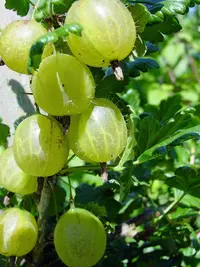
  • Berries are round to oval, about 1/2-1 inch (1-2.5 cm) wide, often translucent with visible veins.

Check both the clustered stem spines and the lobed leaves for the clearest match.

Gooseberry shows clear visual shifts from a small spiny shoot system to fruiting shrubs.

  • Young plant: Early plants are compact with few woody stems, obvious single spines at nodes, and smaller rounded leaves with shallow lobes and a less tangled outline.
  • Mature plant: Older shrubs form a dense, many-branched framework about 3-5 feet (0.9-1.5 m) tall, with arching thorny stems and broader leaves showing deeper lobing.
  • Flowering stage: At bloom, Ribes uva-crispa carries small nodding flowers singly or in pairs along older stems, making the thorny branch structure easier to recognize.
  • Fruiting stage: Fruit reveals the species most clearly: hanging spherical to oval berries on short stalks, larger and heavier-looking than flowers, often exposing stem spines nearby.

Gooseberry has several long-established cultivars that can be separated by fruit color, berry size, and growth habit.

  • 'Hinnonmaki Red': Bears dark red berries and forms a fairly upright, rounded shrub, unlike the usual green- to red-fruited variable type.
  • 'Hinnonmaki Yellow': Produces yellow berries rather than green, pink, or deep red, making fruit color the quickest field mark.
  • 'Invicta': Shows pale green to yellow-green berries that are noticeably large, often on a vigorous, arching plant.
  • 'Captivator': Has red to burgundy berries and fewer spines than the typical thorny form, giving the stems a smoother look.

In spring, Gooseberry leafs out with small, lobed leaves, and the flowers become visible on short stalks along the stems. These are modest, often greenish to pinkish, but useful when seen before the shrub is fully leafy. By early to mid-summer, round berries are the clearest clue. In fall the leaves drop, exposing the thorny, branching stems that make the shrub easier to recognize in winter.

A few close relatives can be mistaken for Gooseberry at a quick glance.

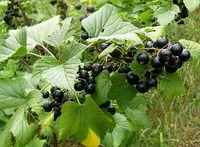
black currant(Ribes nigrum)

Similar because both are small, lobed-leaf shrubs with round berries. Black currant usually lacks the sharp stem spines found on Gooseberry, and its fruits hang in short clusters rather than being borne singly or in pairs.

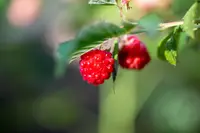
red currant(Ribes rubrum)

Often confused when not in fruit because the leaves are similarly palmately lobed, meaning lobed like an open hand. Red currant is typically unarmed, with no stout spines at the nodes, and its berries are carried in dangling strings.

Ribes uva-crispa is native to much of Europe, with naturalized and cultivated plants far beyond that range. In the wild it is typically found in hedgerows, woodland edges, scrub, rocky slopes, and streamside thickets rather than open prairie or deep shade. That setting can help with identification because truly wild plants are most likely in cool-temperate, shrubby habitats, often on stony or disturbed ground. Geography alone is not enough, since gooseberries are widely planted and escaped.

  • Stem spines: Ribes uva-crispa has sharp spines on the stems. The concern is skin contact, which can cause painful punctures or scratches in humans and pets that brush against the shrub.
  • Fruit confusion: Its berries are edible in some contexts, but identification still matters because raw handling and tasting should not rely on appearance alone. The main safety issue is avoiding accidental ingestion of the wrong plant if a thorny berry shrub is misidentified.

Check Your Plant ID

Use Botan to compare a photo and help confirm the plant, which is useful when details are unclear or similar species overlap.

FAQ

The quickest clue is the combination of small thorns at the nodes, rounded 3- to 5-lobed leaves, and single or few hanging berries that are often slightly translucent. Those traits make Gooseberry plant identification more reliable.

Everything About Gooseberry

More Plant Identification Guides

Identify Your Plant and Learn More

Upload a photo to identify it with Botan, then review plant details, care information, and common problems for the matched species.

Botan app identifying a plant from a photo
When to Plant Hydrangeas: Best Time by Season and Type

6 min read · 30 Oct 2026

When to Plant Hydrangeas: Best Time by Season and Type

Hydrangeas grow best when you plant them in cool weather. This guide explains when to plant hydrangeas in your area, compares fall and spring planting seasons, and shows the right steps for each type.

Beginner Guides

When to Plant Hydrangeas: Best Time by Season and Type
Best Bedroom Plants – Top 10 to Grow in Your Space

8 min read · 8 Jul 2026

Best Bedroom Plants – Top 10 to Grow in Your Space

Discover the top 10 houseplants that are suitable for growing in your bedroom. Compare their light and water needs, pet safety, and benefits. Find out where best to place greenery in your relaxation space and what species to avoid.

Plant Recommendations
Best Bedroom Plants – Top 10 to Grow in Your Space
Banana Peel Water for Plants: 5 Things to Know Before Trying It

5 min read · 9 Jul 2026

Banana Peel Water for Plants: 5 Things to Know Before Trying It

Banana water can provide potassium and some nutrients that may support plant growth, but it is not a universal fix. Use it carefully and only when the plant actually shows signs of nutrient deficiency rather than as a routine treatment.

Plant Care
Banana Peel Water for Plants: 5 Things to Know Before Trying It