Encourage Single Trunk
Remove low, weak side shoots early while they are still soft to encourage a single, strong trunk that will better support the mature canopy.

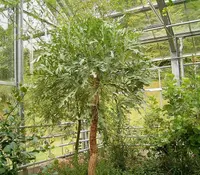
Cussonia paniculata, commonly called mountain cabbage tree, is a small, often multi-stemmed tree with a swollen trunk and rounded heads of divided, cabbage-like leaves. It has an architectural, sculptural look that suits dry gardens and containers.
This species is native to rocky slopes and open habitats in southern Africa, where it experiences strong light, good air movement, and sharp drainage. It grows relatively slowly but is not difficult if its need for bright light, gritty soil, and modest watering is respected.
Gardeners who understand how to care for Cussonia paniculata usually find it a resilient plant once established, especially in mild, low-frost climates.

Care Difficulty
Moderate Care

Light Preference
Full Sun

Water Requirements
Low Water

Temperature Preference
Warm Climate

Hardiness Zone
9–11

Soil Texture
Sandy, Loamy, Rocky

Soil pH
Slightly acidic (6.5–7.0), Neutral (7.0)

Soil Drainage
Well-drained

Fertilization
Minimal (feed rarely)
Scan your plant to receive care tips personalized for your specific plant
Available on iOS and Android
This small tree prefers bright, open positions similar to its native rocky hillsides.
Watering should support a deep, drought-tolerant root system rather than frequent shallow moisture.
This species prefers mild, warm conditions and dislikes prolonged cold or frost.
This drought-adapted species tolerates typical indoor humidity and does not need special moisture in the air.
Cussonia paniculata prefers fast-draining, slightly gritty soil that prevents waterlogging around its roots.
This species is well suited to container growing when the pot supports its deep, sometimes top-heavy root system.
This drought-adapted small tree grows acceptably in poor soils but responds well to modest feeding in containers or lean garden sites.
This species needs only light structural pruning to keep a stable crown and remove problem growth.
This tree develops a strong root system and dislikes frequent disturbance, so repotting or transplanting should be infrequent and deliberate.
Propagation of this species is most reliable from seed, with cuttings attempted mainly by experienced growers.
This semi-tender tree prefers mild winters and benefits from basic cold-season precautions in most temperate climates.

Plant Health Check
Not sure what's wrong with your plant? Check your plant's health inside the app.
This species forms a noticeably thickened, water-storing trunk called a pachycaul stem, which allows it to endure long dry periods in its native South African grassland and rocky habitats.
The divided, hand-like leaves show nyctinasty, a daily sleep movement where leaflets change position between day and night, likely helping to reduce water loss and manage temperature stress.
In its native highveld and rocky slopes, the plant can resprout from its woody framework after grassland fires, an adaptation that helps it persist in fire-prone ecosystems.

The species is characteristic of the so‑called Afro-montane flora and often grows on exposed rocky ridges and slopes, where its umbrella-like canopy can act as a small habitat island that offers shade and perching sites for birds in otherwise open grassland.
Yes, this species adapts well to large containers with good drainage. Choose a deep, heavy pot, use a gritty mix, and up-pot gradually as the thick root system expands to avoid stress.
Keep your plants happy and healthy with plant identification, disease detection, and easy care guidance.