kiss-me-over-the-garden-gate Care (Persicaria orientalis)

Also known as: Princes Feathers, Princess' Feather
kiss-me-over-the-garden-gate

About kiss-me-over-the-garden-gate

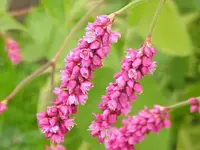
Kiss-me-over-the-garden-gate, Persicaria orientalis, is a fast-growing annual known for tall stems topped with long, dangling clusters of tiny pink flowers. It forms an airy, upright clump that can create a soft, romantic screen or backdrop in garden beds.

This species likely originated in Asia but is now grown as an ornamental in many temperate regions. It is valued for its quick growth, strong visual impact, and ability to blend into cottage or naturalistic plantings.

Gardeners find it relatively simple to care for kiss-me-over-the-garden-gate when given sun, moderate moisture, and well-drained soil, although its height and self-seeding habit require some management.

Main Plant Requirements

Care Difficulty

Moderate Care

Light Preference

Full Sun

Water Requirements

Regular Water

Temperature Preference

Warm Climate

Hardiness Zone

7–10

Soil Texture

Loamy, Silty, Organic-rich

Soil pH

Acidic (5.5–6.5), Slightly acidic (6.5–7.0)

Soil Drainage

Moist but well-drained

Fertilization

Light (every 4–6 weeks)

Get Personalized Care Plan

Scan your plant to receive care tips personalized for your specific plant

Available on iOS and Android

How to Care for the kiss-me-over-the-garden-gate

This tall annual thrives in bright outdoor conditions with ample direct sun during the growing season.

  • Provide 6–8 hours of direct sun daily, with morning sun and light afternoon shade ideal, especially in hotter regions.
  • Plant kiss-me-over-the-garden-gate where it gets at least 4 hours of direct light; in heavier partial shade, stems stretch and flowering drops.
  • In hot summers, protect from intense late-afternoon sun to prevent leaf scorch, but avoid deep shade, which causes weak, floppy growth.

This moisture-loving annual prefers evenly damp but not waterlogged soil throughout its growing season.

  • Water when the top 3–5 cm of soil feels slightly dry, soaking the root zone thoroughly so moisture reaches at least 15–20 cm deep.
  • Use rich, well-drained soil; persistent puddling, yellowing leaves, and soft stems indicate overwatering, while limp, dull foliage and dry soil signal underwatering.
  • During hot, windy periods, check soil daily, but in cooler or rainy weather, extend intervals and skip waterings when soil remains moist.

This species grows best in warm, frost-free conditions from late spring through early fall.

  • Ideal growth occurs around 70–85°F (21–29°C), with vigorous stems and abundant flowering in stable summer warmth.
  • Plant outdoors after nights stay above 50°F (10°C); light frost can kill young plants, so delay sowing or transplanting until risk has passed.
  • Mature plants tolerate short spikes to 90–95°F (32–35°C) if soil moisture is consistent, but growth slows in prolonged heat or when temperatures drop below 45°F (7°C).

Persicaria orientalis handles a wide humidity range and usually does not need special humidity management outdoors.

This species prefers consistently moist, fertile, well-structured soil that does not stay waterlogged.

  • Use a loamy, organic-rich soil that retains moisture yet still feels springy and open when squeezed.
  • Aim for slightly acidic to neutral pH around 6.0–7.0, which supports strong root and shoot growth.
  • In garden beds, mix in compost plus a small amount of coarse sand to boost both fertility and drainage.
  • Avoid compacted clay, poorly drained low spots, or extremely sandy soils that dry out within a few hours after watering.

This species can be grown in containers if the pot is large and stable enough for its tall, top-heavy growth.

  • Choose a deep, heavy container to counterbalance tall stems and reduce tipping in wind or on balconies.
  • Use a broad-based pot to give room for fibrous roots to spread and anchor the plant securely.
  • Select a slightly heavier material such as ceramic or thick-walled plastic to moderate drying and improve stability for growing kiss-me-over-the-garden-gate.

Persicaria orientalis grows well in average soil but benefits from light feeding during the main growing season.

  • Apply a balanced, slow-release fertilizer (around 10-10-10) at planting or early spring for outdoor kiss-me-over-the-garden-gate.
  • Supplement with a light liquid feed at 1/2 strength every 4–6 weeks through summer if growth is weak or soil is poor.
  • Use compost or well-rotted manure as a thin surface dressing to improve soil structure and gentle nutrient supply.
  • Stop feeding in late summer to early fall so growth can harden before cold weather, and do not fertilize in winter.

Pruning helps keep Persicaria orientalis tall, tidy, and flowering well through the season.

  • Use clean hand pruners or sharp scissors to remove dead, damaged, or diseased stems whenever noticed.
  • In late spring to early summer, pinch or trim stem tips to encourage bushier growth and more flowering shoots.
  • Deadhead fading flower spikes to extend the blooming season and reduce unwanted self-seeding.
  • Cut plants back to near ground level after hard frost or at season’s end to tidy beds and break pest cycles.

This species is usually grown as an annual in beds, so transplanting seedlings matters more than long-term repotting.

  • Transplant young plants outdoors after frost when roots lightly fill starter cells but are not circling the container.
  • Choose a sunny site with moist, well-drained soil and space plants well to match their mature height and spread.
  • Water thoroughly before and after transplanting to reduce root stress, and avoid disturbing the root ball more than necessary.
  • Container-grown plants rarely need larger pots in one season; only shift up if roots are dense and growth slows.

Persicaria orientalis is most commonly raised from seed, which allows generous, seasonal plantings.

  • Sow seeds indoors 6–8 weeks before last frost in trays of moist, free-draining mix, barely covering them with substrate.
  • Provide 65–75°F warmth and bright light; keep the surface just moist until germination, which may take 1–3 weeks.
  • Harden off seedlings gradually, then plant outside after frost when they have several true leaves.
  • In mild areas, allow a few seed heads to mature and drop if controlled self-sowing is acceptable.

This plant is typically grown as a tender annual and does not need complex winter care outdoors.

  • In frosty climates, expect top growth to die completely after hard freezes and replant from seed next year.
  • Mulch annual beds in fall mainly to protect and improve soil, not to overwinter the plants themselves.
  • For mild regions, any surviving plants are usually short-lived; remove spent stems and refresh the planting the following season.

Care Tips

Stake Early

Install sturdy stakes or a mesh support when plants are 20–30 cm tall so the tall, heavy flower spikes stay upright and avoid snapping in wind or heavy rain.

Pinch For Bushiness

Lightly pinch out the top 2–3 cm of the main stem once plants reach 25–30 cm to encourage branching and produce more flowering stems over a longer season.

Self‑Seeding Control

To prevent unwanted spread, shear off or deadhead spent flower tassels before seeds turn brown and dry, and collect or dispose of them rather than leaving them on the soil.

Efficient Cut Flowers

For long-lasting cut stems, harvest in the cool morning when 30–50% of florets are open, strip lower leaves, and place stems immediately into deep, clean, lukewarm water.

Mulch For Stability

Apply a 5–7 cm layer of organic mulch around but not touching the stems to stabilize soil moisture, reduce weeds, and keep mud from splashing onto foliage when growing kiss-me-over-the-garden-gate.

Common Pests and Diseases

Leaf spot

This disease causes irregular brown or tan lesions on leaves, often with darker margins, and can lead to premature leaf drop in warm, humid weather.

Solution

Remove and dispose of heavily spotted leaves, avoid overhead watering, and increase spacing or airflow around plants; in persistent wet conditions, a copper-based fungicide labeled for ornamental annuals can help protect new growth.

Powdery mildew

This disease appears as white, powdery patches on upper leaf surfaces and stems, leading to yellowing and distorted foliage later in the season.

Solution

Improve air circulation, thin dense growth, water at soil level, and remove the worst-affected leaves; in recurring cases, apply a sulfur or potassium bicarbonate fungicide early when the first spots appear and repeat as directed.

Aphids

These insects cluster on young stems and flower stalks, sucking sap and causing curled, sticky foliage due to honeydew secretion.

Solution

Spray colonies off with a firm stream of water, then treat remaining clusters with insecticidal soap or a light horticultural oil, ensuring thorough coverage of stems and leaf undersides; encourage natural predators like lady beetles by avoiding broad-spectrum insecticides while growing kiss-me-over-the-garden-gate.

Spider mites

These pests thrive in hot, dry conditions, causing fine stippling, dull foliage, and delicate webbing on the undersides of leaves and between stems.

Solution

Increase humidity around the plants, hose down foliage regularly to dislodge mites, and use insecticidal soap or a labeled miticide on both upper and lower leaf surfaces if damage continues.

Japanese beetles

These insects skeletonize leaves and can chew on the long flower tassels, leaving only the leaf veins and ragged blossoms in midsummer.

Solution

Hand-pick beetles in the early morning into soapy water, use fine mesh netting over smaller plantings during peak flight, and manage nearby lawn grubs with appropriate soil treatments to reduce future adult beetle numbers.

Interesting Facts

Late-flowering annual

This species behaves as a fast-growing annual in temperate gardens, often reaching over 1.5–2 m in a single season and flowering late in summer into fall when many other ornamentals are fading.

Dangling bottlebrush blooms

Its long, pendulous inflorescences are composed of many tiny pink flowers along a flexible axis, creating a brush-like structure that gently nods and provides an extended nectar source for late-season pollinators.

Self-seeding pioneer

The plant sets large numbers of small, hard seeds that readily self-sow in disturbed or bare soil, allowing it to reappear in the same spot year after year even though each plant lives only one season.

Botan icon

Did you know?

The ornamental popularity of this species in 18th–19th century European and American gardens led to its inclusion in many historic seed catalogues under various older synonyms, and it is thought that some long-established cottage garden populations descend from those early introductions.

FAQs about kiss-me-over-the-garden-gate

This species is typically tall, reaching 4–8 ft in one season under good conditions. It forms upright, arching stems rather than a compact mound, so it suits back-of-border or statement plantings rather than tight spaces.

Grow Healthy Plants with Botan Care

Keep your plants happy and healthy with plant identification, disease detection, and easy care guidance.

Botan plant care app — identify plants on mobile

Explore More Plants