Salt-tolerant siting
Use this shrub as a windbreak or roadside barrier in coastal or arid landscapes, since its high salt and drought tolerance allow it to thrive where many other species decline.

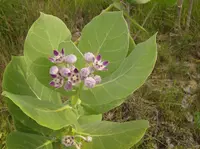
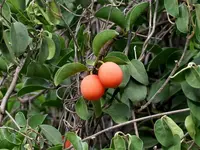
Roostertree, Calotropis procera, is a woody shrub or small tree known for its thick gray-green leaves and clusters of waxy white to purple flowers. It often develops a sculptural, open form with milky sap and inflated seed pods.
This species is native to arid and semi-arid regions of Africa, the Middle East, and South Asia, where it thrives in heat, sun, and poor, sandy soils. It is drought-tolerant and tough but can be sensitive to overwatering in cultivation.
Gardeners who care for roostertree usually value it as a resilient landscape or container specimen in warm, dry climates. It suits growers who prefer low-maintenance plants and can provide strong light and fast-draining soil.

Care Difficulty
Easy Care

Light Preference
Full Sun

Water Requirements
Low Water

Temperature Preference
Tropical / Frost Sensitive

Hardiness Zone
10–12

Soil Texture
Sandy, Loamy, Rocky

Soil pH
Slightly alkaline (7.0–7.5), Alkaline (7.5–8.5)

Soil Drainage
Well-drained

Fertilization
Minimal (feed rarely)
Scan your plant to receive care tips personalized for your specific plant
Available on iOS and Android
This sun-loving desert shrub thrives in strong, direct light when established outdoors.
This drought-tolerant species prefers infrequent, deep watering in fast-draining soil.
This heat-adapted shrub grows best in consistently warm, dry climates.
Calotropis procera handles low humidity well and rarely needs special humidity management.
This drought-adapted shrub prefers very free-draining, mineral-based soil that mimics sandy or rocky native habitats.
This species is suitable for container growing when set up to support its deep roots and top-heavy form.
Calotropis procera grows on very poor soils and usually needs minimal feeding in cultivation.
Calotropis procera benefits from modest structural pruning to maintain a stable, safe form.
This species is more often established outdoors than kept in containers, so focus on careful transplanting of young plants.
Calotropis procera is commonly propagated from seed for landscape and restoration use.
In warm climates this drought-tolerant shrub needs little winter attention but is poorly suited to hard frost.

Plant Health Check
Not sure what's wrong with your plant? Check your plant's health inside the app.
When damaged, this plant exudes a thick white latex rich in cardenolides, a group of toxic compounds that deter most herbivores and can be harmful if ingested by livestock.
The leaves serve as a food source for larvae of several danaine butterflies, including the plain tiger (Danaus chrysippus), which can store the plant’s toxins and become less palatable to predators.
Its robust root system and tolerance to arid, saline, and disturbed soils allow it to colonize dunes and wastelands, where it helps stabilize loose substrates while sometimes behaving as an invasive species outside its native range.

In some arid regions, this species is one of the few woody plants that can complete its life cycle and flower on extremely low rainfall, which makes it a useful model organism for studying drought tolerance and adaptation in tropical dryland ecosystems.
Lack of flowers usually comes from insufficient heat or light, or from overly rich, moist soil. This desert shrub blooms best in full sun, high temperatures, and lean, well-drained ground without frequent fertilizing or heavy watering.
Keep your plants happy and healthy with plant identification, disease detection, and easy care guidance.