


Encourage Dense Mats
Pinch back the soft tips of longer runners in early growth to encourage branching and create a thicker, more uniform carpet rather than a few long, straggly stems.

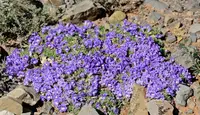
Carpetflower, Aptosimum procumbens, is a low, mat-forming perennial from arid and semi-arid regions of southern Africa. It naturally creeps along the ground, creating a dense, flowering carpet. Small, tubular purple to blue flowers appear along its stems, contrasting with tiny, closely packed leaves that help the plant conserve water. This compact habit makes it suitable for rock gardens, dry borders, and groundcover in warm, dry climates. It is adapted to strong sun, low rainfall, and lean, fast-draining soils, which makes it drought tolerant but less suited to wet or heavy conditions. Those who learn how to care for Carpetflower often find it a durable choice for xeriscapes and other low-water plantings.

Care Difficulty
Easy Care

Light Preference
Full Sun

Water Requirements
Low Water

Temperature Preference
Warm Climate

Hardiness Zone
9–11

Soil Texture
Sandy, Loamy, Rocky

Soil pH
Slightly acidic (6.5–7.0), Neutral (7.0)

Soil Drainage
Well-drained

Fertilization
Minimal (feed rarely)
Scan your plant to receive care tips personalized for your specific plant
Available on iOS and Android
This low-growing South African perennial thrives in bright, open positions with strong sun exposure.
This drought-tolerant groundcover prefers infrequent, deep watering and fast-drying soil.
This species prefers warm, dry conditions and copes well with summer heat when soil drainage is excellent.
This species tolerates dry conditions well, so humidity is rarely a concern indoors or outdoors.
Aptosimum procumbens prefers lean, fast-draining soil that mimics rocky, sandy habitats.
This low, spreading plant is suitable for container growing, especially in shallow, wide pots or troughs.
Aptosimum procumbens is a light feeder that benefits from modest nutrition in poor soils.
Pruning Aptosimum procumbens is mainly about keeping the mat tidy and flowering well.
This ground-hugging species is usually grown in open soil, so transplanting is more common than repotting.
Aptosimum procumbens is most often propagated by seed or soft cuttings to expand groundcover patches.
This low-growing Carpetflower is generally drought and cold tolerant in mild to moderate climates, needing limited winter care.

Plant Health Check
Not sure what's wrong with your plant? Check your plant's health inside the app.
This species is naturally restricted to the arid regions of Namibia and South Africa’s Northern Cape, where it forms dense mats on open, stony or sandy soils that experience highly irregular rainfall.
It grows as a very low, spreading groundcover, with stems that hug the substrate and small opposite leaves, helping the plant reduce exposure to desiccating winds and intense sun near the soil surface.
During favorable moisture periods it can produce numerous violet to blue, funnel-shaped flowers that collectively create the characteristic “carpet” effect referenced in its common name, carpetflower.

In its native range, this species often colonizes disturbed or sparsely vegetated microsites, where its dense prostrate mats help stabilize loose surface material and slightly modify the near-ground microclimate for other small organisms.
This species spreads slowly to moderately, forming a low, patchy mat rather than a fast-moving carpet. It rarely becomes troublesome. Occasional trimming of longer runners keeps edges neat and prevents it from encroaching on nearby plants.
Keep your plants happy and healthy with plant identification, disease detection, and easy care guidance.

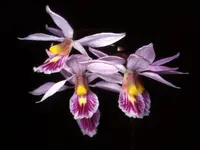
Barkeria shoemakeri
Barkeria shoemakeri
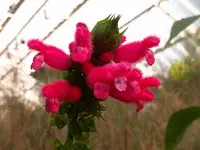
Bolivian hummingbird sage
Salvia oxyphora
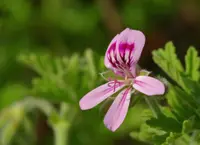
Scented geraniums
Pelargonium graveolens
Zulu Spurflower
Plectranthus zuluensis
Crisp Plumeiris
Tritonia undulata

doublehorn calicoflower
Downingia bicornuta
orange-tipped dandelion
Taraxacum obliquilobum
Coelogyne viscosa
Coelogyne viscosa