Summer dormancy handling
Mark bulb locations before foliage dies back so you can avoid disturbing them during summer dormancy and resume light irrigation at the first sign of new autumn growth.

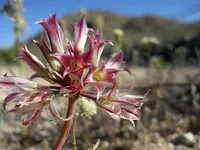
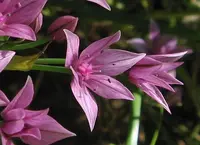
Parish's onion, Allium parishii, is a small desert onion native to dry, rocky slopes of the southwestern United States. It grows from a bulb and produces slender leaves with delicate pink to rose flowers on thin stalks. This species stays compact and forms loose clumps rather than large dense patches, which suits rock gardens and container collections. Its natural habitat suggests a strong tolerance for heat, sun, and drought. The plant generally prefers full sun, very well-drained sandy or gravelly soil, and infrequent watering. Understanding these dryland needs makes it easier to care for Parish's onion in cultivation.

Care Difficulty
Moderate Care

Light Preference
Full Sun

Water Requirements
Low Water

Temperature Preference
Warm Climate

Hardiness Zone
8–10

Soil Texture
Sandy, Rocky, Loamy

Soil pH
Slightly acidic (6.5–7.0), Neutral (7.0)

Soil Drainage
Well-drained

Fertilization
Minimal (feed rarely)
Scan your plant to receive care tips personalized for your specific plant
Available on iOS and Android
This desert bulb needs strong light to flower well and stay compact.
This species is drought-adapted and prefers infrequent, deep watering in fast-draining soil.
This desert allium prefers warm, dry conditions and handles a wide temperature range once established.
This desert Allium prefers very dry air and usually does not need humidity adjustment indoors.
Allium parishii needs lean, sharply drained mineral soil to prevent bulb rot and support healthy growth.
This species can be grown in containers if the pot and medium are managed to stay dry around the bulb.
This desert-adapted bulb needs only light feeding, as excessive nutrients can weaken growth and shorten lifespan.
Pruning needs for Allium parishii are minimal and mainly focused on tidiness and seed control.
This species is usually grown in the ground; transplanting bulbs carefully is more important than frequent repotting.
Propagation of Allium parishii is most reliable by bulb division, with seeds used mainly for larger-scale or conservation-focused growing.
This species is adapted to mild, dry winters and usually needs little special winter care in frost-free or light-frost climates.

Plant Health Check
Not sure what's wrong with your plant? Check your plant's health inside the app.
This species is native to arid regions of the Mojave and Sonoran deserts, where it grows in sandy or gravelly washes that briefly carry water after rare rains.
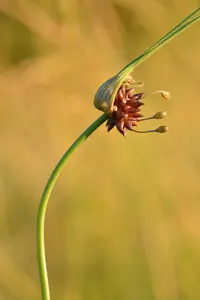
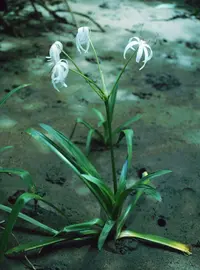
Its flowering heads are small, loose clusters of pale pink to whitish, bell-shaped flowers that often nod slightly, an adaptation that helps protect reproductive parts from intense desert sun and drying winds.
The plant survives long dry periods as a small underground bulb, then rapidly sends up leaves and flowers in spring when soil moisture and temperatures become favorable.
Lack of blooms usually comes from insufficient sun, overcrowded bulbs, or nutrient-poor, very dry soil during active growth. Ensure strong light, modest but regular moisture in spring, and divide congested clumps every few years to restore flowering.
Keep your plants happy and healthy with plant identification, disease detection, and easy care guidance.