Bulb marking stakes
Place small, durable stakes or tags where bulbs are planted so you can avoid disturbing them during later digging or replant annuals around them without damaging the bulbs.

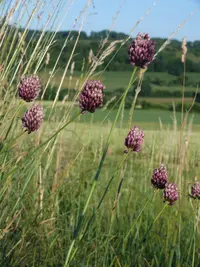
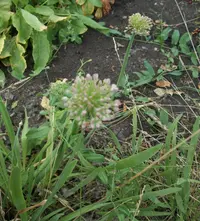
Round-headed leek, Allium rotundum, is a bulb-forming perennial in the onion family, grown mainly for its rounded purple flower heads. It sends up slender stems topped with tight, spherical clusters of small, star-like blooms that attract bees and other pollinators.
This species occurs naturally in parts of southern and eastern Europe and western Asia, often in open, sunny habitats. It is generally undemanding, as long as the soil drains well and the bulbs do not sit in waterlogged ground.
Gardeners who care for round-headed leek value its reliable flowering, good cold tolerance, and ability to naturalize slowly in suitable conditions. It prefers full sun and moderately dry to fresh soil rather than constantly wet sites.

Care Difficulty
Easy Care

Light Preference
Full Sun

Water Requirements
Moderate Water

Temperature Preference
Cold Hardy

Hardiness Zone
4–8

Soil Texture
Sandy, Loamy, Rocky

Soil pH
Slightly acidic (6.5–7.0), Slightly alkaline (7.0–7.5)

Soil Drainage
Well-drained

Fertilization
Minimal (feed rarely)
Scan your plant to receive care tips personalized for your specific plant
Available on iOS and Android
Allium rotundum grows best in open, bright conditions that mimic a sunny meadow or border.
Allium rotundum prefers evenly moist but never waterlogged soil, especially during active growth.
Allium rotundum is a hardy bulb that tolerates cold winters and warm summers when planted in the ground.
Humidity is rarely critical for Allium rotundum, which naturally prefers dry, open sites.
Allium rotundum performs best in lean, well-aerated mineral soil that drains very quickly.
This species is well-suited to container growing when drainage and pot depth are carefully managed.
This bulb needs only light feeding to flower well in average garden soil.
Pruning needs for Allium rotundum are minimal and focus on tidiness and bulb health.
This species is usually grown in the ground, with transplanting focused on lifting and dividing bulbs.
Allium rotundum is commonly propagated by bulb division and, less often, by seed.
This hardy bulb generally needs little winter care in most temperate climates.

Plant Health Check
Not sure what's wrong with your plant? Check your plant's health inside the app.
Allium rotundum is naturally native to a relatively limited belt from eastern Europe through western Asia, rather than being widespread across the Northern Hemisphere like many other Allium species.
This species forms small, narrowly ovoid bulbs that often produce offsets, creating loose clumps that slowly expand rather than dense colonies.
In many parts of its range, it flowers in late spring to early summer, after several other wild alliums have finished, providing a later-season nectar source for pollinating insects.

Genetic and morphological studies show that Allium rotundum belongs to a specialized group within the onion genus that is adapted to dry, steppe-like habitats, which is why it is frequently used in restoration and ornamental plantings that mimic natural steppe and meadow ecosystems.
Lack of flowers is often due to insufficient sun, overcrowded bulbs, or bulbs planted too shallow or deep. Allow foliage to mature naturally after flowering each year so bulbs can store enough energy for the next season.
Keep your plants happy and healthy with plant identification, disease detection, and easy care guidance.