Annual Rockcress Care (Arabis auriculata)

Annual Rockcress

About Annual Rockcress

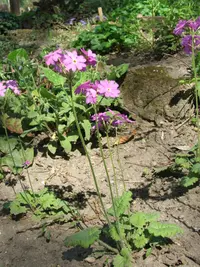
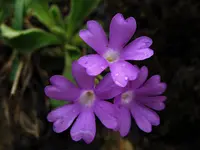
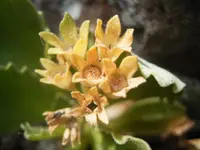
Annual rockcress (Arabis auriculata) is a small, short-lived perennial often grown as an annual, valued for its early spring display. It forms low, spreading mats of foliage topped with many small white to pale pink flowers.

This species is native to rocky slopes and open areas in parts of southern Europe and western Asia, where it thrives in well-drained, often calcareous, soils. It suits rock gardens, gravel beds, and edging, especially in cooler climates.

The plant grows quickly, flowers reliably, and generally stays compact, which makes it straightforward for beginners who want to learn how to care for Annual Rockcress. It prefers full sun to light shade and moderate moisture in freely draining soil.

Main Plant Requirements

Care Difficulty

Easy Care

Light Preference

Full Sun

Water Requirements

Low Water

Temperature Preference

Cold Hardy

Hardiness Zone

4–8

Soil Texture

Sandy, Loamy, Rocky

Soil pH

Slightly acidic (6.5–7.0), Neutral (7.0)

Soil Drainage

Well-drained

Fertilization

Minimal (feed rarely)

Get Personalized Care Plan

Scan your plant to receive care tips personalized for your specific plant

Available on iOS and Android

How to Care for the Annual Rockcress

This alpine perennial thrives in bright conditions with cool roots and good air movement.

  • Provide full sun for 4–6 hours daily, ideally morning sun with some light afternoon shade, especially in hotter regions.
  • Tolerates light partial shade (2–4 hours sun), but flowering of Annual Rockcress may decrease and stems may stretch if shade is too heavy.
  • Avoid harsh, reflected afternoon sun against walls or paving, which can scorch foliage and dry shallow roots too quickly, especially in summer.

This species prefers slightly dry, fast-draining conditions rather than constant moisture.

  • Water when the top 2–3 cm of soil feel dry, then soak thoroughly so water passes through and does not pool around the roots.
  • In spring and early summer, check soil every few days during dry spells; in cooler or rainy periods, rely mainly on natural rainfall for Arabis auriculata.
  • Reduce watering if foliage yellows and stems become limp and soft (overwatering sign); increase slightly if leaves wilt but soil is dry and crumbly.

This hardy rock garden plant tolerates a wide temperature range but flowers best in cool to mild conditions.

  • Optimal growth and flowering occur around 55–70°F (13–21°C), typical of cool spring weather in many temperate regions.
  • Mature plants usually tolerate down to about 10–15°F (-12 to -9°C) in well-drained soil; snow cover often improves winter survival by insulating crowns.
  • Heat above 85°F (29°C), especially with high humidity, can reduce flowering and vigor, so provide afternoon shade and avoid heat-radiating surfaces nearby.

This alpine species handles typical indoor humidity but grows best in slightly dry air.

  • Aim for 30–50% humidity, which suits Annual Rockcress and reduces fungal risk.
  • Dry indoor air is usually tolerated; problems appear only with prolonged hot, stagnant conditions.
  • Humidity stress shows as limp growth and increased fungal spotting rather than crisp leaf edges; improve air movement instead of misting.

Arabis auriculata prefers lean, fast-draining, mineral soils rather than rich, heavy mixes.

  • Use a sandy or gritty loam with 40–60% mineral material such as coarse sand or fine gravel to keep roots dry between waterings.
  • Maintain strong drainage by adding perlite or pumice to any commercial mix, avoiding peat-heavy formulas that stay wet.
  • Target a slightly alkaline to neutral pH around 6.8–7.5, which suits this rock-garden species and supports firm, compact growth.
  • Avoid compacted clay, consistently wet spots, or thick layers of undecomposed compost, which promote root rot and weak stems.

This species is suitable for container growing, especially in shallow, free-draining pots.

  • Choose a wide, shallow container to match its spreading, mat-forming habit and prevent water from pooling around the crown.
  • Use unglazed terracotta if possible, as it allows moisture to evaporate faster and reduces root rot risk in wet climates.
  • Raise the pot on feet or bricks outdoors so drainage holes stay clear and runoff cannot re-enter through the base.

This alpine annual grows well in lean soil, so Annual Rockcress needs only light, targeted feeding in most gardens.

  • Use a balanced, dilute liquid fertilizer (for example 10-10-10 at 1/2 strength) for plants in poor or sandy soils.
  • Apply every 4–6 weeks during the active spring–early summer growing season if growth appears weak or leaves pale.
  • Favor compost or a light top-dressing of organic matter over heavy synthetic feeding to avoid lush, floppy growth.
  • Stop feeding in late summer and avoid fertilizing in winter dormancy to prevent soft, cold-sensitive growth.

Pruning Arabis auriculata is simple and mainly helps keep the plant compact and flowering well.

  • Shear back spent flower stems in late spring to encourage a neater mound and possible light rebloom.
  • Remove dead, damaged, or winter-burned foliage whenever seen, using clean, sharp scissors or hand pruners.
  • Lightly trim leggy or sprawling edges to maintain a dense cushion and prevent neighboring plants from being overrun.
  • Avoid cutting into very old, woody crowns; focus on soft, green growth to reduce stress and promote quick recovery.

This species is most often grown in rock gardens or borders, so transplanting young plants matters more than container repotting.

  • Transplant in early spring or early fall, when temperatures are mild and moisture is more consistent.
  • Look for signs like slow growth, roots circling a small plug, or soil drying very fast to decide on moving container-grown plants.
  • Shift to a slightly larger pot or a well-drained garden spot, using gritty, low-fertility soil to mimic natural conditions.
  • Water thoroughly after planting, then keep soil just moist for 1–2 weeks to limit root stress before returning to normal watering.

Arabis auriculata is commonly propagated by seed, division, or soft cuttings under simple garden conditions.

  • Sow fresh seeds in late summer or early spring on the soil surface, as light aids germination; keep evenly moist until sprouting.
  • Divide small clumps in early spring, replanting divisions immediately into well-drained soil and watering gently.
  • Take non-flowering softwood cuttings in late spring, insert into gritty, moist mix, and keep in bright, indirect light.
  • Provide cool to mild temperatures and good air movement to reduce rot and encourage steady rooting or seedling growth.

This plant is generally cold hardy in temperate climates and needs minimal winter care in the ground.

  • Tolerates typical winter frosts when planted in sharply drained soil that does not stay waterlogged.
  • Apply a thin, breathable mulch around but not over the crown in colder areas to buffer freeze–thaw cycles.
  • For containers, move pots to a sheltered, unheated spot and avoid saturated soil during prolonged freezes.

Care Tips

Rock garden placement

Plant in cracks between rocks or along the top edge of a low wall so the stems can naturally cascade, which keeps foliage drier and reduces foliar disease pressure.

Seasonal re-sowing

Collect seed from the earliest, strongest plants and re-sow in late summer or early fall to maintain a dense, uniform carpet, especially in zones where summers are hot.

Shear for compactness

After peak bloom, lightly shear back spent flower stems by about one-third to encourage a tighter mat of foliage and reduce self-seeding into unwanted areas.

Grit mulch use

Apply a thin layer of coarse horticultural grit or small gravel around the crowns to keep the leaf bases dry, discourage slugs, and maintain sharp drainage near the root zone when growing Annual Rockcress.

Slope and edging control

On slopes or at path edges, stagger small groups 15–20 cm apart so plants knit together into a stable mat that helps reduce soil erosion while preventing sprawl onto walkways.

Common Pests and Diseases

Downy mildew

This disease causes yellow, pale, or angular spots on the upper leaf surface with grayish or white downy growth underneath, especially in cool, moist weather. Symptoms include stunted growth and premature leaf drop in dense clumps.

Solution

Remove and discard affected leaves to reduce spread, then thin or divide plants to improve airflow and dry the foliage faster. Avoid overhead watering, water early in the day at soil level, and if conditions stay cool and humid, apply a phosphorus-based or copper fungicide labeled for ornamental brassicas according to directions.

White rust

This disease produces small, raised, white blister-like pustules on the undersides of leaves and sometimes on stems, leading to distorted foliage. Symptoms include yellowing and early senescence of older leaves in crowded or poorly drained sites.

Solution

Promptly remove and destroy infected leaves and any heavily diseased plants to limit spores. Improve drainage, avoid overhead irrigation, and rotate plantings away from previous brassica beds for several years; in severe or recurring cases, use a suitable ornamental rust fungicide and follow label timing for preventive sprays.

Cabbage aphids

These insects cluster in dense gray-green colonies on stems, buds, and leaf undersides, often covered with a fine whitish waxy coating. This pest can cause leaf curling, sticky honeydew, and reduced flowering in stressed plants.

Solution

Dislodge colonies by spraying plants with a strong stream of water, then follow with applications of insecticidal soap or horticultural oil, making sure to cover leaf undersides. Encourage or conserve natural predators like lady beetles, and remove heavily infested flower stalks if populations remain high when growing Annual Rockcress in ornamental borders.

Flea beetles

These insects create many tiny round shot holes in leaves, giving foliage a sieve-like appearance, and they jump quickly when disturbed. This pest is most damaging to young plants and fresh spring growth.

Solution

Use floating row covers or fine mesh to protect young plants during peak beetle activity and remove nearby brassica weeds that host the insects. If damage is significant, apply a spinosad or pyrethrin product labeled for ornamental use in the evening, and repeat only as needed while maintaining good plant vigor with consistent but not excessive watering.

Powdery mildew

This disease appears as white, powdery patches on leaves and stems, often starting on older foliage in late summer or in shaded, humid spots. Symptoms include reduced vigor and a dull, mottled look to the foliage over time.

Solution

Cut off and discard affected leaves to lower the amount of fungal spores, then increase sun exposure and airflow by spacing plants properly and trimming nearby dense growth. Water at the base in the morning and, if the problem persists, use a sulfur or potassium bicarbonate fungicide labeled for powdery mildew on ornamentals, applied preventively during favorable weather conditions.

Interesting Facts

Limestone specialist

This species naturally grows on calcareous and rocky slopes, often rooted in shallow crevices of limestone outcrops in southeastern Europe and parts of western Asia.

Early spring bloomer

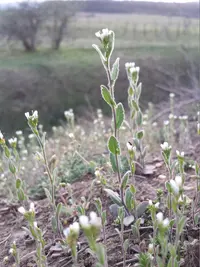
It flowers early in the season, producing small white four-petaled blossoms typical of the mustard family while many other herbaceous species in its habitat are still dormant.

Rosette and stem leaves

The plant forms a basal rosette of spatula-shaped leaves and also has smaller, auriculate (ear-like lobed) leaves along the flowering stems, a trait that helps distinguish it from related Arabis species and supports precise Arabis auriculata plant care identification.

FAQs about Annual Rockcress

This species forms low, spreading mats but is not usually aggressive in typical garden conditions. It can self-seed modestly in open, well-drained soil, but is generally easy to contain with normal edging and occasional thinning.

Grow Healthy Plants with Botan Care

Keep your plants happy and healthy with plant identification, disease detection, and easy care guidance.

Botan plant care app — identify plants on mobile

Explore More Plants