Install sturdy supports
Place metal peony rings or grid supports over emerging shoots in early spring so the stems grow up through the frame and large flowers stay upright and clean off the soil in wind and rain.

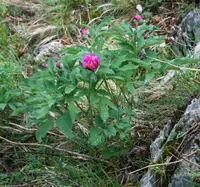
The common peony, Paeonia officinalis, is a long-lived herbaceous perennial grown mainly for its large, showy spring flowers and lush green foliage. Plants form dense clumps that die back to the ground in winter and re-sprout each spring from underground buds.
In nature, P. officinalis occurs in parts of southern and central Europe, often on sunny, well-drained slopes and open woodland edges. It prefers full sun to light shade, moderate moisture, and fertile, well-drained soil.
Mature plants are generally robust and can flower for many years if left undisturbed, but they dislike frequent moving and waterlogged sites. Once established, it is relatively low-maintenance, and understanding how to care for common peony mainly involves choosing an appropriate planting spot and avoiding heavy disturbance.

Care Difficulty
Moderate Care

Light Preference
Full Sun

Water Requirements
Moderate Water

Temperature Preference
Cold Hardy

Hardiness Zone
3–8

Soil Texture
Loamy, Sandy, Clay

Soil pH
Acidic (5.5–6.5), Slightly acidic (6.5–7.0)

Soil Drainage
Well-drained

Fertilization
Minimal (feed rarely)
Scan your plant to receive care tips personalized for your specific plant
Available on iOS and Android
This perennial prefers cool, bright conditions and rewards consistent, strong light with best flowering.
This species prefers evenly moist but not saturated soil, especially during spring growth and flowering.
This hardy perennial thrives in climates with cold winters and moderate summers.
Humidity is not a major factor for Paeonia officinalis in typical outdoor conditions.
Paeonia officinalis grows best in deep, loose, moisture-retentive but well-drained soil.
This species can be grown in large containers but performs better long term in the ground.
Paeonia officinalis benefits from modest, well-timed nutrition rather than frequent feeding.
Pruning Paeonia officinalis focuses on hygiene and supporting strong flowering rather than reshaping the plant.
This species is usually grown in the ground, and transplanting should be rare and carefully planned to avoid setback.
Multiplying Paeonia officinalis is most reliable by division, while seed propagation is slow and mainly for specialists.
This peony is cold hardy and usually needs only basic winter care in most temperate climates.

Plant Health Check
Not sure what's wrong with your plant? Check your plant's health inside the app.
This species is native to dry, sunny meadows and open woodlands of southern and central Europe, which explains its strong preference for full light and well-drained, alkaline to neutral soils in cultivation.
Its flower buds exude sugary nectar-like secretions that attract ants; the insects feed on these exudates and in turn help keep the buds relatively clean of some soft-bodied pests, although they are not required for blooming.
Paeonia officinalis is one of the earliest peonies brought into European gardens, grown in monastery and cottage gardens for centuries and used as a parent in breeding many traditional double garden peonies.

In traditional European folk beliefs, this species was so culturally prominent that its seeds were sometimes strung as protective charms, and the plant was associated with warding off evil or misfortune rather than being valued only for its ornamental display.
Lack of flowers is usually caused by planting too deep, young plants still establishing, or insufficient winter chill. Overfertilizing with high nitrogen, deep shade, or recent division can also delay buds for 1–2 seasons.
Keep your plants happy and healthy with plant identification, disease detection, and easy care guidance.