Panama tree Care (Sterculia apetala)

Panama tree

About Panama tree

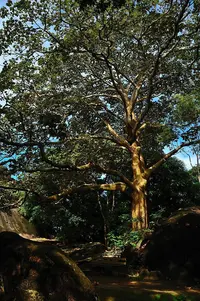
The Panama tree, Sterculia apetala, is a large, fast-growing tropical tree valued for its broad canopy and distinctive, palmate leaves. It forms a straight trunk with a tall, rounded crown, making it an important shade and timber tree in its native range.

This species occurs naturally from Mexico through Central America into northern South America, often in lowland forests and along rivers. It adapts to warm climates, grows best in full sun, and prefers reasonably moist, well-drained soil. For those who want to care for Panama tree, space, warmth, and long-term outdoor conditions are essential considerations.

Main Plant Requirements

Care Difficulty

Moderate Care

Light Preference

Full Sun

Water Requirements

Moderate Water

Temperature Preference

Tropical / Frost Sensitive

Hardiness Zone

10–12

Soil Texture

Sandy, Loamy, Organic-rich

Soil pH

Slightly acidic (6.5–7.0), Neutral (7.0)

Soil Drainage

Moist but well-drained

Fertilization

Minimal (feed rarely)

Get Personalized Care Plan

Scan your plant to receive care tips personalized for your specific plant

Available on iOS and Android

How to Care for the Panama tree

This fast-growing tropical tree needs strong light but benefits from some protection from harsh sun.

  • Provide 6–8 hours of sun daily; full sun is suitable once established, but young trees benefit from light afternoon shade in hot climates.
  • Allow morning sun with filtered or dappled light after midday, especially in areas above 90°F (32°C), to reduce leaf scorch risk.
  • Panama tree tolerates light partial shade, yet prolonged deep shade leads to sparse branching, slow growth, and smaller leaves.

This species prefers evenly moist, well-drained soil and reacts clearly to both drought and excess water.

  • Water when the top 3–5 cm of soil feel dry, applying a slow, deep soak so moisture reaches the main root zone.
  • During hot, dry seasons increase frequency, watching for dull, folding leaves as early drought signs; in cool or rainy periods extend the interval between waterings.
  • Ensure soil drains freely; persistent puddling, sour smell, or yellowing, soft leaves signal overwatering for Sterculia apetala.

This tropical canopy tree thrives in warm, frost-free conditions with only moderate tolerance to temperature extremes.

  • Aim for 70–90°F (21–32°C) for active growth, with best development usually around 75–85°F (24–29°C).
  • Protect from cold; growth slows below 60°F (16°C) and damage occurs near 40°F (4°C), while hard frost can kill young tissue.
  • Mature trees handle short heatwaves up to about 100°F (38°C) if soil moisture is maintained, but extended extreme heat increases stress and leaf drop risk.

Humidity influences leaf health but Sterculia apetala tolerates a moderate range.

  • Aim for 50–70% humidity for best growth, especially on young container plants.
  • Tolerates short periods of 30–40% air humidity but may show crispy leaf edges and slower growth.
  • Raise humidity with a nearby humidifier or grouped plants rather than misting, which offers only brief benefit.

This species prefers deep, well-draining, moderately fertile substrates.

  • Use a loamy, slightly sandy structure with 30–40% organic matter such as compost to balance moisture and drainage.
  • Ensure free drainage by blending coarse sand or fine gravel and avoiding heavy clay that stays waterlogged.
  • Aim for slightly acidic to neutral pH, around 6.0–7.2, to support balanced nutrient availability.
  • For Sterculia apetala in large containers, combine compost, pine bark, and coarse perlite to maintain aeration around the roots.

This species can be grown in containers only while young, due to its eventual large tree size.

  • Use a wide, heavy container to counteract the fast-developing canopy and reduce wind tipping.
  • Select thick-walled terracotta or similar porous material to help prevent prolonged soggy conditions around the root zone.
  • Provide a deep substrate layer so the developing taproot can extend downward without circling tightly near the surface.

Sterculia apetala benefits from light, balanced feeding when grown in managed landscapes or containers.

  • Use a balanced NPK fertilizer or well‑matured compost in spring as growth begins.
  • Apply slow‑release granules or diluted liquid feed at 1/2 strength every 6–8 weeks during the warm growing season.
  • Do not apply fertilizer to dry soil; water first to reduce root burn risk.
  • Reduce or stop fertilizing in late fall and winter when growth slows or stops.

Sterculia apetala responds well to light structural pruning to maintain safe, healthy growth.

  • Carry out main pruning in late winter or very early spring before active growth resumes.
  • Remove dead, diseased, crossing, or storm‑damaged branches first to improve airflow and safety.
  • Thin crowded interior branches to maintain a single strong leader and stable framework.
  • Use clean, sharp bypass pruners or a pruning saw, making smooth cuts just outside the branch collar.

This species is usually grown as a landscape tree, so care focuses on careful transplanting rather than frequent repotting.

  • Transplant young Sterculia apetala trees in late winter or early spring while they are dormant or just starting growth.
  • Look for signs like circling roots in the nursery pot or slowed growth to decide when to shift to a larger container or into the ground.
  • Choose a hole 2–3× the width of the root ball, set the tree at the same soil level, and backfill with native soil, not rich mixes.
  • Water deeply after planting, keep soil evenly moist for the first season, and avoid disturbing roots to reduce transplant shock.

Sterculia apetala is most commonly propagated from seed rather than vegetative methods in home and nursery settings.

  • Collect mature seeds from fully dried pods and sow them fresh for best viability.
  • Pre‑soak seeds in lukewarm water for 12–24 hours, then sow 1–2 cm deep in a free‑draining, sterile mix.
  • Provide warm conditions around 75–85°F, bright indirect light, and consistently moist but not waterlogged substrate.
  • Once seedlings develop several true leaves, pot them individually and gradually increase light and airflow.

In frost‑free or very mild climates, Sterculia apetala needs minimal winter attention but remains tender to hard freezes.

  • In regions with occasional light frost, apply a 5–8 cm mulch layer around the root zone, keeping it away from the trunk.
  • For young trees, wrap the lower trunk with breathable tree wrap to reduce cold and sunscald injury.
  • Move container‑grown plants indoors or into a heated greenhouse when temperatures approach 32°F and ensure bright light inside.

Care Tips

Early trunk training

Stake young trees with a sturdy post on the windward side and use soft, wide ties, adjusting them every 3–4 months so the trunk lignifies straight without constriction.

Root flare protection

Keep the root collar slightly exposed and maintain a mulch-free ring 10–15 cm around the trunk base to reduce risk of rot and improve trunk stability.

Storm readiness pruning

Before storm season, remove dead, rubbing, or steeply upright secondary branches while they are still under 3–4 cm thick to lower limb breakage risk and direct energy into a strong main framework.

Deep root encouragement

In the first 2–3 years, apply water and slow-release nutrients slightly beyond the drip line rather than at the trunk to encourage a broad, deep root system that anchors the tree better.

Seedling bed management

When growing Panama tree from seed, thin crowded seedlings early and undercut or root-prune them lightly at transplant size to promote fibrous roots that establish faster in their final site.

Common Pests and Diseases

Leaf-chewing caterpillars

This pest often attacks young foliage and seedling leaves, leaving irregular holes and sometimes skeletonized leaf blades. Symptoms include rapid defoliation on tender growth, especially during warm, wet periods.

Solution

Hand-pick caterpillars where reachable and prune heavily infested shoots on young trees. For larger trees or repeated damage, use a targeted Bacillus thuringiensis (Bt) spray in the evening, focusing on young foliage, and reduce nearby weeds that host caterpillar larvae.

Wood-boring beetles

These insects tunnel into branches and stems, creating small round exit holes and internal galleries that weaken the wood. Symptoms include dieback of branches, frass (sawdust-like material) around holes, and sometimes branch breakage in wind.

Solution

Prune and destroy affected branches as soon as dieback or exit holes are noticed, cutting back to healthy wood. Improve tree vigor with proper watering and mulching, avoid trunk injuries, and in high-risk areas consider preventive trunk sprays with a systemic insecticide applied by a certified arborist.

Leaf spot fungi

This disease appears as scattered brown to dark purple spots on leaves that may merge into larger necrotic patches. Symptoms include premature yellowing and leaf drop, especially in humid, rainy conditions or in dense plantings with poor airflow.

Solution

Remove and dispose of fallen and heavily spotted leaves to reduce fungal spores, and avoid wetting the foliage when irrigating. Improve air circulation around the canopy, and if defoliation is severe, use a copper-based or chlorothalonil fungicide during wet seasons according to label directions.

Powdery mildew

This disease causes a white to gray powdery coating on the upper leaf surfaces and young shoots. Symptoms include distorted new growth, reduced vigor, and in severe cases partial leaf drop.

Solution

Increase light and airflow around the canopy by thinning congested branches and avoiding overhead watering late in the day. At first signs of infection, apply a sulfur, potassium bicarbonate, or horticultural oil product labeled for powdery mildew and repeat as directed until new growth appears clean.

Scale insects

These insects appear as small, flattened or domed bumps on stems and leaf veins, sucking sap and weakening the tree. Symptoms include sticky honeydew, sooty mold growth on leaves, and general decline of affected branches over time.

Solution

Prune and destroy heavily infested twigs, then wash accessible branches with water and a soft brush to dislodge scales. For persistent infestations, apply a horticultural oil spray during the crawler stage or use a systemic insecticide in soil drench form, following label instructions to protect beneficial insects involved in Sterculia apetala care.

Interesting Facts

Bat-pollinated canopy tree

This large tropical tree often relies on bats as primary pollinators, which visit its night-scented flowers in the upper forest canopy. This bat-tree interaction supports both forest regeneration and bat food resources in its native range from Mexico to South America and the Caribbean.

Spiny seed capsules

The tree produces woody, star-shaped capsules covered in short spines that split open to reveal several seeds. These exposed seeds attract parrots and other wildlife, which help disperse them away from the parent tree.

Host for keystone ants

In parts of Central America, its hollow branches and trunk cavities frequently host colonies of Azteca ants. These ants can defend the tree from some herbivores by aggressively swarming and biting animals that disturb the branches.

Botan icon

Did you know?

In Panama and several neighboring countries, this species is widely planted in reforestation and shade projects because it grows quickly, tolerates disturbed sites, and its deep root system helps stabilize soils in degraded tropical landscapes.

FAQs about Panama tree

This species is generally fast-growing, often adding 60–120 cm in height per year in warm, frost-free climates. Growth slows in containers, poor soil, or cooler regions, so expect more moderate development outside ideal tropical conditions.

Grow Healthy Plants with Botan Care

Keep your plants happy and healthy with plant identification, disease detection, and easy care guidance.

Botan plant care app — identify plants on mobile

Explore More Plants