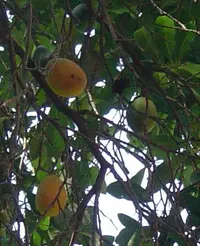
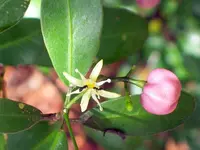
gumball tree Care (Liquidambar styraciflua)

Also known as: American Sweetgum, Alligatorwood, Gumball Tree, redgum, starleaf-gum
gumball tree

About gumball tree

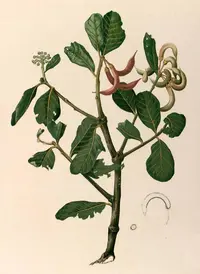
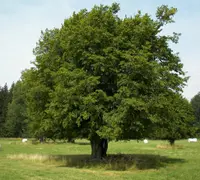
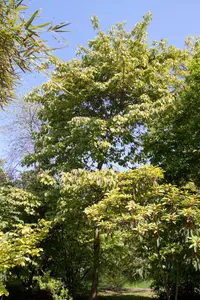
The gumball tree, Liquidambar styraciflua, is a deciduous hardwood tree valued for its strong structure and vivid autumn color. It forms a tall, upright canopy with star-shaped leaves and round, spiky seed pods often called gumballs.

This species is native to the eastern and southern United States, where it commonly grows in woodlands and along streams. It is typically moderate to fast growing and long lived when sited correctly.

Liquidambar styraciflua prefers full sun, consistent moisture, and deep, well-drained soil. Once established, it is relatively low maintenance, which makes it easier to care for gumball tree in parks and larger gardens.

Main Plant Requirements

Care Difficulty

Moderate Care

Light Preference

Full Sun

Water Requirements

Moderate Water

Temperature Preference

Cold Hardy

Hardiness Zone

5–9

Soil Texture

Loamy, Clay, Organic-rich

Soil pH

Acidic (5.5–6.5), Slightly acidic (6.5–7.0)

Soil Drainage

Moist but well-drained

Fertilization

Minimal (feed rarely)

Get Personalized Care Plan

Scan your plant to receive care tips personalized for your specific plant

Available on iOS and Android

How to Care for the gumball tree

Liquidambar styraciflua grows best in full sun but accepts some light shade, especially in hot climates.

  • Aim for 6–8 hours of direct sun daily to support strong growth and vivid autumn color in this gumball tree.
  • Provide full morning sun with light afternoon shade in hotter regions to reduce leaf scorch and stress on young trees.
  • In partial shade (3–5 hours sun), the tree survives but fall color may dull; avoid dense shade, which leads to sparse, weak branching.

This species prefers evenly moist, well-drained soil, especially while establishing.

  • Water when the top 3–5 cm of soil feels dry, applying a slow, deep soak to reach the main rooting zone rather than frequent shallow splashes.
  • In the first 2–3 years, check moisture weekly in dry weather; reduce frequency once established but increase during heatwaves or prolonged drought.
  • Watch for yellowing leaves and soft, soggy soil as signs of overwatering, and crisp, browning leaf edges or premature leaf drop as signs of underwatering.

This deciduous tree is cold-hardy yet appreciates moderate summer temperatures for best growth.

  • Optimal growing temperatures are about 60–80°F (16–27°C) during the active season, with cooler nights improving color and vigor.
  • Mature trees tolerate winter lows near -10°F (-23°C) when fully dormant, but young trees benefit from protection from drying winds and sudden hard freezes.
  • The tree handles brief heat up to about 95°F (35°C) if soil moisture is maintained; prolonged extreme heat or sudden late frosts can damage new spring growth.

This species grows well in average outdoor humidity and usually does not need special humidity management.

This tree prefers deep, evenly moist, well-structured soil to support extensive root growth and stable anchoring.

  • Aim for a loamy soil with moderate clay, sand, and organic matter to hold moisture while still allowing air movement around roots.
  • Ensure drainage is moderate: avoid waterlogged sites but do not plant in very fast-draining, drought-prone sand without added organic material.
  • Keep soil pH slightly acidic to neutral, around 5.5–7.0, which supports nutrient uptake for Liquidambar styraciflua.
  • Improve structure and aeration by mixing in compost and shredded bark, avoiding compacted or heavily disturbed construction fill.

This species can be grown in large containers only for the short to medium term, mainly when young.

  • Choose a very heavy, wide-based pot to reduce tipping risk as the canopy becomes tall and wind-exposed.
  • Use a deep container that allows a strong taproot and lateral roots to develop before the plant is moved to open ground.
  • Select a thick-walled pot material that buffers rapid moisture loss, since large foliage can increase transpiration on hot days.

Liquidambar styraciflua benefits from light, targeted feeding but established trees in fertile soil often need little additional fertilizer.

  • Use a balanced slow-release fertilizer (around 10-10-10 or similar) or a thin layer of compost in early spring for gumball tree.
  • Apply once in spring; in poor soils a second light application in early summer can support growth.
  • Reduce or stop feeding in fall and winter when the tree is dormant.
  • Use fertilizers at half the labeled strength near young or newly planted trees to limit root burn.

Liquidambar styraciflua responds well to modest structural pruning that maintains a strong central leader and balanced canopy.

  • Carry out main pruning in late winter to early spring before bud break to reduce sap bleed and stress.
  • Remove dead, diseased, crossing, or storm-damaged branches first to improve safety and airflow.
  • Thin crowded interior shoots lightly to maintain form, not to drastically reduce height or spread.
  • Use sharp, clean bypass pruners or a pruning saw, making smooth cuts just outside the branch collar.

American sweetgum is usually grown in the ground, so focus on careful transplanting rather than frequent repotting.

  • Plan transplanting for late fall or very early spring while the tree is fully dormant to reduce shock.
  • Look for signs such as roots circling the container, water running off quickly, or slowed growth in nursery stock.
  • Dig a wide planting hole, loosen circling roots gently, and keep the original soil level at the same height.
  • Water thoroughly after planting, then maintain even moisture and a 5–8 cm mulch ring to limit stress and encourage new roots.

Propagation of Liquidambar styraciflua is possible but slower than many ornamental shrubs and is mainly done from seed or semi-ripe cuttings.

  • Collect ripe seeds in fall from mature cones and sow in late winter after 60–90 days of cold stratification at 34–41°F.
  • Use a sterile, well-drained seed mix, keep it just moist, and provide bright, indirect light for germination.
  • Take semi-ripe cuttings in mid to late summer, use rooting hormone, and place in a high-humidity, warm environment around 70–75°F.
  • Allow seedlings and rooted cuttings at least 1–2 growing seasons in containers before planting out to develop strong root systems.

Established Liquidambar styraciflua trees are cold hardy in much of the US and usually need minimal winter care once well rooted.

  • In zones near its hardiness limit, apply a 5–8 cm mulch layer over the root zone, keeping it slightly away from the trunk.
  • Young or newly planted trees benefit from burlap windbreaks in very exposed sites to reduce desiccation.
  • Container-grown specimens should be moved into an unheated but frost-free or slightly sheltered location in winter.

Care Tips

Manage Surface Roots

Plant at least 3–4 in above grade on a broad, gently sloped mound and keep a 60–90 cm turf-free mulch ring to reduce surface root heave, lawn mower damage, and trip hazards as the tree matures.

Plan For Spiky Fruit

Site the tree away from high-traffic lawns, paths, and play areas, and use a thick autumn leaf and bark mulch layer under the canopy to cushion or collect fallen spiky seed pods for easier cleanup.

Stake Only When Needed

If planting in a windy, exposed spot, use 2 low, flexible stakes for the first 1–2 years only, attaching the trunk with soft, loose ties that allow movement so the tree develops a strong, tapered trunk.

Encourage Single Leader

In the first 3–5 years, inspect annually and remove or shorten competing upright stems so the tree keeps one dominant central leader, which greatly improves long-term structure and storm resilience when growing gumball tree.

Protect From Construction

Before any digging, paving, or construction near the tree, mark a no-disturbance zone at least out to the drip line to avoid cutting major roots, and if trenching is unavoidable, keep all excavation at least 1.5–2 m from the trunk and on only one side where possible.

Common Pests and Diseases

Leaf spot

This disease causes small brown, tan, or purple spots on leaves that may merge into larger blotches, leading to premature leaf drop in wet seasons.

Solution

Prune and dispose of heavily spotted leaves and any fallen debris to reduce fungal spores, and improve air circulation by thinning crowded branches. If severe and recurring, apply a labeled ornamental tree fungicide in early spring and repeat as directed, focusing on how to take care of gumball tree in consistently humid climates.

Canker

This disease produces sunken, discolored areas on branches or the trunk, sometimes with oozing sap, leading to dieback of affected limbs.

Solution

Prune out infected branches several inches below visible damage during dry weather, disinfecting tools between cuts with alcohol or a 10% bleach solution. Reduce stress by watering during drought, mulching the root zone, and avoiding trunk wounds, which lowers future infection risk.

Leaf scorch

Symptoms include browning and drying of leaf edges, often with a yellow band between green and dead tissue, especially during hot, dry, or windy weather or in compacted soils.

Solution

Water deeply but infrequently during dry periods, focusing on the root zone out to the drip line, and apply 5–8 cm of mulch to keep soil moisture even. Avoid overfertilizing and improve soil structure where possible to support strong root growth and better drought tolerance.

Aphids

These insects cluster on young leaves and stems, sucking sap and causing distorted growth, sticky honeydew, and sometimes sooty mold on foliage below.

Solution

Spray colonies off with a strong stream of water from a hose, repeating every few days as needed, and encourage natural predators such as lady beetles by avoiding broad-spectrum insecticides. For persistent outbreaks, use a horticultural soap or neem oil spray, coating leaf undersides and new growth thoroughly.

Scale insects

This pest appears as small, immobile, shell-like bumps on twigs and branches that draw sap, weaken the tree, and excrete honeydew that can lead to sooty mold.

Solution

Prune out and discard heavily infested twigs and gently scrub small colonies with a soft brush and soapy water if reachable. For larger trees, use a dormant oil spray in late winter to smother overwintering scale and, if needed, apply a labeled systemic insecticide according to instructions to protect new growth.

Interesting Facts

North American resin source

This species was historically tapped for a fragrant resin called storax, used in varnishes, incense, and as a chewing gum base by Indigenous peoples and early European settlers.

Spiky gumball fruits

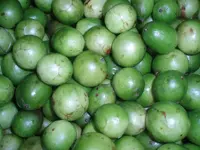
The tree produces hard, woody, spherical seed pods with sharp spines; these persistent “gumballs” can remain under the tree for years and significantly influence its suitability for lawns and high-traffic areas.

Exceptional autumn color

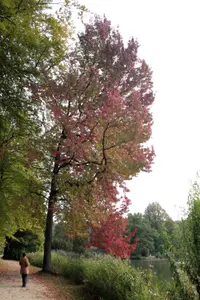
Its leaves can show a mix of yellow, orange, red, and deep purple on the same tree in autumn due to genetic and environmental variation in pigments such as anthocyanins and carotenoids.
Botan icon

Did you know?

Liquidambar styraciflua often forms near-pure stands on poorly drained bottomlands in parts of the southeastern United States, becoming a dominant component in second-growth forests after disturbance such as logging or farming abandonment.

FAQs about gumball tree

This species is moderately fast-growing in youth, often adding 30–60 cm per year under good conditions, then slowing as it matures. Growth speed depends strongly on soil quality, moisture availability, climate suitability, and space for roots.

Grow Healthy Plants with Botan Care

Keep your plants happy and healthy with plant identification, disease detection, and easy care guidance.
Botan plant care app — identify plants on mobile

Explore More Plants