Showcase bark
Remove lower side shoots in late winter over several years to gradually reveal more of the trunk so the decorative bark can develop evenly and stay visible from key viewing points.

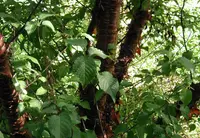
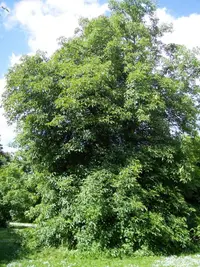
Tibetan cherry, Prunus serrula, is a small to medium ornamental tree valued mainly for its smooth, shiny, peeling bark in rich copper to mahogany tones. It forms a graceful, upright crown with fine branching and narrow, willow-like leaves that create a light, airy canopy.
This species is native to high-altitude regions of western China and Tibet, where it grows in cool, temperate conditions. Once established, it is moderately easy to grow if planted in well-drained soil, with reasonable moisture and good light.
Gardeners who learn how to care for Tibetan Cherry usually choose it as a focal tree for winter interest and attractive bark display.

Care Difficulty
Moderate Care

Light Preference
Full Sun

Water Requirements
Moderate Water

Temperature Preference
Cold Hardy

Hardiness Zone
5–8

Soil Texture
Sandy, Loamy, Clay

Soil pH
Acidic (5.5–6.5), Slightly acidic (6.5–7.0)

Soil Drainage
Moist but well-drained

Fertilization
Minimal (feed rarely)
Scan your plant to receive care tips personalized for your specific plant
Available on iOS and Android
Prunus serrula grows best in open, bright sites with consistent direct sun exposure.
Prunus serrula prefers evenly moist, well-drained soil rather than constant saturation or drought.
This hardy deciduous cherry tolerates a wide temperature range when established in the landscape.
Humidity is rarely a limiting factor for Prunus serrula in typical outdoor conditions.
Prunus serrula prefers moderately fertile, well-structured soil that drains freely yet retains some moisture.
Prunus serrula can be grown in large containers for some years, though it is ultimately a tree best suited to open ground.
This ornamental cherry benefits from light, targeted feeding rather than heavy fertilization.
Prunus serrula responds well to thoughtful pruning that maintains structure and highlights its decorative bark.
This cherry is almost always grown in the ground, so focus on careful transplanting rather than frequent repotting.
Prunus serrula is usually propagated by grafting onto compatible cherry rootstocks, which is best left to experienced growers.
This cherry is generally cold hardy in suitable climates and needs only modest winter care once established.

Plant Health Check
Not sure what's wrong with your plant? Check your plant's health inside the app.
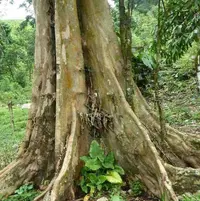
Mature stems develop smooth, polished bark in rich copper to mahogany tones that peel in thin, translucent curls, especially visible in winter. This ornamental bark is one of the main reasons gardeners plant this species as a four-season feature tree.
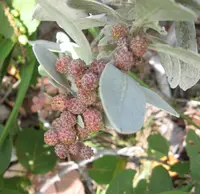
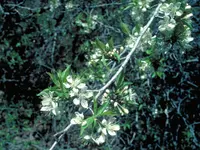
The tree produces small, white, lightly scented blossoms in spring that are less showy than ornamental Japanese cherries but still provide nectar and pollen for early pollinators. These flowers are followed by small fruits that are generally unimportant for human use but can be taken by birds.
This species is native to high-altitude regions of western China, including parts of Tibet, where it grows on mountain slopes and riverbanks. Its natural habitat includes cold winters and relatively dry conditions, which helps explain its tolerance of frost and moderate drought in cultivation.

The bark of this species has been used in traditional East Asian ornamental planting for over a century, and historic specimens in older gardens and arboreta are often valued more for their winter bark display than for their flowers, making it one of the few cherries cultivated primarily as a bark tree.
This species has a moderate growth rate, usually adding about 30–45 cm per year once established. Growth is slower in poor, dry, or compacted soil and in exposed, windy sites, and faster in deep, fertile ground.
Keep your plants happy and healthy with plant identification, disease detection, and easy care guidance.