Dacrydium araucarioides Care

About Dacrydium araucarioides

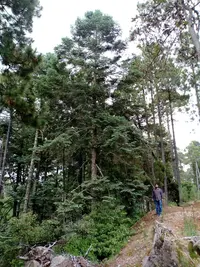
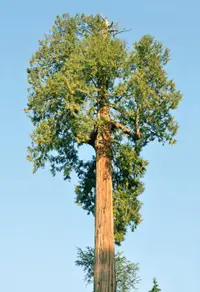
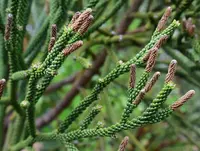
Dacrydium araucarioides is a slow-growing conifer from New Caledonia, valued mainly as a botanical curiosity rather than a common garden or houseplant. It forms a small, often irregular tree with fine, scale-like foliage that gives it a delicate, almost feathery texture.

In nature it grows in humid, nutrient-poor, often ultramafic mountain soils, which makes it quite specialized and not especially easy in ordinary garden conditions. It prefers cool to mild temperatures, consistent moisture without waterlogging, and sharply drained, acidic soil.

Because of its narrow native range and specific habitat needs, care for Dacrydium araucarioides requires attention to drainage, humidity, and protection from extreme heat or drought.

Main Plant Requirements

Care Difficulty

Hard Care

Light Preference

Partial Shade

Water Requirements

Keep Soil Moist

Temperature Preference

Warm Climate

Hardiness Zone

10–11

Soil Texture

Sandy, Loamy, Organic-rich

Soil pH

Strongly acidic (4.5–5.5), Acidic (5.5–6.5)

Soil Drainage

Moist but well-drained

Fertilization

Minimal (feed rarely)

Get Personalized Care Plan

Scan your plant to receive care tips personalized for your specific plant

Available on iOS and Android

How to Care for the Dacrydium araucarioides

This conifer prefers bright, cool conditions that mimic light woodland or forest edges.

  • Provide 3–6 hours of indirect or lightly filtered sun daily, with morning sun and afternoon shade in hotter regions to prevent needle scorch.
  • Plant in a site with dappled shade under taller trees, as Dacrydium araucarioides naturally grows in sheltered, high-light but not exposed positions.
  • In summer, protect from harsh midday sun; in winter, ensure access to as much indirect light as possible, avoiding dense, permanent shade.

Moist, cool, well-drained soil is important for healthy root development in this species.

  • Aim for consistently moist soil; allow the top 2–3 cm to feel slightly dry before deep watering, rather than using a fixed calendar schedule.
  • Use free-draining, slightly acidic soil and avoid waterlogged conditions; yellowing, soft foliage often indicates overwatering and poor drainage.
  • In cooler months reduce frequency as evaporation slows, but do not let the root zone fully dry; browning, crisp needle tips suggest underwatering stress.

Cool to mild conditions suit this plant best, with some tolerance of brief temperature extremes.

  • Optimal growth occurs around 50–68°F (10–20°C), especially in sites with good air movement and protection from hot, drying winds.
  • It generally tolerates short dips to about 28–30°F (-2 to -1°C), but repeated hard frosts below 26°F (-3°C) can damage young foliage and shoots.
  • In warmer areas, prolonged heat above 86°F (30°C) can stress the plant; provide shade, mulch, and consistent soil moisture during hot spells.

This species prefers steady, moderately moist air and reacts if conditions become too dry.

  • Aim for 50–70% humidity, as very dry heated rooms can desiccate fine foliage tips.
  • Watch for browning or crisping of outer foliage and slowed growth as signs of humidity stress.
  • Increase humidity with a nearby pebble tray or grouped plants, but avoid misting that keeps foliage wet for long periods.

This conifer prefers loose, moist, sharply drained soil that stays aerated around the roots.

  • Use a sandy-loam mix with 40–60% mineral content and added fine bark to mimic naturally light, organic-poor forest soils.
  • Ensure rapid drainage by blending roughly 2 parts composted pine bark, 1 part coarse sand, and 1 part perlite or pumice.
  • Keep pH slightly acidic, around 5.5–6.5, since strongly alkaline mixes can limit nutrient uptake and cause chlorosis (leaf yellowing).
  • Avoid compacted, clay-heavy, or waterlogged substrates, which quickly lead to root decline in Dacrydium araucarioides.

This species can be grown in containers, especially when young or in cooler climates.

  • Choose a tall, relatively narrow pot so the deep, fine root system can extend downward without circling tightly near the surface.
  • Select a heavier material such as ceramic or clay to add stability against wind and the plant’s upright, conifer-like form.
  • Elevate the container slightly on feet or pot risers so drainage holes remain clear and excess water exits quickly after rain or irrigation.

This slow-growing conifer benefits from only light, infrequent feeding in cultivation.

  • Use a mild, balanced NPK fertilizer (such as 10-10-10) or a thin layer of well-rotted compost for Dacrydium araucarioides in spring.
  • Feed once at the start of the growing season; avoid multiple applications in the same year.
  • Dilute liquid fertilizer to 25–50% strength to prevent root burn in containers.
  • Stop feeding in late summer so growth hardens before winter and the plant enters dormancy naturally.

This species needs minimal pruning, mainly to maintain health and a natural form.

  • Carry out light pruning in late winter or early spring before active growth starts.
  • Remove dead, diseased, or storm-damaged shoots using clean, sharp bypass pruners or loppers.
  • Thin badly crossing or crowded interior branches to improve light penetration and airflow.
  • Avoid cutting into large, old wood, as this can disfigure the natural habit of Dacrydium araucarioides.

This conifer is usually grown in the ground; transplant carefully due to its sensitive root system.

  • Plan transplanting for cool, moist periods in early spring or early autumn to reduce stress.
  • Look for signs such as roots circling the pot, poor drainage, or slowed growth before moving container-grown plants.
  • Shift up only 1 pot size, keeping the root ball intact, and use a free-draining, slightly acidic mix.
  • Water thoroughly after planting, then keep soil evenly moist and shaded for several weeks while Dacrydium araucarioides re-establishes.

Propagation of this species is slow and technically demanding, mainly done from seed in specialist settings.

  • Collect fresh seed from mature cones and sow in late winter or early spring in a free-draining, acidic medium.
  • Provide cool, consistent temperatures and bright, indirect light to support gradual germination.
  • Keep the medium just moist, never wet, as excess water quickly damages fine roots.
  • Semi-hardwood cuttings are sometimes used but root poorly; use rooting hormone, high humidity, and patience with Dacrydium araucarioides.

This species is moderately cold tolerant but benefits from thoughtful winter management in cooler climates.

  • In-ground plants tolerate light frosts but may suffer below the hardiness range of your local seed source.
  • Apply a 5–8 cm layer of mulch around the root zone in late autumn, keeping it off the trunk.
  • Shelter young or exposed plants from harsh wind that can dry foliage in freezing conditions.
  • Move container-grown Dacrydium araucarioides into a cool, bright, frost-free space when hard freezes are expected.

Care Tips

Sheltered site selection

Plant in a spot protected from prevailing winds and strong salt-laden breezes, using fences or taller shrubs as windbreaks to prevent branch dieback and uneven, wind-burned growth when growing Dacrydium araucarioides.

Mulch for root stability

Maintain a 5–8 cm layer of inert mulch such as pine bark or composted wood chips over the root zone, keeping it a few cm away from the trunk to moderate soil temperature, protect fine feeder roots, and reduce surface compaction.

Gentle structural training

In the first years, check the central leader and remove or shorten competing upright shoots during late winter so the plant maintains a single, strong trunk and a balanced, conical crown.

Avoid soil disturbance

Keep foot traffic and digging away from the drip line, and do not cultivate or rake deeply under the canopy, as the shallow fibrous roots are easily damaged and this stress can slow growth for several seasons.

Careful container transition

If grown in a pot before planting out, step up only 1–2 pot sizes at a time and tease out circling roots gently, which reduces transplant shock and encourages the roots to grow outward into surrounding soil rather than girdling the trunk.

Common Pests and Diseases

Scale insects

This pest feeds on stems and foliage, causing yellowing, slowed growth, and sticky honeydew on nearby surfaces.

Solution

Prune and discard heavily infested twigs, then wipe remaining stems with cotton pads dipped in isopropyl alcohol or a mild insecticidal soap solution; repeat every 7–10 days until no new scales appear and maintain good light and air movement to keep populations low.

Spider mites

These insects thrive in warm, dry conditions and cause fine stippling, bronzing, and eventual thinning of the foliage, often with fine webbing between leaves and branchlets.

Solution

Rinse foliage thoroughly with a firm but gentle stream of water, increase ambient humidity, and use insecticidal soap or horticultural oil on both upper and lower leaf surfaces, repeating treatments weekly until new growth appears clean as part of broader Dacrydium araucarioides care instructions.

Needle blight

This disease causes browning and premature drop of the fine scale-like leaves, often progressing from the inner branches outward.

Solution

Remove and discard affected shoots, avoid overhead watering, and improve spacing and airflow around the plant; in persistent or severe cases, apply a suitable fungicide labeled for conifer needle blights, following label directions carefully.

Phytophthora collar rot

This disease attacks the root collar and lower stem in poorly drained or chronically wet soils, leading to wilting, dull foliage, and eventual dieback despite moist substrate.

Solution

Improve drainage immediately, reduce watering, and avoid water pooling around the base; remove and destroy severely affected plants and, if replanting in the same site, raise the planting area and use only well-drained, pathogen-free substrate and containers.

Interesting Facts

New Caledonia specialist

This species is endemic to New Caledonia, where it occurs only on the ultramafic massifs of the southern part of the main island, making its natural range very restricted and geographically fragmented.

Ultramafic soil tolerance

It grows naturally on ultramafic substrates that are rich in heavy metals like nickel and magnesium and poor in essential nutrients, a harsh soil environment that many other tree species cannot tolerate.

Subalpine shrub habit

Unlike many conifers that form tall trees, this species often forms low, shrubby or small tree growth in high-elevation shrublands and maquis vegetation, shaped by wind exposure and nutrient-poor conditions.

Botan icon

Did you know?

Dacrydium araucarioides is assessed as Near Threatened on the IUCN Red List because of its limited distribution on New Caledonia’s ultramafic massifs and ongoing habitat disturbance, which together increase its risk of future decline.

FAQs about Dacrydium araucarioides

This conifer grows slowly, typically adding only a few cm per year under garden conditions. Growth is faster in mild, consistently moist, frost-free climates and slows in containers, exposed sites, or where soil dries or compacts regularly.

Grow Healthy Plants with Botan Care

Keep your plants happy and healthy with plant identification, disease detection, and easy care guidance.

Botan plant care app — identify plants on mobile

Explore More Plants