Formative branching
In the first 3–4 years, pinch or lightly tip-prune young shoots in spring to encourage low, dense branching rather than a tall, bare trunk, which makes future structural pruning easier and safer.

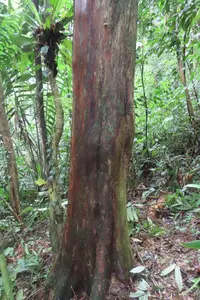
British Honduras yellowwood (Podocarpus guatemalensis) is an evergreen conifer often grown as a small tree, hedge, or large container plant. It keeps its foliage year-round and can be shaped easily. Leaves are narrow, glossy, and dark green, giving a neat, formal look that suits both gardens and patios.
This species is native to Central America, where it grows in warm, humid forests. It is generally considered a durable, long-lived plant with moderate growth. Once established, it tolerates pruning and brief dry periods but dislikes waterlogged soil. Understanding how to care for British Honduras yellowwood starts with providing steady light, well-drained soil, and protection from hard frost.

Care Difficulty
Moderate Care

Light Preference
Partial Sun

Water Requirements
Moderate Water

Temperature Preference
Tropical / Frost Sensitive

Hardiness Zone
10–12

Soil Texture
Sandy, Loamy, Organic-rich

Soil pH
Acidic (5.5–6.5), Slightly acidic (6.5–7.0)

Soil Drainage
Moist but well-drained

Fertilization
Minimal (feed rarely)
Scan your plant to receive care tips personalized for your specific plant
Available on iOS and Android
Podocarpus guatemalensis prefers bright light with some protection from harsh afternoon sun.
This species prefers evenly moist but never waterlogged soil.
This species grows best in mild, frost-free climates with warm summers.
This species handles typical indoor humidity but benefits from slightly moist air.
This species prefers a loose, well-drained, slightly acidic to neutral mix.
This species is well suited to container growing outdoors or in bright sheltered spaces.
Podocarpus guatemalensis benefits from light, steady feeding but tolerates lean soil once established.
Podocarpus guatemalensis responds well to controlled pruning that maintains structure and size.
Container-grown plants and young landscape specimens benefit from careful transplanting to support stable growth.
This species is most commonly propagated from semi-hardwood cuttings under warm, humid conditions.
This warm-climate species is only mildly frost tolerant and needs protection in regions with freezing winters.

Plant Health Check
Not sure what's wrong with your plant? Check your plant's health inside the app.
This species is naturally distributed from southern Mexico through Guatemala to Honduras and Nicaragua, where it grows in warm, humid lowland and foothill forests, often below 1,000 m, unlike many podocarps that prefer cooler montane sites.
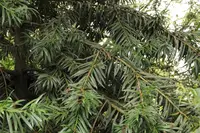
Its leaves are unusually narrow and linear for the genus, typically only a few millimeters wide, giving the crown a fine-textured, almost feathery appearance compared with broader-leaved relatives.
Like other podocarps, it does not form typical woody cones; instead it produces small seeds on fleshy, berry-like structures that are adapted for dispersal by birds in its native forests.

Podocarpus guatemalensis belongs to one of the most ancient lineages of conifers, the Podocarpaceae, which has a fossil record dating back to the Mesozoic era, so this species represents a modern member of a group that coexisted with dinosaurs.
Growth is moderate. In suitable outdoor conditions it typically adds 20–40 cm per year, sometimes more when young. Container plants grow more slowly. Rate depends on warmth, light, regular moisture, and balanced nutrition.
Keep your plants happy and healthy with plant identification, disease detection, and easy care guidance.

_(49532732922)-2-200x133.webp)