Giant spear lily Care (Doryanthes palmeri)

Giant spear lily

About Giant spear lily

Giant spear lily (Doryanthes palmeri) is a large, long-lived rosette-forming perennial native to subtropical coastal slopes of eastern Australia. It belongs to a small genus closely related to agaves and other architectural plants.

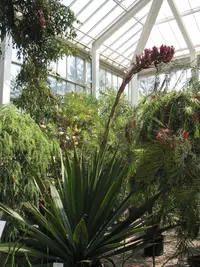
The plant forms massive sword-like leaves and, in maturity, sends up a tall flower spike with many red to reddish-orange blooms that attract birds. It grows slowly and takes many years to flower, which is the main factor that makes it less suitable for impatient gardeners.

In mild, frost-free climates it suits large gardens or landscapes, while in cooler regions it is best treated as a specimen in protected spots. Understanding how to care for Giant spear lily focuses mainly on providing bright light, good drainage, and consistent moisture without waterlogging.

Main Plant Requirements

Care Difficulty

Moderate Care

Light Preference

Full Sun

Water Requirements

Regular Water

Temperature Preference

Warm Climate

Hardiness Zone

9–11

Soil Texture

Loamy, Sandy, Organic-rich

Soil pH

Slightly acidic (6.5–7.0), Neutral (7.0)

Soil Drainage

Moist but well-drained

Fertilization

Minimal (feed rarely)

Get Personalized Care Plan

Scan your plant to receive care tips personalized for your specific plant

Available on iOS and Android

How to Care for the Giant spear lily

This sun-loving Australian perennial forms its strongest flower spikes when given ample direct light.

  • Provide 6–8 hours of direct sun daily, ideally with morning sun and light afternoon shade in hotter inland areas to reduce leaf scorch.
  • Tolerates bright, open partial shade, but flowering of Giant spear lily may be reduced and flower spikes shorter when daily sun falls below about 4 hours.
  • Avoid deep shade, which leads to lax, leaning growth and poor bloom, and monitor reflected heat from walls or paving that can overheat foliage in summer.

This large rosette plant prefers steadily moist but not waterlogged soil, especially during active growth.

  • Allow the top 3–5 cm of soil around Doryanthes palmeri to dry slightly, then soak the root zone deeply so water penetrates 20–30 cm, rather than giving light, frequent splashes.
  • In summer or in sandy, fast-draining soil, expect to water more often; in cooler months or heavier clay, extend intervals once growth slows and rainfall increases.
  • Watch for overwatering signs such as yellowing, soft leaf bases and a sour soil smell, and underwatering signs such as rolled, browning leaf tips and slow, stunted new growth.

This species grows best in mild, frost-free climates with warm summers and gentle winters.

  • Ideal growth occurs around 65–80°F (18–27°C), with consistent warmth encouraging faster leaf expansion and earlier flower spike development over several years.
  • The plant tolerates brief drops to about 28–30°F (-2 to -1°C) but foliage may be damaged; repeated frosts or freezes below 28°F (-2°C) can kill crowns, especially in poorly drained soil.
  • Handles dry heat up to 95°F (35°C) if soil moisture is adequate; during hot, windy periods, mulch the root zone and avoid planting in narrow heat-trapping courtyards.

This species handles a wide humidity range and usually does not need special humidity management outdoors.

  • Target 40–60% humidity; brief dips lower are tolerated if soil moisture is kept consistent.
  • Leaves remain firm and green in typical outdoor air; prolonged hot, very dry wind may brown tips and edges.
  • If humidity stress appears, shelter plants from drying wind and apply a thick mulch layer to stabilize root moisture.

Doryanthes palmeri prefers deep, well-drained, moisture-retentive soil that mimics rich, sloping forest or hillside conditions.

  • Use a mix based on loam with 30–40% coarse sand and fine gravel, plus 20–30% compost to hold moisture without staying waterlogged.
  • Aim for slightly acidic to neutral pH around 6.0–7.0, avoiding strongly alkaline substrates that can limit nutrient uptake.
  • Improve aeration by blending in chunky materials such as fine pine bark or scoria so dense particles do not compact around the fleshy roots.
  • Avoid heavy clay, low spots, or potting mixes with high peat content that stay wet for long periods, as this increases rot risk.

This species can be grown in large, sturdy containers when in-ground planting is not possible.

  • Choose a deep, heavy pot (for example concrete or thick terracotta) to counterbalance the tall, eventually top-heavy rosette and flowering stem.
  • Select a container at least 45–60 cm wide so the fibrous root system can spread and anchor the plant securely.
  • Elevate the pot slightly on feet or bricks so drainage holes stay clear and runoff moves away quickly after heavy watering or rain.

Doryanthes palmeri grows slowly and needs only modest, steady nutrition in cultivation.

  • Use a balanced slow-release fertilizer (around 10-10-10) or well-rotted compost mixed into the topsoil in spring.
  • Feed once at the start of the warm growing season; in poor soils, a light second application in midsummer is acceptable.
  • Apply at half the label rate for ornamentals to avoid soft, weak growth and salt buildup.
  • During cooler months and reduced growth, especially in winter, withhold additional feeding for this Giant spear lily.

Pruning needs for Doryanthes palmeri are low and focus on cleanliness rather than shaping.

  • Best time for any pruning is late winter to early spring, before strong new growth starts.
  • Remove dead, damaged, or diseased leaves at the base using clean, sharp bypass pruners or a knife.
  • Cut spent flower stalks back to the base once they dry, which tidies the clump but does not trigger new flowering.
  • Avoid heavy cutting into healthy green leaves, as this species forms its natural shape with minimal intervention.

This species is usually grown in the ground, and transplanting should be infrequent and deliberate.

  • Move plants in late winter to early spring, when growth is slower and temperatures are mild.
  • Look for signs such as roots circling a pot, distortion of containers, or noticeably slowed growth in good conditions.
  • If container-grown, shift up only 1 pot size every several years, using a deep, free-draining mix to accommodate the long root system.
  • Reduce root stress by watering thoroughly before and after moving, handling the root ball gently, and shading the plant for 1–2 weeks while it re-establishes.

Propagation of Doryanthes palmeri is slow and typically done from seed under controlled conditions.

  • Sow fresh seeds in late winter or early spring in a deep tray with a free-draining, sandy mix.
  • Provide gentle bottom warmth around 70–75°F and bright, indirect light to encourage even germination.
  • Keep the medium just moist, never waterlogged; germination may take many weeks or longer.
  • Transplant seedlings only once they have several strong leaves, disturbing roots as little as possible.

Doryanthes palmeri is best suited to mild, frost-free climates and needs protection in colder regions.

  • In ground, add a 5–8 cm layer of coarse mulch around the root zone in late fall, keeping it away from the crown.
  • In areas with light frost, cover the crown with breathable frost cloth on the coldest nights.
  • Container plants in regions below 30°F should be moved into a bright, cool, frost-free space until temperatures stabilize.

Care Tips

Stabilize Heavy Foliage

Install a sturdy stake or discreet low barrier on the windward side before the rosette becomes very large to prevent leaf breakage and root rock in exposed sites.

Space For Flowering

Allow at least 1.5–2 m of clear space around the rosette so the future flower spike can emerge and arch without hitting structures, sharp edges, or other plants that could damage the stem.

Mulch For Root Protection

Maintain a 5–8 cm deep ring of coarse organic mulch around but not touching the crown to keep shallow roots cool, reduce soil moisture swings, and protect against mechanical damage from tools or foot traffic.

Monitor Spike Development

Once the flower spike starts to form, inspect it monthly for mealybugs or scale insects and wash pests off with a firm water jet before they shelter between buds, which simplifies caring for Giant spear lily during the long flowering period.

Container Weight Management

If grown in a large container, use a broad, heavy pot or add weight at the base and place it on a wheeled dolly so the plant remains stable as the tall flower spike develops and can still be moved for site adjustments or protection.

Common Pests and Diseases

Slugs and snails

These pests chew large, irregular holes in the soft leaf bases and young shoots, often leaving slime trails on or around the plant. Damage is usually heaviest on plants growing in damp, shaded positions or in thick mulch.

Solution

Hand-pick slugs and snails in the evening, use physical barriers such as copper tape or rough mulch, and reduce dense, moist hiding spots around the clump. In high-pressure areas, place beer traps or pet-safe slug baits outside the main crown to protect emerging leaves and flower spikes.

Scale insects

These insects attach to the leaf bases and lower leaf surfaces, appearing as small, dome-shaped bumps and sometimes causing sticky honeydew and sooty mold. Infestations can weaken clumps over time and reduce flowering.

Solution

Wipe affected areas with a cloth or cotton pad dipped in diluted insecticidal soap or horticultural oil, repeating every 7–10 days until new growth is clean. For dense clumps, prune away heavily infested leaves and improve light and airflow around the base so predators and treatments reach the insects more easily.

Mealybugs

This pest forms white, cottony clusters in protected leaf axils and tight folds near the base of the plant. Symptoms include sticky honeydew, black sooty mold, and slowed growth on younger plants or container specimens.

Solution

Direct a firm jet of water into leaf bases to dislodge colonies, then spot-treat remaining insects with isopropyl alcohol on a cotton swab or with insecticidal soap. Inspect regularly and remove heavily infested leaves to prevent reinfestation, especially in Giant spear lily indoor care situations where natural predators are limited.

Leaf spot

This disease causes small brown to dark purple spots on older leaves that may expand and merge, leading to patches of dead tissue along the leaf blades. Symptoms include faster decline of older foliage in very humid or poorly ventilated conditions.

Solution

Remove and discard affected leaves, keeping the dense rosette as open as possible, and avoid overhead watering that keeps foliage wet for long periods. In persistently humid climates, apply a copper-based or broad-spectrum fungicide labeled for ornamental foliage plants and maintain good spacing and airflow around the clump.

Interesting Facts

Massive flower spikes

This species can produce arching flower spikes up to several meters long, bearing hundreds of tubular red flowers that open progressively along the stem and can be visible for many months in mild climates.

Fire-associated germination

In its native range in eastern Australia, seed germination is promoted by disturbance such as fire, an adaptation typical of fire-prone ecosystems where heat or smoke cues signal an open, nutrient-rich site.

Slow to first bloom

Plants grown from seed can take many years to reach flowering size, reflecting the species’ strategy of investing heavily in a large rosette of tough leaves and underground storage before allocating resources to its huge inflorescence.

Botan icon

Did you know?

The species is endemic to a relatively small part of coastal and subcoastal eastern Australia, where it often grows on steep, rocky slopes and cliffs, and its long, strap-like leaves and sprawling flower spikes have evolved to withstand high winds and exposure in these rugged habitats.

FAQs about Giant spear lily

Lack of flowering often comes from the plant being too young, crowded roots, or insufficient light and nutrients. This species usually needs many years of stable conditions and a mature, well-established clump before sending up a flower spike.

Grow Healthy Plants with Botan Care

Keep your plants happy and healthy with plant identification, disease detection, and easy care guidance.

Botan plant care app — identify plants on mobile

Explore More Plants