milk-white brittlegill Care (Russula delica)

Also known as: common russula
milk-white brittlegill

About milk-white brittlegill

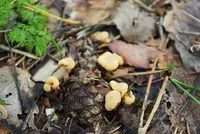
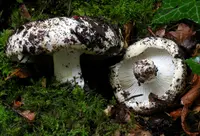
The milk-white brittlegill, Russula delica, is a stout, ground-dwelling mushroom rather than a leafy plant. It forms thick, pale to creamy caps with crowded, brittle gills underneath.

This fungus commonly grows in woodlands, especially under broadleaf and conifer trees, often appearing in groups or arcs. It lives in symbiosis with tree roots, which makes it difficult to cultivate indoors or in ordinary garden beds.

Its solid, compact fruiting bodies and mycorrhizal life cycle mean that attempts to care for milk-white brittlegill are usually limited to protecting existing woodland habitats rather than growing it like a houseplant.

Main Plant Requirements

Care Difficulty

Hard Care

Light Preference

Shade

Water Requirements

Keep Soil Moist

Temperature Preference

Cool Climate

Hardiness Zone

Unknown

Soil Texture

Loamy, Silty, Organic-rich

Soil pH

Acidic (5.5–6.5)

Soil Drainage

Moist but well-drained

Fertilization

Minimal (feed rarely)

Get Personalized Care Plan

Scan your plant to receive care tips personalized for your specific plant

Available on iOS and Android

How to Care for the milk-white brittlegill

This fungus thrives in bright woodland settings with indirect or filtered light rather than direct, open sun.

  • Provide dappled or filtered light for 3–6 hours per day under trees or shrubs, avoiding exposed, treeless sites.
  • Milk-white brittlegill tolerates partial to deep shade, especially in summer, but fruiting is often better where some morning sun reaches the forest floor.
  • Avoid strong midday and afternoon sun, which can dry the substrate and inhibit fruiting; slight seasonal canopy thinning in autumn usually improves light levels naturally.

Russula delica depends on consistently moist, but not waterlogged, soil in its woodland habitat.

  • Aim for evenly moist mineral or humus-rich soil; the top 2–5 cm should feel damp, not soggy or cracked.
  • In dry periods, especially mid-summer, supplement rainfall whenever leaf litter feels dry and brittle, focusing on slow soaking rather than frequent light sprinkling.
  • Reduce supplemental water in cool, wet seasons to avoid standing water, sour smells, or slimy mycelial patches, which indicate poor drainage and possible overwatering stress for Russula delica.

This ectomycorrhizal fungus prefers cool to mild conditions typical of temperate woodlands.

  • Optimal fruiting occurs around 50–68°F (10–20°C), often in late summer to autumn when soil and air temperatures drop from peak summer heat.
  • Growth and mycelial activity can persist down to about 40°F (4°C), but repeated hard frosts below 28°F (-2°C) can damage fruiting bodies.
  • Heat above 77–82°F (25–28°C), combined with dry soil, reduces fruiting and can desiccate caps, so canopy shade and leaf litter are important buffers in hot periods.

This ectomycorrhizal fungus fruits best in consistently moist air but does not require controlled high humidity.

  • Aim for 60–80% humidity in the fruiting area, as milk-white brittlegill caps dry and crack quickly in low humidity.
  • Watch for pale, brittle caps and shrinking gills as signs that air is too dry during development.
  • Increase humidity locally with damp leaf litter, moist sphagnum around the fruiting zone, or gentle misting that avoids soaking caps.

Russula delica associates with tree roots and needs a loose, well-aerated, mineral soil layer rather than a dense potting substrate.

  • Use a mix mimicking forest mineral soil: 50–60% sandy loam, 20–30% leaf mold or compost, and 10–20% coarse material such as grit or fine bark.
  • Maintain pH near neutral to slightly acidic (pH 5.5–6.8) to support both host tree roots and fungal mycelium.
  • Ensure drainage is fast enough that free water does not stand, but retain some moisture with organic matter that stays lightly damp.
  • Avoid compacted, heavily fertilized, or peat-only mixes, which reduce oxygen around fine roots and inhibit mycorrhizal colonization.

This species is not well suited to conventional container growing because it relies on stable ectomycorrhizal relationships with tree roots in the ground.

This mycorrhizal fungus gains most nutrients through tree-root partnerships, so direct fertilization of Russula delica is usually unnecessary.

Pruning is not applicable to Russula delica, as it is a wild ectomycorrhizal fungus rather than a typical garden plant.

Transplanting this ectomycorrhizal mushroom is rarely successful because it depends on specific tree-root associations in stable woodland soil.

  • Avoid lifting or disturbing established patches; the fine fungal network in the soil is easily damaged and does not re-establish well.
  • If moving leaf litter or soil, keep the original orientation and moisture level to reduce stress on hidden mycelium.
  • Maintain host trees and soil structure instead of attempting to repot; long-term stability favors continued fruiting.
  • Limit disturbance from digging, compaction, or heavy raking so the underground mycelial mat remains intact.

Propagation of Russula delica is indirect and relies on spore dispersal and compatible host trees rather than controlled gardening techniques.

No special winter care is needed, as this woodland fungus is naturally cold hardy in climates where it occurs.

Care Tips

Spore-friendly setup

Leave mature, healthy caps in place for a few days to release spores, then gently disturb the surrounding leaf litter to help distribute them and encourage future fruiting in the same area.

Protect mycelium zone

Mark the productive patch boundary and avoid heavy foot traffic, raking, or deep digging there so the underground mycelium network stays intact and continues to fruit for many seasons.

Leaf litter management

Maintain a light, loose layer of hardwood leaf litter over the fruiting area, topping up each autumn to conserve moisture, buffer temperature, and provide a stable microhabitat for the fungus.

Careful harvesting technique

When collecting mushrooms, twist and lift gently at the base or cut with a clean knife, then backfill the small hole with surrounding soil or litter to reduce mycelium exposure and drying.

Seasonal moisture checks

In extended dry periods during the normal fruiting season, check the upper 3–5 cm of soil in the patch and, if very dry, apply a single deep, gentle watering in the evening to support growing milk-white brittlegill without waterlogging the site.

Common Pests and Diseases

Mycophagous springtails

These insects feed on developing fruiting bodies and mycelium in very damp substrates, leaving pitted or uneven caps and distorted margins. Symptoms include small surface gouges and irregular erosion on young basidiocarps.

Solution

Reduce excessive surface moisture by improving drainage and ventilation around the fruiting area, and avoid constant waterlogging of the casing or forest floor microhabitat. For cultivation settings, use fine mesh or sticky barriers around trays, and lightly disturb or scrape the top layer of substrate to break springtail concentrations while keeping the deeper mycelium intact.

Fungus gnat larvae

This pest damages the mycelial mat and primordia (baby fruiting bodies), leading to aborted or misshapen mushrooms and a decline in flush size. This pest is often seen where organic substrate is kept continuously wet and poorly ventilated.

Solution

Allow the top layer of substrate to dry slightly between waterings, and remove decaying plant debris that attracts adults. In controlled cultivation, use yellow sticky traps for flying gnats, cover vents and openings with fine mesh, and apply a Bacillus thuringiensis israelensis (BTI) product to the substrate according to label directions to target larvae without harming the fungus.

Slugs and snails

These mollusks rasp away at caps and gills, leaving large irregular holes, slime trails, and sometimes entirely consumed young mushrooms. This pest is common in moist woodland habitats and shaded outdoor cultivation beds.

Solution

Hand-pick slugs and snails during damp evenings or early mornings, and remove nearby cover such as boards, dense leaf piles, and pots where they hide. Create physical barriers around beds using copper tape, coarse sand, or sharp grit, and if needed place iron phosphate slug baits outside the main fruiting zone, following label instructions to reduce non-target impact.

Parasitic Hypomyces infection

This disease is caused by parasitic fungi such as Hypomyces species that colonize Russula fruiting bodies, leading to distorted, chalky, or felt-like white growth over the cap and gills. Symptoms include loss of normal gill structure, tough texture, and eventual decay of the basidiocarp.

Solution

Promptly remove and discard all infected mushrooms and adjacent visibly colonized substrate to reduce spore load near healthy mycelium. Improve air movement and avoid persistent surface wetness on fruiting bodies, and where cultivating, rotate fruiting sites outdoors or rest heavily affected beds to interrupt the disease cycle, instead of continuing growing milk-white brittlegill in the same small area every season.

Interesting Facts

Milk-white fruiting bodies

This species produces large, thick, white to cream caps that often become stained ochre or rusty from soil and leaf litter, a key feature that helps distinguish it from other pale Russula species in the field.

Partially buried growth

The fruiting bodies typically emerge deep in leaf litter or partially buried in soil, so only the rim of the cap may be visible at first, giving the appearance of a mushroom pushing up from underground.

Dry, brittle texture

The cap and gills are distinctly dry and brittle when fresh rather than slimy, and the gills are crowded and often forked, features used by mycologists to separate this species from superficially similar white mushrooms.

Botan icon

Did you know?

Russula delica forms ectomycorrhizal associations with a wide range of broadleaf and conifer trees, exchanging mineral nutrients from the soil for sugars from the host and playing a significant role in forest nutrient cycling across its native range.

FAQs about milk-white brittlegill

This mushroom is considered conditionally edible but often rated low quality due to its very firm, sometimes tough flesh and mild to slightly acrid taste. It must always be thoroughly cooked and never eaten raw.

Grow Healthy Plants with Botan Care

Keep your plants happy and healthy with plant identification, disease detection, and easy care guidance.

Botan plant care app — identify plants on mobile

Explore More Plants