


Use deep containers
If grown in pots, use a tall, deep container (at least 30–40 cm) to allow strong taproot development and reduce stress from frequent repotting.

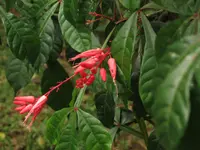
Quassia wood comes from Quassia amara, a small tropical tree or shrub known for its very bitter bark and wood. It is native to northern South America and parts of the Caribbean, where it grows in warm, humid forests.
The plant typically has smooth gray bark, glossy green leaves, and clusters of red flowers that develop into small fruits. Its bitterness is due to quassinoids, natural compounds that can deter pests.
In cultivation, Quassia amara prefers warm temperatures, bright filtered light, and consistently moist but well-drained soil. These specific climate and moisture needs make care for quassia wood more challenging outside tropical or greenhouse conditions.

Care Difficulty
Moderate Care

Light Preference
Partial Shade

Water Requirements
Regular Water

Temperature Preference
Tropical / Frost Sensitive

Hardiness Zone
11–12

Soil Texture
Loamy, Sandy, Organic-rich

Soil pH
Acidic (5.5–6.5), Slightly acidic (6.5–7.0)

Soil Drainage
Moist but well-drained

Fertilization
Minimal (feed rarely)
Scan your plant to receive care tips personalized for your specific plant
Available on iOS and Android
Quassia amara is a tropical shrub that performs best with consistent bright light and protection from harsh extremes.
Quassia amara prefers evenly moist, well-drained soil and reacts poorly to both prolonged drought and waterlogging.
Stable warm conditions are important for strong growth and flowering in this tropical species.
This species prefers moderately humid air and reacts to very dry indoor conditions.
Quassia amara grows best in moist, freely draining, organic-rich soil that does not compact.
This species can adapt to container growing when given a stable, well-drained setup.
Quassia amara benefits from light, balanced feeding but grows acceptably in lean soils, similar to wild quassia wood stands.
Quassia amara responds well to light structural pruning that maintains a healthy, open canopy.
Young Quassia amara plants can be transplanted or shifted to larger containers when root congestion starts to limit growth.
Quassia amara is usually propagated from seeds or semi-hardwood cuttings under warm, controlled conditions.
Quassia amara is a tropical species and needs protection in climates with cool or frosty winters.

Plant Health Check
Not sure what's wrong with your plant? Check your plant's health inside the app.
The wood and bark of this shrub contain quassin and related quassinoids, among the most intensely bitter natural compounds known, used as standard bitter references in sensory research.
Extracts from the wood are used as a botanical insecticide against sap-sucking pests, while in its native range some insect species have adapted to tolerate or avoid these same defensive chemicals.
This species naturally grows as a small tree or shrub in the shaded understory of lowland tropical forests from Central to northern South America, favoring warm, humid habitats near forest edges and clearings.

The plant is named after the enslaved Surinamese healer Graman Quassi (also spelled Kwasi), whose knowledge of the bark’s properties in the 18th century led European botanists to describe and honor the species with his name.
Propagation is usually done from fresh seed, which loses viability quickly if it dries out. Use a warm, consistently moist seedbed, good light, and patience; germination can be slow and irregular over several weeks or months.
Keep your plants happy and healthy with plant identification, disease detection, and easy care guidance.

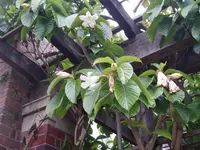
Easter lily vine
Beaumontia grandiflora
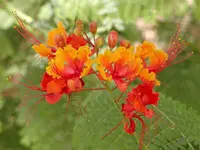
Mexican bird of paradise
Caesalpinia pulcherrima
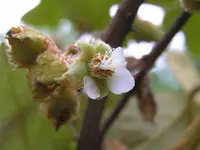
Rusty-haired Raspberry
Rubus reflexus
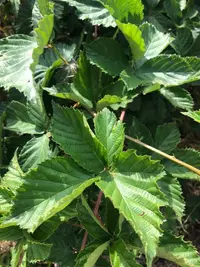
red-stemmed bramble
Rubus divaricatus
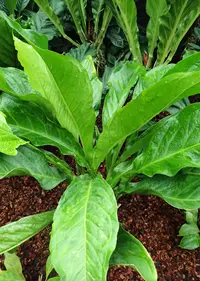
Anthurium salvinii
Anthurium salvinii
Aphelandra chamissoniana
Aphelandra chamissoniana
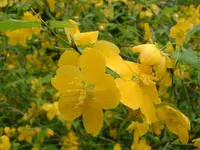
Japanese rose
Kerria japonica
Maxillaria lutescens
Maxillaria lutescens