viper's bugloss Care (Echium vulgare)

Also known as: common viper's bugloss, blueweed, Blue echium
viper's bugloss

About viper's bugloss

Viper's bugloss (Echium vulgare) is a hardy biennial or short-lived perennial often found in dry grasslands, roadsides, and coastal areas. It forms a low rosette in its first year, then sends up tall, bristly flowering stems in the second.

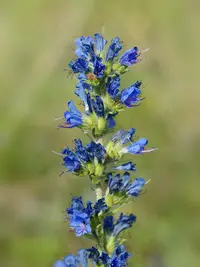
The plant carries dense spikes of blue to violet funnel-shaped flowers that attract bees and other pollinators. Stems and leaves are rough and hairy, which helps the plant cope with wind and drought.

It thrives in full sun, well-drained, often poor soils, and tolerates dry conditions once established. These traits make it relatively easy to grow for gardeners who want to learn how to care for viper's bugloss in low-maintenance, sunny spots.

Main Plant Requirements

Care Difficulty

Easy Care

Light Preference

Full Sun

Water Requirements

Low Water

Temperature Preference

Cold Hardy

Hardiness Zone

3–8

Soil Texture

Sandy, Loamy, Rocky

Soil pH

Slightly acidic (6.5–7.0), Slightly alkaline (7.0–7.5)

Soil Drainage

Well-drained

Fertilization

Minimal (feed rarely)

Get Personalized Care Plan

Scan your plant to receive care tips personalized for your specific plant

Available on iOS and Android

How to Care for the viper's bugloss

Echium vulgare thrives in strong, direct light similar to open meadows and roadsides.

  • Provide full sun for 6–8 hours daily; flowering and compact growth are best in unobstructed exposure.
  • Plant in a spot with morning to mid-afternoon sun; it tolerates light partial shade but may grow taller and bloom less.
  • In very hot, dry climates, protect viper's bugloss from intense late-afternoon sun to reduce leaf scorch and stress.

This species prefers dry, free-draining conditions and is sensitive to excess moisture.

  • Water only when the top 4–6 cm of soil are completely dry; in many climates this means long gaps between waterings.
  • Use gritty, fast-draining soil or a slope so rain does not pool around roots, as Echium vulgare is prone to rot in heavy clay.
  • In the first growing season, watch foliage for wilting or dull, gray-green leaves as a sign to water; yellowing, mushy stems suggest overwatering.

This hardy wildflower tolerates a wide temperature range but performs best in moderate conditions.

  • Optimal growth occurs around 60–75°F (16–24°C), with strong vegetative growth in cool to mild spring weather.
  • Established plants usually survive down to about 0°F (−18°C), especially with good drainage, though rosettes may suffer cosmetic winter damage.
  • In summer, it copes with heat up to about 90–95°F (32–35°C) if soil is dry and air is moving; prolonged heat with high humidity raises disease stress.

This species prefers dry air and does not have special humidity requirements.

Echium vulgare thrives in lean, fast-draining mineral soils that never stay waterlogged.

  • Use sandy or gravelly loam with low to moderate organic matter to mimic dry, open habitats.
  • Aim for slightly alkaline to neutral pH around 7.0–8.0, avoiding strongly acidic mixes.
  • Blend coarse sand or small grit into garden soil to improve drainage and root aeration.
  • Avoid heavy clay, peat-heavy, or compacted substrates that retain moisture and encourage root rot.

This species can be grown in containers, but only where a very free-draining, dry substrate can be maintained.

  • Select a deep, narrow pot to accommodate the taproot while limiting excess surface area that holds moisture.
  • Use a heavy, stable container material if plants grow tall, preventing wind from tipping them over.
  • Raise the pot on feet or bricks so drainage holes stay clear and water cannot pool under the base.

This tough wildflower, including garden-grown viper's bugloss, needs only light feeding in poor soils.

  • Use a light top-dressing of compost or a low-rate balanced NPK granular fertilizer in early spring.
  • Apply once at the start of the main growing season; avoid repeated applications that encourage lush, weak growth.
  • Choose a slow-release product if soil is very sandy and nutrient-poor, following label rates at half strength.
  • Do not feed in late fall or winter, when the plant is dormant or semi-dormant.

Pruning Echium vulgare is mainly done to manage self-seeding and remove spent or damaged growth.

  • Cut back finished flowering spikes in late summer to limit reseeding and keep the plant tidy.
  • Remove dead, diseased, or storm-damaged stems at ground level using clean, sharp pruners.
  • Lightly thin crowded stems on young plants to improve air flow and reduce fungal issues.
  • Leave some seed heads if natural reseeding and a wilder look are desired.

Transplanting Echium vulgare focuses on getting young plants settled, as older plants dislike root disturbance.

  • Transplant in early spring or early fall when temperatures are mild and soil is workable.
  • Move plants only when rootballs hold together; avoid disturbing thick taproots to reduce transplant shock.
  • Look for signs like roots circling the pot or stalled growth in containers before shifting to a larger space.
  • Water thoroughly after moving, then keep soil lightly moist until new growth appears and plants re-establish.

Echium vulgare propagation is most often done from seed, which germinates reliably in suitable conditions.

  • Sow fresh seed in late summer or early spring, either in trays or directly in well-drained soil.
  • Provide light, free-draining mix, good air circulation, and bright light; avoid waterlogging during germination.
  • Barely cover the seeds, as light exposure can support more even germination.
  • Thin or transplant seedlings once they have 2–3 true leaves, handling the young taproot gently.

This species is fairly cold hardy in much of the US and needs only modest winter attention outdoors.

  • In zones with wet winters, ensure very sharp drainage to reduce crown and root rot.
  • Apply a light mulch around, not on top of, the crown to moderate freeze–thaw cycles.
  • Container plants in colder regions can be moved to an unheated but frost-sheltered area.

Care Tips

Encourage Deep Rooting

Lightly hoe or loosen the soil surface around young plants every few weeks during the first season to reduce crusting and encourage deeper root penetration, which helps the plant handle heat and drought more reliably.

Self-Seeding Management

Mark preferred plants during peak bloom, then after flowering cut back only the unwanted seed heads and leave selected ones to dry and drop seed, which maintains a controlled but renewing colony instead of random spread.

Support Tall Spikes

In windy sites, place discreet pea sticks or short canes on the windward side of developing flower spikes and tie loosely with soft twine so the stems remain upright without snapping at the base.

Rosette Winter Protection

In colder regions, apply a light, dry mulch such as straw or shredded bark around but not over the central crown of first-year rosettes in late fall to reduce freeze–thaw heaving and winter losses.

Pollinator-Friendly Placement

Site plants in blocks or drifts rather than single scattered clumps to create a stronger visual target and nectar resource for bees and other pollinators, which also improves natural reseeding when growing viper's bugloss in wildlife gardens.

Everything About viper's bugloss

Common Pests and Diseases

Powdery mildew

This disease causes a white, powdery coating on leaves, stems, and sometimes flower buds, often in warm, dry conditions with poor air movement. Symptoms include distorted new growth and slowed vigor.

Solution

Remove and dispose of heavily infected leaves and any nearby plant debris, then improve spacing and airflow around plants. If needed, apply a sulfur or potassium bicarbonate fungicide labeled for ornamental plants during dry weather, making sure foliage dries quickly after treatment.

Rust

This disease produces orange to brown pustules on the undersides of leaves, with yellowing spots above and occasional premature leaf drop. Symptoms include a patchy, speckled appearance that spreads along lower leaves first in humid conditions.

Solution

Promptly remove and destroy affected leaves and any fallen material to reduce spore spread, and avoid overhead watering. In persistent cases, use a copper-based fungicide or other rust-specific product during periods of high humidity, following label directions and rotating products to reduce resistance risk.

Leaf spot

This disease causes small brown, tan, or purplish spots on leaves that may merge into larger blotches under prolonged wet conditions. Symptoms include cosmetic damage and occasional leaf drop, but plants often survive if stress is reduced.

Solution

Improve drainage and avoid wetting foliage by watering at the base of the plant early in the day, and remove badly spotted leaves to limit pathogen levels. In severe outbreaks, apply a broad-spectrum ornamental fungicide and consider thinning nearby vegetation to keep foliage drier.

Aphids

These insects cluster on young stems and underside of leaves, sucking sap and causing curling, yellowing, and sticky honeydew deposits. This pest can attract sooty mold fungi and may distort emerging flower spikes, which matters for Echium vulgare care in garden settings.

Solution

Spray colonies off with a strong stream of water, repeating as needed, and encourage natural predators such as lady beetles by avoiding broad-spectrum insecticides. For persistent infestations, use insecticidal soap or neem oil, coating undersides of leaves and tender growth thoroughly.

Leaf-mining flies

These insects create pale, winding tunnels within leaves as larvae feed between leaf surfaces, giving foliage a scribbled or blotchy pattern. Symptoms include reduced photosynthesis on heavily mined leaves, though flowering often continues on established plants.

Solution

Remove and discard mined leaves as soon as damage is seen to physically reduce larvae and future adults. In larger plantings, use yellow sticky traps to monitor adult activity and, if needed, apply a systemic insecticide labeled for ornamental use before heavy tunneling develops, targeting young larvae inside leaves.

Interesting Facts

Color-changing flowers

The flowers open pink and gradually turn vivid blue as they age because of shifts in petal pH that alter the anthocyanin pigments responsible for color.

Specialized bee resource

Its nectar and pollen are particularly attractive to long-tongued bees and certain solitary bees, which are well adapted to reach into the narrow, tubular flowers.

Coarse, bristly defenses

The stems and leaves are covered with stiff, rough hairs that deter many grazing animals and also reduce water loss by slightly shading the leaf surface.

Botan icon

Did you know?

Echium vulgare is considered a classic indicator of dry, nutrient-poor, often disturbed soils in parts of Europe, and its presence can signal former grazing, road construction, or other ground disturbance that created open, sunny conditions where it can easily establish.

FAQs about viper's bugloss

This species self-seeds very freely. In open, disturbed, or gravelly ground it can form dense patches over several seasons. Deadhead spent flower spikes before seeds ripen if you need to limit spread and prevent unwanted seedlings.

Grow Healthy Plants with Botan Care

Keep your plants happy and healthy with plant identification, disease detection, and easy care guidance.

Botan plant care app — identify plants on mobile

Explore More Plants