


Rubber Tree (Ficus elastica 'Tineke') Light Needs

Rubber Tree grows best in bright, indirect light with a little gentle morning sun when acclimated.

Light Preference

Bright Indirect Light

Ficus elastica 'Tineke' Light Requirements

Ficus elastica is native to humid tropical forests of South and Southeast Asia, where young plants often grow beneath taller canopy and receive filtered light or partial shade. Mature plants may receive brighter seasonal light along gaps and forest edges, but foliage is not adapted to sudden harsh midday sun in indoor conditions. Cultivated Rubber Tree follows this pattern. Its preferred light is bright, indirect or filtered light.

  • Ideal exposure:

    Rubber Tree needs about 6–8 hours of bright, indirect or filtered light daily, including up to 1–2 hours of gentle direct morning sun.

  • Direct sun:

    Brief morning sun is usually tolerated, but full sun or hot afternoon rays can scorch variegated leaves.

  • Lower light:

    Shade is tolerated for short periods, but dim rooms usually reduce growth and weaken leaf color.

  • Afternoon risk:

    West or south exposure needs filtering when rays hit the leaves for more than a short period.

Indoors, place the plant where it sees bright sky without long exposure to hot direct sun.

NConditional
North-facing window:

A north-facing window is acceptable only if it is large, unobstructed, and bright for most of the day.

EBest
East-facing window:

An east-facing window is usually best because it gives soft morning sun and bright indirect light for much of the day.

SSuitable
South-facing window:

A south-facing window is suitable when direct midday sun is filtered with a sheer curtain or the plant sits 3–6 ft back.

WConditional
West-facing window:

A west-facing window works only if afternoon sun is filtered or the pot sits 3–6 ft back from the glass.

If shadows are very faint at midday, move the plant closer to the light source.

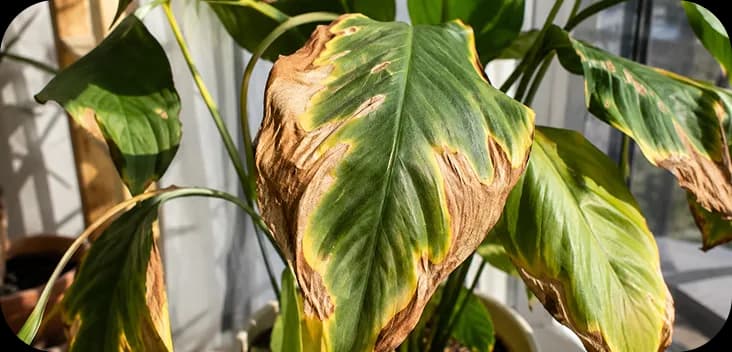
Excess light usually appears on the most exposed leaves first.

Bleached patches:

Cream or green areas may look washed out after sudden exposure to stronger sun.

Tan scorch marks:

Dry, tan patches can form where direct rays hit the leaf surface through glass.

Window-facing damage:

Injury often appears on the side closest to a hot south or west window.

Dulled variegation:

The pale margins may lose clean contrast when light is intense and heat builds around the foliage.

Move the plant back from the glass or filter the sun with a sheer curtain. Keep the next few weeks bright but indirect so new leaves develop normally.

Low light often shows up slowly because this species can tolerate shade for a while. Watch new growth rather than only older leaves.

  • Longer spacing:

    New leaves may appear farther apart on the stem as growth stretches toward available light.

  • Leaning growth:

    The plant may angle toward the brightest side instead of staying upright and balanced.

  • Faded variegation:

    Cream margins and pale sections may become less distinct when new growth develops in dim conditions.

  • Small new leaves:

    Fresh leaves may open smaller than earlier leaves produced in brighter conditions.

  • Slow active growth:

    Little or no new growth during spring or summer can suggest the light is too weak.

Move the plant gradually into brighter indirect light. Avoid a sudden jump into strong direct sun, which can stress shaded foliage.

When ideal brightness is not available, choose the brightest spot that avoids harsh afternoon rays rather than keeping it deep in a room.

Rotate the pot a quarter turn every 1–2 weeks so new growth stays balanced and the variegated canopy does not lean toward the light.

Avoid a dark corner because it usually weakens variegation and produces smaller, more spaced leaves.

Get Personalized Care Plan

Scan your plant to receive care tips personalized for your specific plant

FAQ

The best light for Rubber Tree is bright, indirect light for most of the day. A small amount of gentle morning sun can help, but hot direct sun is risky.

More Plant Light Guides

Get the Botan App

Discover how to care for your plants with Botan.

Botan app identifying a plant with a phone camera
Plants That Repel Bugs – 20 Effective Options

12 min read · 16 Jul 2026

Plants That Repel Bugs – 20 Effective Options

Mosquitoes on the patio? Gnats in the kitchen? Some plants keep them away with the scent of their own leaves. Here are 20 that deal with mosquitoes, flies, aphids, and more, plus where to put them so they help.

Plant Recommendations
Plants That Repel Bugs – 20 Effective Options
How to Mist Plants – Proper Technique and Common Mistakes

7 min read · 30 Jul 2026

How to Mist Plants – Proper Technique and Common Mistakes

Find out when misting works well and when to avoid it. Here, you’ll find detailed information about compatible and incompatible species, tips on how often to mist plants and do it correctly, and some great alternatives for raising humidity.

Beginner Guides
How to Mist Plants – Proper Technique and Common Mistakes
How to Clean Plant Leaves: A Simple Care Guide

6 min read · 4 Aug 2026

How to Clean Plant Leaves: A Simple Care Guide

Dusty leaves look dull and don't absorb light well. Below, you'll find simple ways to clean them, which tools are truly effective, how often you should do it, and what causes damage.

Beginner Guides
How to Clean Plant Leaves: A Simple Care Guide