Provide climbing support
Install a sturdy trellis, wire mesh, or pergola early and loosely tie young stems with soft ties so the vine can attach and form a stable, well-spaced framework as it matures.

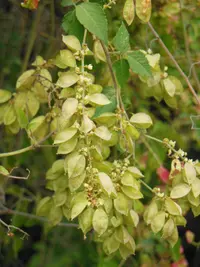
Urvillea ulmacea, often called apaac, is a fast-growing woody vine from tropical and subtropical South America. It typically climbs over supports with slender, twining stems and delicate, divided leaves. Small, airy flower clusters are followed by decorative, papery seed capsules that add light texture rather than bold color. In gardens, it is usually grown as an ornamental climber on fences, trellises, or pergolas in warm climates. The plant tends to be vigorous but can be somewhat demanding outside its preferred mild, frost-free conditions. Light, well-drained soil and regular moisture make it easier to care for apaac, especially when combined with a stable support structure.

Care Difficulty
Moderate Care

Light Preference
Full Sun

Water Requirements
Moderate Water

Temperature Preference
Warm Climate

Hardiness Zone
10–11

Soil Texture
Sandy, Loamy, Organic-rich

Soil pH
Acidic (5.5–6.5), Slightly acidic (6.5–7.0)

Soil Drainage
Well-drained

Fertilization
Minimal (feed rarely)
Scan your plant to receive care tips personalized for your specific plant
Available on iOS and Android
This vigorous climber prefers bright outdoor conditions with protection from harsh extremes when caring for apaac.
This plant prefers consistently moist but not saturated soil, especially during active growth.
This vine thrives in warm, frost-free climates with moderate seasonal shifts.
This species prefers moderate air moisture but adapts to typical indoor levels when managed carefully.
This vine grows best in loose, well-aerated, sharply draining soil that prevents waterlogging around the roots.
This species adapts well to container growing when the pot setup supports climbing growth and fast drainage.
Urvillea ulmacea responds well to light, steady feeding during the warm growing months.
Urvillea ulmacea benefits from modest structural pruning to keep the vine manageable and flowering well.
This species is more often grown in the ground, so focus on careful transplanting or occasional container refresh.
Urvillea ulmacea is usually multiplied by seeds or semi-ripe cuttings under warm, bright conditions.
In mild climates this vine needs only basic winter care, but it is sensitive to hard frost.

Plant Health Check
Not sure what's wrong with your plant? Check your plant's health inside the app.
This species is a woody climbing vine native to tropical and subtropical South America, where it scrambles over shrubs and trees in forest edges and disturbed habitats.
Its fruits are dry, winged samaras that spin and glide in the wind, helping seeds travel away from the parent plant and colonize open, sunny spots.
This vine belongs to the Sapindaceae (soapberry family), the same family as plants like maple relatives and soapberry trees, sharing features such as compound leaves and small, nectar-bearing flowers that attract insects.
Poor flowering often results from insufficient light, lack of seasonal temperature contrast, or pruning at the wrong time that removes flowering wood. Avoid heavy pruning just before the main flowering season and provide a modest nutrient boost with balanced fertilizer.
Keep your plants happy and healthy with plant identification, disease detection, and easy care guidance.