Establish dry mulch
Use a 5–8 cm layer of coarse gravel or decomposed granite around the root zone to suppress weeds, keep the crown dry, and reduce fungal problems without holding excess moisture near the stems.

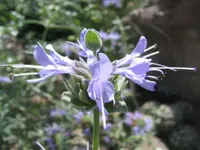
Cleveland sage, Salvia clevelandii, is a woody, evergreen shrub from dry coastal hills and chaparral of southern California and northern Baja California. It is grown mainly for its strong aromatic foliage and showy whorls of bluish-purple flowers that attract bees, butterflies, and hummingbirds.
Plants form a rounded, bushy shape with many branching stems and gray-green, textured leaves. Once established, it tolerates drought well and prefers lean, fast-draining soil in a sunny, open position.
These traits make it well suited to low-water gardens and beginners who want to care for Cleveland sage without intensive maintenance, provided the site is bright and not overly wet.

Care Difficulty
Easy Care

Light Preference
Full Sun

Water Requirements
Low Water

Temperature Preference
Warm Climate

Hardiness Zone
8–11

Soil Texture
Sandy, Loamy, Rocky

Soil pH
Slightly acidic (6.5–7.0), Slightly alkaline (7.0–7.5)

Soil Drainage
Well-drained

Fertilization
Minimal (feed rarely)
Scan your plant to receive care tips personalized for your specific plant
Available on iOS and Android
This drought-tolerant shrub thrives in bright, open conditions with long hours of direct sun.
This plant prefers deep, infrequent watering and dries quickly between soakings once established.
This shrub is adapted to warm, dry climates with mild winters and hot summers.
This species prefers dry air and does not require elevated humidity indoors or outdoors.
Salvia clevelandii performs best in lean, sharply drained, mineral-rich soil.
This species can be grown in containers if the setup prioritizes fast drainage and root aeration.
This drought-adapted shrub needs only light feeding in most soils.
Thoughtful pruning keeps Salvia clevelandii compact, productive, and longer lived.
This species is usually grown in the ground, so focus on careful transplanting rather than frequent repotting.
Salvia clevelandii is commonly propagated from semi-ripe cuttings or seeds.
This shrub is fairly cold tolerant in mild, dry-winter climates but does need some winter consideration in colder regions.

Plant Health Check
Not sure what's wrong with your plant? Check your plant's health inside the app.
The leaves release a strong resinous scent described as a mix of sage, citrus, and pine, due to high levels of volatile oils in the glandular hairs on the leaf surface.
This species is naturally restricted to dry chaparral and coastal sage scrub habitats in southern California and northern Baja California, where it is adapted to shallow, rocky, low-fertility soils.
Its tubular purple-blue flowers are shaped and positioned to favor hummingbird pollination, and visiting birds often leave with pollen dusted on their heads and bills, increasing cross-pollination between plants.

Some inland populations of this species exhibit a summer-deciduous habit in very dry years, shedding a portion of their leaves to reduce water loss while maintaining dormant buds that can quickly resume growth after autumn rains.
Lack of flowers usually comes from too much shade, excess nitrogen fertilizer, or pruning at the wrong time, which removes flower buds. Light, well-timed pruning and lean, low-nitrogen soil help restore normal flowering.
Keep your plants happy and healthy with plant identification, disease detection, and easy care guidance.