


Seasonal Water Depth
In outdoor tubs or ponds, lower the water level by 5–10 cm in late spring to warm the root zone faster, then gradually raise it again in mid-summer to keep growth vigorous without stressing the plant.

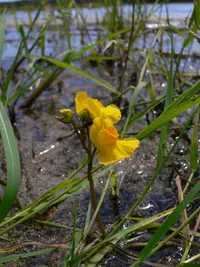
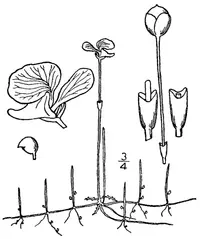
Bladderwort (Utricularia australis) is a free-floating aquatic carnivorous plant found in ponds, lakes, and slow-moving waters across Europe, Asia, and parts of Australia. It forms tangled mats of thin, branching stems with fine, divided leaves and small underwater bladders that trap tiny aquatic animals.
The plant often produces delicate yellow flowers that rise above the water surface on slender stalks, giving a soft, airy look to the water’s edge. It can be rewarding but somewhat challenging, as stable water quality and low-nutrient conditions are important.
Those who want to learn how to care for Bladderwort should know it prefers full sun to bright light, clean, still or slow water, and nutrient-poor, mineral-free substrates.

Care Difficulty
Hard Care

Light Preference
Full Sun

Water Requirements
Aquatic

Temperature Preference
Cool Climate

Hardiness Zone
5–10

Soil Texture
Sandy, Peaty, Organic-rich

Soil pH
Strongly acidic (4.5–5.5), Acidic (5.5–6.5)

Soil Drainage
Waterlogged tolerant

Fertilization
Minimal (feed rarely)
Scan your plant to receive care tips personalized for your specific plant
Available on iOS and Android
This floating carnivorous plant needs bright, gentle light to fuel growth without overheating shallow water.
As an aquatic species, this plant depends on stable, clean water levels rather than soil moisture.
This species prefers cool to mild water and air temperatures, with limited tolerance for frost or extreme heat.
This aquatic carnivorous plant prefers stable, high humidity around its foliage and water surface.
This free-floating or loosely rooted species grows best in nutrient-poor, soft, organic substrates under water.
This species is well suited to container culture in outdoor tubs, ponds, or aquaria.
This aquatic carnivorous plant gains most nutrients from prey and usually needs very little supplemental fertilizer.
Pruning Utricularia australis focuses on keeping water growth clean and preventing excessive tangle.
Container-grown Utricularia australis is usually managed by transplanting sections rather than traditional root-ball repotting.
Utricularia australis is commonly propagated vegetatively in cultivation rather than from seed.
Winter care depends strongly on local climate and whether plants grow in ponds or containers.

Plant Health Check
Not sure what's wrong with your plant? Check your plant's health inside the app.
This species forms tiny underwater bladder traps that create a vacuum, allowing it to suck in small aquatic prey like water fleas in less than a millisecond, making it one of the fastest known movement systems in plants.
Unlike many carnivorous plants that root in soil, this species typically lives as a free‑floating aquatic plant in nutrient-poor lakes, ponds, and ditches, absorbing minerals directly from the water and captured prey.
It has no true roots; instead, its finely divided, filamentous stems provide buoyancy and a large surface area for photosynthesis and trap placement, an adaptation that suits calm, shallow freshwater habitats.

This species often forms extensive underwater mats that can provide microhabitats and shelter for aquatic invertebrates and small vertebrates, influencing the structure of entire shallow-water communities despite its delicate appearance.
Poor flowering often results from insufficient light, water that is too clean, or low nutrients. This carnivorous species needs bright conditions and access to tiny aquatic prey. Stable water levels and minimal disturbance also support reliable blooming.
Keep your plants happy and healthy with plant identification, disease detection, and easy care guidance.

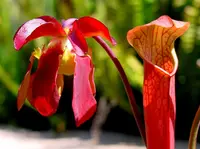
sweet pitcherplant
Sarracenia rubra
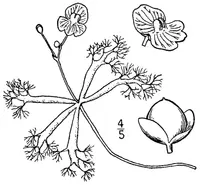
little floating bladderwort
Utricularia radiata
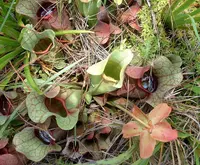
Burk's southern pitcher plant
Sarracenia rosea
fairy aprons
Utricularia dichotoma
striped bladderwort
Utricularia striatula
hooded pitcherplant
Sarracenia minor
Scented Sundew
Drosera aberrans
lavender bladderwort
Utricularia resupinata