Ludwigia inclinata var. verticillata 'Pantanal' Care (Ludwigia inclinata)

Also known as: Ludwigia inclinata var. verticillata 'Cuba'
Ludwigia inclinata var. verticillata 'Pantanal'

About Ludwigia inclinata var. verticillata 'Pantanal'

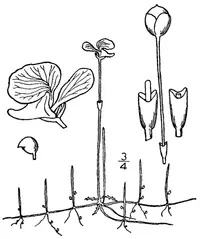
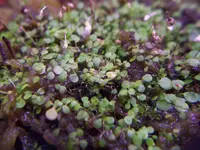
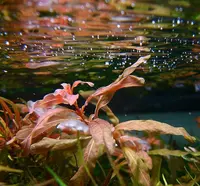
Ludwigia inclinata var. verticillata 'Pantanal' is a fast-growing aquatic stem plant popular in freshwater aquariums. It forms dense, upright groups of slender stems with narrow leaves that shift from green to orange-red under strong light. Originating from South America, it naturally occurs in shallow, slow-moving waters and flooded areas. The plant is visually striking but not beginner friendly, as it needs stable water conditions and consistent nutrients. High light and added carbon dioxide are usually required to maintain compact growth and strong coloration. Aquarists looking to learn how to care for Ludwigia inclinata var. verticillata 'Pantanal' should be ready to provide attentive, steady maintenance.

Main Plant Requirements

Care Difficulty

Hard Care

Light Preference

Full Sun

Water Requirements

Aquatic

Temperature Preference

Tropical / Frost Sensitive

Hardiness Zone

Unknown

Soil Texture

Loamy, Silty, Organic-rich

Soil pH

Acidic (5.5–6.5), Slightly acidic (6.5–7.0)

Soil Drainage

Waterlogged tolerant

Fertilization

Heavy (weekly, diluted)

Get Personalized Care Plan

Scan your plant to receive care tips personalized for your specific plant

Available on iOS and Android

How to Care for the Ludwigia inclinata var. verticillata 'Pantanal'

This amphibious stem plant needs strong, consistent light to maintain compact, colorful growth.

  • Provide 8–10 hours of high-intensity light daily; in outdoor ponds or tubs, favor full sun with some protection from harsh late-afternoon summer sun.
  • Ludwigia inclinata var. verticillata 'Pantanal' and related forms lose red coloration and grow leggy if light drops below about 6 hours or becomes heavily shaded.
  • In aquariums, use bright lighting across the full footprint; prevent floating plants or hardscape from casting dense shade over the stems.

This aquatic species is usually grown fully submerged, so water quality and movement matter more than soil dryness.

  • Grow Ludwigia inclinata rooted in fine gravel or nutrient-rich substrate under a stable water level; avoid exposing stems to fluctuating emersed/submersed conditions that cause melt.
  • Signs of underwatering in emergent or bog culture include limp, drooping stems and dull leaves; overwatering in poorly drained soil shows as black, rotting lower stems.
  • In aquariums, aim for gentle to moderate flow that prevents debris buildup on leaves; poor circulation and stagnant zones encourage algae and suffocation of lower foliage.

This tropical aquatic plant favors warm, stable conditions for dense, colorful growth.

  • Aim for 72–82°F (22–28°C) as the main growth range; growth is strongest and coloration best near 75–80°F (24–27°C).
  • Below about 68°F (20°C), Ludwigia inclinata growth slows, lower leaves may drop, and long exposure under 64°F (18°C) can cause dieback.
  • The plant tolerates short spikes to 86°F (30°C) if oxygenation and water movement stay high, but prolonged heat above this range stresses stems and invites algae.

Ludwigia inclinata prefers high humidity to maintain vigorous submerged growth.

  • Aim for 60–80% humidity over the tank to reduce leaf-edge drying, especially for Ludwigia inclinata var. verticillata 'Pantanal'.
  • Dry household air can cause curled, dull, or browned emergent leaves near the waterline.
  • Use a tight-fitting aquarium lid or cover glass to trap moisture and stabilize humidity above the water surface.
  • Increase humidity around emergent stems by lowering fan speed, reducing open-top exposure, or partially covering mesh lids.

Ludwigia inclinata is a rooted aquatic plant that responds strongly to nutrient-rich, well-structured substrate.

  • Use a fine to medium-grain aquatic plant substrate or sand capped over nutrient-rich aquasoil to support stable anchoring and root spread.
  • Aim for slightly acidic to neutral conditions, roughly pH 6.0–7.2, which support nutrient availability and healthy growth.
  • Include iron- and micronutrient-rich root tabs or aquasoil components rather than plain inert gravel alone, which can lead to weak, pale stems.
  • Avoid coarse gravel, compacted sand, or substrates loaded with decomposing organics, as these limit aeration and promote anaerobic zones around roots.

This species is well suited to container growing when used in aquariums or dedicated aquatic planters.

  • Choose a deep container section so roots can form a tall, stable column, preventing stems from uprooting in moderate water flow.
  • Place a heavier substrate layer at the bottom of the container zone to anchor tall stems and resist floating during planting or maintenance.
  • Position the container area away from strong filter outlets to keep substrate from shifting while still allowing gentle circulation around the roots.

Ludwigia inclinata grows best with consistent but moderate nutrition during its active season.

  • Use a balanced aquatic fertilizer or complete NPK root tabs for rooted stems in nutrient-poor substrates.
  • Feed every 2–4 weeks in the main growing season, adjusting based on plant growth and algae presence.
  • Reduce feeding to once every 6–8 weeks in winter or low-light periods when growth slows.
  • Apply liquid fertilizers at 1/2–3/4 label strength; sensitive forms like Ludwigia inclinata var. verticillata 'Pantanal' respond well to steady, not excessive, dosing.

Ludwigia inclinata responds well to thoughtful pruning that maintains compact, bushy growth.

  • Carry out most shaping trims during active growth, when stems recover quickly.
  • Remove dead, algae-covered, or shaded lower leaves and stems to improve light penetration and water flow.
  • Cut back tall or leggy stems above a healthy node to encourage branching and fuller tops.
  • Use clean, sharp aquascaping scissors and make straight cuts to limit tissue damage and reduce infection risk.

Stoloniferous or stem-bunch forms of this plant benefit from occasional thinning and replanting rather than classic repotting.

  • Check for signs such as crowded stems, shading of lower leaves, or slow growth despite good nutrients.
  • Transplant during stable, warm conditions when light and CO2 are consistent to reduce shock.
  • Every 2–4 months, lift overgrown bunches, trim lower bare sections, and replant only strong stem tips.
  • After replanting, avoid major parameter changes, keep good circulation, and monitor for 3–7 days for melt or stress.

Ludwigia inclinata is most often propagated by stem cuttings under stable, high-light aquatic conditions.

  • Take 10–15 cm tip cuttings from healthy, well-colored stems during peak growth.
  • Cut just below a node, remove lower leaves, and insert the bare section into the substrate or plant weight.
  • Provide strong light, stable CO2 (if used), and balanced nutrients to support fast rooting and new side shoots.
  • For emersed culture, keep high humidity and shallow water around stems until new roots and leaves form.

This tropical Ludwigia requires stable warm-water conditions and lacks true outdoor winter hardiness in most temperate regions.

  • In outdoor ponds, treat it as annual or move specimens indoors before water drops below 60°F.
  • Maintain aquarium water around 72–82°F in winter to prevent growth collapse and leaf melt.
  • Reduce lighting intensity or duration slightly if growth slows, but keep conditions stable rather than fluctuating.

Care Tips

Timed stem trimming

Stagger stem trimmings every 1–2 weeks rather than cutting the whole group at once to maintain stable biomass and reduce sudden nutrient and CO2 demand shifts in the aquarium.

Replanting tops correctly

After topping, discard the weak, shaded lower portions and replant only the healthiest upper 5–10 cm of stems to keep the stand dense, upright, and free of old, algae-prone bases.

Flow and spacing management

Arrange stems in small groups with open gaps and position them in moderate current so every leaf receives water movement, which improves gas exchange and reduces debris buildup on foliage.

Nutrient gradient monitoring

Use regular nitrate and phosphate testing in tall tanks to check for vertical nutrient gradients, and adjust flow or dosing if older lower leaves pale or melt while tops remain vigorous.

CO2 stability checks

Monitor Ludwigia inclinata responses after photoperiod or CO2 adjustments, since curled or twisted new growth often signals CO2 instability, and make only one small change at a time to avoid stressing the stand while caring for Ludwigia inclinata var. verticillata 'Pantanal' or similar forms.

Common Pests and Diseases

Thread algae

This pest appears as fine green or gray threads entangled among the stems and leaves, especially in high-light, nutrient-rich tanks. Symptoms include slowed growth and shaded lower leaves that may yellow and melt.

Solution

Manually remove as many algae threads as possible, then reduce light intensity or duration and balance nutrients by lowering excess nitrate and phosphate while keeping stable CO2. Increase plant mass, improve flow, and consider short-term use of algae-eating fish or shrimp compatible with growing Ludwigia inclinata var. verticillata 'Pantanal' to keep regrowth in check.

Staghorn algae

This pest forms tough, branching gray-green tufts on older leaves, stems, and hardscape near strong flow, often in CO2-unstable aquariums. Symptoms include localized patches that do not rub off easily and affected leaves eventually deteriorating.

Solution

Trim and remove heavily infested leaves and reduce strong localized flow that directs CO2-poor water onto the plant. Stabilize CO2 levels, avoid sudden nutrient swings, and spot-treat remaining tufts outside the tank with diluted liquid carbon or hydrogen peroxide before replanting.

Nutrient deficiency melt

This disease-like condition causes the plant to lose older leaves rapidly, with symptoms including pale new growth, transparent patches, and stems that become bare in the lower sections. Symptoms include distorted or stunted tips when iron, potassium, or micronutrients are imbalanced relative to strong light and high CO2.

Solution

Increase and stabilize a complete fertilization routine that supplies nitrate, phosphate, potassium, and trace elements, and ensure CO2 is adequate and consistent. Remove severely damaged leaves, keep stable water parameters, and avoid abrupt changes in dosing to allow new, healthy tops to regrow before replanting.

CO2 deficiency stress

This disease-like stress state appears as poor coloration, weak stems, and shedding of lower leaves despite strong light and adequate macronutrients. Symptoms include twisted or stunted growing tips and algae starting on slow or damaged tissue.

Solution

Raise and stabilize CO2 concentration by improving diffusion, circulation, and timing CO2 to start 1–2 hours before lights on, while monitoring fish health. Reduce light intensity slightly until growth recovers, then gradually increase as the plant shows strong, steady pearling and compact form.

Snail grazing damage

These insects are replaced by aquatic snails that rasp soft tissue, creating small holes and ragged edges on tender leaves, particularly on slower or stressed stems. Symptoms include skeletonized older leaves and visible clusters of small snails on or near the plant.

Solution

Manually remove visible snails and egg clutches, reduce overfeeding of fish, and use snail traps or selective snail-eating fish where appropriate. Strengthen plant growth through stable CO2 and nutrients so new foliage outpaces damage, and quarantine new plants to avoid introducing heavy snail populations.

Interesting Facts

Seasonal leaf dimorphism

Ludwigia inclinata shows different leaf shapes above and below water, with broader emergent leaves and narrow, finely divided submersed leaves adapted to underwater light capture and gas exchange.

Pantanal floodplain origin

This species is native to seasonally flooded wetlands and river margins in tropical Central and South America, where it experiences an annual cycle of emersion and submersion that has shaped its strong response to changing water levels.

High light pigment response

Under intense light and sufficient nutrients, some geographic forms of this species develop striking red, orange, or bronze pigmentation in their submerged leaves due to increased production of protective pigments such as anthocyanins.

Botan icon

Did you know?

The horticultural form Ludwigia inclinata var. verticillata 'Pantanal' is considered one of the more demanding aquarium stems, and many aquarists use it as a visual indicator of stable, high CO2 and nutrient conditions due to its sensitive growth response to suboptimal water chemistry.

FAQs about Ludwigia inclinata var. verticillata 'Pantanal'

Growth is typically fast under strong light, ample CO₂, and regular macro- and micronutrient fertilization, with stems often extending several cm per week. In low-tech tanks, growth slows markedly and color intensity is reduced.

Grow Healthy Plants with Botan Care

Keep your plants happy and healthy with plant identification, disease detection, and easy care guidance.

Botan plant care app — identify plants on mobile

Explore More Plants