Mark Dormant Clumps
Flag or label plant locations in late fall before dieback so you avoid disturbing crowns when digging or weeding nearby in early spring.

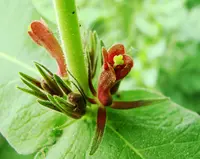
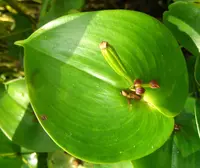
Orangefruit horse-gentian (Triosteum aurantiacum) is a hardy, upright perennial native to woodlands and shady slopes in eastern and central North America. It forms clumps of tall, square stems with large, opposite leaves and small, tubular orange to yellow flowers that give way to showy orange berries in late season.
This plant has a coarse, architectural look and tends to spread slowly where conditions suit it. It prefers partial shade, consistent moisture, and humus-rich soil, which makes it better suited to naturalistic or woodland-style gardens than to dry, exposed spots.
Gardeners who want to learn how to care for orangefruit horse-gentian usually find it moderately easy if the site mimics its cool, moist woodland habitat.

Care Difficulty
Moderate Care

Light Preference
Partial Shade

Water Requirements
Regular Water

Temperature Preference
Cold Hardy

Hardiness Zone
4–8

Soil Texture
Loamy, Silty, Organic-rich

Soil pH
Acidic (5.5–6.5), Slightly acidic (6.5–7.0)

Soil Drainage
Moist but well-drained

Fertilization
Minimal (feed rarely)
Scan your plant to receive care tips personalized for your specific plant
Available on iOS and Android
This woodland perennial prefers bright, indirect light with some direct sun in cooler hours.
This species prefers evenly moist, not soggy, soil throughout the growing season.
This temperate woodland plant handles a wide temperature range but grows best in moderate conditions.
Humidity is rarely a limiting factor for orangefruit horse-gentian grown outdoors in its native range.
Triosteum aurantiacum prefers moist, deep, loamy soil that stays aerated but not waterlogged.
This species can be grown in containers, but large, deep pots are needed for its perennial root system.
This woodland perennial needs only light feeding in most garden soils, so caring for orangefruit horse-gentian focuses more on good site conditions than on fertilizer inputs.
Pruning needs for Triosteum aurantiacum are modest and mainly focused on cleanup and maintaining a tidy clump.
This species is usually grown in the ground, so transplanting is more relevant than repotting once plants are established.
Propagation is usually done from seed, with some potential for division in established clumps of Triosteum aurantiacum.
This is a cold-hardy woodland perennial that usually needs minimal winter care in most temperate climates.

Plant Health Check
Not sure what's wrong with your plant? Check your plant's health inside the app.
This species is native to central and eastern North America, where it grows in partial shade along prairie edges, open woodlands, and thickets with moist, well-drained soils rich in organic matter.
After flowering, it forms clusters of bright orange, berry-like fruits that persist into late summer, making the plant visually distinctive and giving rise to the common name orangefruit horse-gentian.
The fruits are strongly bitter to humans but are eaten by some bird species, which help disperse the seeds across the forest and prairie landscape.

The genus name Triosteum refers to the three bony stones, or hard seed-like structures, inside each fruit, a distinctive trait that helps botanists identify the species in the field even after the soft pulp has decayed.
The berries are showy but not considered good eating and may cause stomach upset if consumed in quantity. Historically, the dried roots were used medicinally, but self-medication is unsafe without professional guidance and correct identification.
Keep your plants happy and healthy with plant identification, disease detection, and easy care guidance.