Mark Dormant Clumps
After foliage dies back, place small, weatherproof labels where each bulb clump is located so you avoid accidental digging or planting over them during summer and autumn maintenance.

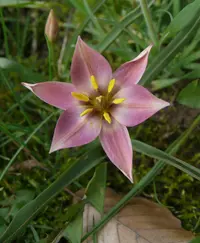
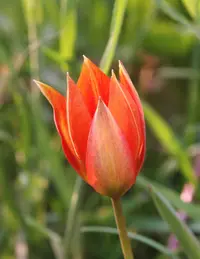
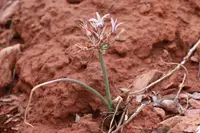
Tulipa humilis is a small, bulb-forming perennial tulip known for its low, compact habit and bright star-shaped flowers. It usually blooms very early in spring, often close to the ground.
In nature, it occurs in rocky, open habitats in parts of the Middle East and southwestern Asia, where soils are well drained and winters are cold. Its hardy bulbs and modest size make it relatively straightforward for gardeners who understand how to care for Tulipa humilis.
It generally prefers full sun, cool winters, and well-drained, moderately moist soil that does not stay wet for long periods.

Care Difficulty
Moderate Care

Light Preference
Full Sun

Water Requirements
Moderate Water

Temperature Preference
Cold Hardy

Hardiness Zone
3–8

Soil Texture
Sandy, Loamy, Rocky

Soil pH
Acidic (5.5–6.5), Slightly acidic (6.5–7.0)

Soil Drainage
Well-drained

Fertilization
Minimal (feed rarely)
Scan your plant to receive care tips personalized for your specific plant
Available on iOS and Android
This small tulip thrives in open, bright conditions that mimic sunny alpine or rock garden sites.
This bulb prefers evenly moist but never saturated soil during active spring growth, then much drier conditions in summer dormancy.
This species is adapted to cold winters and cool springs, with bulbs that require a marked chill period to perform well.
Humidity is not a major factor for Tulipa humilis, which thrives in typical outdoor air conditions.
Tulipa humilis grows best in light, well-aerated soil that drains quickly after watering or rain.
This species is suitable for container growing when the pot and substrate prevent waterlogging.
This small bulb thrives in lean soil and needs only light, targeted feeding for reliable flowering.
Pruning needs are minimal and focus on cleaning up spent growth while preserving bulb strength.
This species is usually grown in borders or rock gardens, so focus on occasional lifting and replanting rather than frequent repotting.
New plants are most reliably produced by bulb division, with seed used mainly for long-term selection work.
This tulip is cold hardy in most temperate climates and usually needs little winter care in the ground.

Plant Health Check
Not sure what's wrong with your plant? Check your plant's health inside the app.
This species is naturally found in rocky, open steppe and subalpine habitats in regions such as eastern Turkey, Iran, and the Caucasus, where soils are well-drained and winters are cold. Its compact growth and early flowering are adaptations to a short growing season at higher elevations.
Unlike many taller garden tulips, this species opens its flowers into a flat, star-shaped disk in full sun, often revealing a contrasting yellow or dark basal blotch in the center of each tepal. The flowers close in dull weather or at night, a behavior known as nyctinasty, which protects reproductive organs from cold and moisture.
This wild tulip has produced several naturally occurring color forms, commonly seen in cultivation under names like Tulipa humilis 'Alba Coerulea Oculata' with a pale perianth and striking blue-violet center. These forms reflect underlying genetic variation in pigment expression, which breeders have used as a starting point for selection when they grow Tulipa humilis.

The original scientific description of Tulipa humilis by the botanist John Gilbert Baker in the 19th century helped clarify the distinction between true wild species tulips and the complex hybrid groups that dominated European gardens, making it an important reference species in the taxonomic study of the genus Tulipa.
This species usually flowers in early to mid spring, depending on climate. Bloom time is quite short, often 1–3 weeks. Cooler temperatures and protection from strong sun and wind help the delicate flowers last longer.
Keep your plants happy and healthy with plant identification, disease detection, and easy care guidance.