Fast ground cover
To achieve a dense mat quickly, plant divisions 20–25 cm apart in a staggered grid, then lightly mulch between them so runners root into the mulch layer instead of exposed soil.

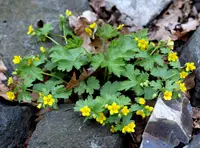
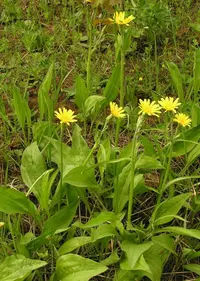
Large barren strawberry, Waldsteinia geoides, is a low-growing perennial groundcover from central and eastern Europe. It forms dense, slowly spreading clumps rather than running aggressively. The plant carries glossy, three-part leaves and small yellow flowers that resemble wild strawberry blossoms, followed by dry, inedible fruits. It is often used to cover shaded banks, woodland edges, and underplanting areas where turf struggles. This species is valued for durability, tolerance of cold, and low maintenance, which makes it relatively straightforward to care for large barren strawberry in many gardens. It prefers partial shade, evenly moist but well-drained soil, and benefits from organic matter in the planting area.

Care Difficulty
Easy Care

Light Preference
Partial Shade

Water Requirements
Moderate Water

Temperature Preference
Cold Hardy

Hardiness Zone
4–8

Soil Texture
Loamy, Silty, Organic-rich

Soil pH
Acidic (5.5–6.5), Slightly acidic (6.5–7.0)

Soil Drainage
Moist but well-drained

Fertilization
Minimal (feed rarely)
Scan your plant to receive care tips personalized for your specific plant
Available on iOS and Android
This low groundcover prefers bright, gentle light rather than intense, exposed sun.
This woodland groundcover prefers consistently moist but not saturated soil.
This hardy perennial is adapted to cool to mild outdoor conditions.
This species manages well in typical indoor humidity and rarely needs special adjustments.
This plant prefers loose, humus-rich soil that stays evenly moist yet drains freely.
This low, spreading species is suitable for container growing outdoors on patios, balconies, or shaded entries.
This low-maintenance groundcover benefits from light, targeted feeding rather than heavy fertilization.
Pruning Waldsteinia geoides is simple and mainly focused on tidying and renewing foliage.
This species is usually grown as a groundcover, so care focuses more on transplanting clumps than on frequent repotting.
New plants are most reliably obtained by division, with seed and short stolon pieces as secondary options.
This groundcover is generally cold hardy in temperate climates and needs only minimal winter attention.

Plant Health Check
Not sure what's wrong with your plant? Check your plant's health inside the app.
This species forms low, dense evergreen mats that keep their foliage through winter in many temperate climates, providing year-round ground cover even when nearby herbaceous plants die back.
Although it belongs to the rose family and resembles a small strawberry plant, it typically produces dry, inconspicuous fruits rather than fleshy edible berries and mainly spreads via creeping rhizomes.
The species is native to central and southeastern European woodlands, where it grows under deciduous trees in humus-rich, slightly acidic to neutral soils and helps stabilize the forest floor.
This species spreads slowly to moderately by short stolons, forming a dense, low mat over time. It usually stays well behaved, especially in average garden soil, and is rarely considered aggressive or difficult to contain.
Keep your plants happy and healthy with plant identification, disease detection, and easy care guidance.