Shade seedling roots
Mulch lightly around young plants with fine compost or leaf mold to keep the shallow roots cool and moist, which significantly improves establishment when growing Aquilegia olympica.

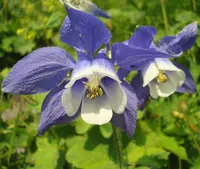
Aquilegia olympica is a perennial flowering plant in the buttercup family, valued for its delicate, nodding blooms and airy foliage. It typically forms a low clump of divided leaves topped by slender stems carrying elegant, spurred flowers in soft shades of blue, purple, or white.
This species is native to mountainous regions of Turkey and nearby areas, where it grows in open woods, meadows, and rocky slopes. In gardens, it suits temperate climates and is considered moderately easy to grow when its needs are met.
It prefers cool conditions, evenly moist but well-drained soil, and light shade to sun in milder regions. Understanding these preferences helps gardeners know how to care for Aquilegia olympica with fewer issues.

Care Difficulty
Moderate Care

Light Preference
Partial Shade

Water Requirements
Moderate Water

Temperature Preference
Cold Hardy

Hardiness Zone
3–8

Soil Texture
Loamy, Sandy, Organic-rich

Soil pH
Acidic (5.5–6.5), Slightly acidic (6.5–7.0)

Soil Drainage
Moist but well-drained

Fertilization
Minimal (feed rarely)
Scan your plant to receive care tips personalized for your specific plant
Available on iOS and Android
This alpine perennial prefers cool, bright conditions with some protection from intense midday sun.
This plant prefers consistently moist but not waterlogged soil, especially during active growth and flowering.
This hardy perennial is adapted to cool to mild climates and tolerates significant winter cold once established.
This species handles a wide humidity range and usually does not need special humidity management outdoors.
Aquilegia olympica prefers cool, moist, well-structured soil that drains freely yet does not dry out too fast.
This species can be grown in containers for a few seasons if moisture and root space are managed carefully.
This species grows well in modest soils, so Aquilegia olympica benefits from only light feeding in the growing season.
Pruning focuses on tidying Aquilegia olympica and maintaining strong flowering rather than reshaping the plant.
This columbine is usually grown in garden beds, so Aquilegia olympica is more often transplanted than repotted.
Propagation of Aquilegia olympica is most reliable from seed, with division only for well-established clumps.
Aquilegia olympica is generally cold hardy and requires minimal winter care in most temperate climates.

Plant Health Check
Not sure what's wrong with your plant? Check your plant's health inside the app.
Aquilegia olympica is naturally restricted to the Caucasus region, where it grows in montane meadows and open woodland clearings, often on rocky, well-drained slopes.
This species typically bears nodding blue to violet flowers with long, curved nectar spurs, which are adapted to pollination by long-tongued insects such as certain bees and moths.
In gardens and in areas with other Aquilegia species, Aquilegia olympica can hybridize readily, so wild-type populations are most reliably encountered in relatively undisturbed native habitats.
This species usually blooms in late spring to early summer, depending on climate. Individual flowers last about 1–2 weeks, but the overall flowering period can extend 3–4 weeks if plants are healthy and conditions are cool.
Keep your plants happy and healthy with plant identification, disease detection, and easy care guidance.