Edge Containment
Install a shallow physical edging (5–8 cm deep) around beds to prevent stems from rooting into lawns or paths, which keeps mats tidy and easier to rejuvenate over time.

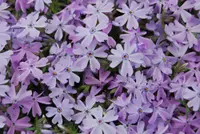
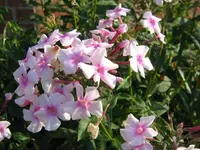
Moss phlox (Phlox subulata) is a low, mat-forming perennial often used as a flowering groundcover. It stays close to the soil and spreads to form dense, colorful carpets. In spring, it produces many small, five-petaled flowers in shades of pink, purple, white, or blue that almost cover the foliage. The narrow, needle-like leaves are evergreen in mild climates, adding year-round texture. This species is native to rocky slopes and open, sandy areas in eastern North America, which helps explain its tolerance of poor, well-drained soils. Once established, it is relatively low-maintenance, and understanding how to care for Moss phlox focuses mainly on providing full sun and avoiding heavy, wet conditions.

Care Difficulty
Easy Care

Light Preference
Full Sun

Water Requirements
Low Water

Temperature Preference
Cold Hardy

Hardiness Zone
3–9

Soil Texture
Sandy, Loamy, Rocky

Soil pH
Acidic (5.5–6.5), Slightly acidic (6.5–7.0)

Soil Drainage
Well-drained

Fertilization
Minimal (feed rarely)
Scan your plant to receive care tips personalized for your specific plant
Available on iOS and Android
Phlox subulata forms the best flowering mat when grown in bright, direct outdoor light.
This drought-tolerant groundcover prefers infrequent, deep watering in sharply drained soil.
This hardy perennial thrives in temperate climates with cool to warm conditions and cold winters.
Humidity is not a major factor for Phlox subulata, which thrives in typical outdoor conditions.
Phlox subulata prefers mineral, sharply drained soil that does not stay wet after rain.
This species is well suited to container growing, especially in shallow, well-drained pots.
Phlox subulata benefits from light feeding but grows well in modest soils.
Pruning Phlox subulata helps maintain a dense, flowering mat and prevents it from becoming woody.
This low-growing perennial is usually transplanted in the garden rather than repotted long term in containers.
Phlox subulata is commonly propagated to renew older patches and spread groundcover.
This species is cold hardy in much of the US and usually needs minimal winter care in the ground.

Plant Health Check
Not sure what's wrong with your plant? Check your plant's health inside the app.
This species has narrow, needle-like leaves that remain green in many climates through winter, giving visual structure even when not in bloom.
Its dense carpets of flowers provide early-season nectar and pollen for bees, butterflies, and other pollinators at a time when few other garden plants are in full bloom.
In the wild, it naturally colonizes rocky slopes and sandy, shallow soils, using a mat-forming root system to anchor itself and stabilize loose substrates.

In the horticultural trade, numerous cultivars of Phlox subulata have been selected not just for flower color but also for distinct flower patterns such as bicolors, eye zones, and star-shaped markings, making it one of the most morphologically varied spring groundcovers in ornamental breeding.
Poor flowering usually comes from too much shade, overfertilizing with high-nitrogen products, or heavy, wet soil. Light trimming after spring bloom and avoiding strong late frosts also supports reliable flowering in the following season.
Keep your plants happy and healthy with plant identification, disease detection, and easy care guidance.