Pleurothallis cordata Care

Pleurothallis cordata

About Pleurothallis cordata

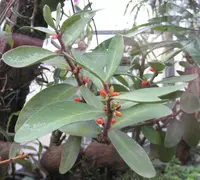
Pleurothallis cordata is a small epiphytic orchid, usually found growing on trees in humid cloud forests of Central and South America. It forms compact clumps of short stems with distinctive heart-shaped leaves, which give the species its name. Flowers are typically small, subtle, and held close to the foliage, appealing more to collectors of miniature orchids than to those seeking showy blooms. Its natural habitat is cool to intermediate, shaded, and consistently moist, so it prefers similar conditions in cultivation. Understanding how to care for Pleurothallis cordata mainly involves providing stable humidity, gentle air movement, and protection from strong sun and drying conditions.

Main Plant Requirements

Care Difficulty

Hard Care

Light Preference

Partial Shade

Water Requirements

Keep Soil Moist

Temperature Preference

Tropical / Frost Sensitive

Hardiness Zone

11–13

Soil Texture

Peaty, Organic-rich, Loamy

Soil pH

Acidic (5.5–6.5)

Soil Drainage

Moist but well-drained

Fertilization

Light (every 4–6 weeks)

Get Personalized Care Plan

Scan your plant to receive care tips personalized for your specific plant

Available on iOS and Android

How to Care for the Pleurothallis cordata

This cloud-forest orchid prefers soft, filtered light rather than direct sun exposure.

  • Provide bright, filtered light or dappled shade, such as under 30–60% shade cloth or beneath open tree canopy, for about 6–8 hours per day.
  • Allow only gentle early morning sun; avoid direct sun from late morning to afternoon, which can scorch leaves and cause yellowing or silvery patches.
  • In summer, increase shading or move the plant deeper into shade, and in winter, shift slightly brighter to compensate for shorter, weaker light.

This species prefers consistently moist but airy conditions around the roots.

  • Aim for evenly moist substrate; allow only the top 0.5–1 cm to approach dryness before watering again, rather than letting it dry completely.
  • Increase watering frequency in warm, active growth periods and reduce slightly in cooler months, while never allowing the plant to stay dry for more than a short time.
  • Watch for wrinkling or limp leaves as a sign of underwatering, and for yellowing, blackened bases, or a sour smell as signs of overwatering or poor drainage.

This orchid comes from cool to intermediate cloud-forest conditions and dislikes temperature extremes.

  • Maintain a general target of 55–75°F (13–24°C) for steady growth, with best performance near 60–70°F (16–21°C).
  • Avoid temperatures below 45°F (7°C); brief dips may be tolerated but repeated cold or any frost can damage foliage and roots.
  • In hot spells above 80°F (27°C), increase shade, air movement, and humidity to reduce heat stress, and avoid placing the plant near hot, reflective surfaces.

This cloud-forest orchid needs consistently high humidity to grow well indoors.

  • Aim for 70–90% humidity, using a cool-mist humidifier or growing case for stable conditions.
  • Tolerates short dips to 50–60%, but prolonged dry air causes leaf-edge browning and shriveling.
  • Increase humidity with grouped plants, wet gravel trays near but not under pots, and reduced direct airflow.

This species prefers a very airy, bark-based medium rather than compact potting soil.

  • Use a fine to medium orchid mix of bark, sphagnum moss, and perlite to create a loose, organic-rich structure.
  • Ensure rapid drainage; water should flow through in seconds and the mix should never become soggy or waterlogged.
  • Aim for slightly acidic to neutral conditions, around pH 5.5–7.0, which suits Pleurothallis cordata roots.
  • Improve aeration by avoiding peat-heavy mixes and adding extra bark chips or chunky perlite if the medium feels dense.

This orchid is well suited to container growing, including small pots or baskets.

  • Choose a shallow, snug pot that keeps roots slightly confined, which helps maintain stable moisture without saturation.
  • Use slotted or mesh orchid pots to increase side ventilation and prevent stale, anaerobic conditions around the roots.
  • Prefer lightweight plastic or net pots that slow evaporation when humidity is lower, then adjust watering frequency to match.

This orchid benefits from light, consistent feeding during active growth but is sensitive to excess salts.

  • Use a balanced orchid fertilizer (around 20-20-20) diluted to 1/4–1/2 strength in low-mineral water.
  • Feed every 2–4 weeks in spring and summer when Pleurothallis cordata is actively growing.
  • Pause or reduce feeding to once every 6–8 weeks during fall and winter.
  • Flush the medium with plain water monthly to prevent fertilizer salt buildup around the roots.

Pruning needs are minimal and focus on hygiene rather than shaping the plant.

  • In late winter or after bloom, remove dead or yellowing leaves with clean, sharp scissors.
  • Cut spent flower spikes at the base to maintain appearance and direct energy to new growth.
  • Trim only clearly damaged or rotting pseudobulbs or stems to limit disease spread.
  • Disinfect tools with alcohol before and after use to reduce the risk of infection in Pleurothallis cordata.

This species prefers a stable environment and only occasional repotting when the medium breaks down.

  • Repot every 2–3 years, or when roots circle the pot, growth slows, or the medium becomes compacted or sour.
  • Plan repotting for early spring, just as new root tips appear, to shorten recovery time for Pleurothallis cordata.
  • Use a small, well-drained container with fine orchid bark, sphagnum, or a mix suited to cool, moist conditions.
  • Gently loosen roots, remove dead tissue, and keep the plant slightly shaded and evenly moist for 1–2 weeks after repotting.

Propagation is usually done by careful division rather than seed in home conditions.

  • Divide mature clumps in spring when new growth and roots are starting.
  • Ensure each division has at least 3–4 healthy growths and a good root system.
  • Plant divisions in fresh, fine orchid mix and keep humidity high (70–80%) with gentle airflow.
  • Maintain bright, indirect light and stable temperatures around 60–75°F to support establishment of Pleurothallis cordata divisions.

This orchid is sensitive to freezing temperatures and needs sheltered conditions in winter.

  • Maintain indoor or greenhouse temperatures above 50°F, ideally 55–65°F during winter nights.
  • Move container plants indoors before the first frost and place in bright, indirect light.
  • Avoid cold drafts and sudden temperature swings that can stress Pleurothallis cordata foliage.
  • Water slightly less in winter while preventing the fine root system from fully drying out.

Care Tips

Mounting strategy

Consider mounting this orchid on cork or hardwood with a thin pad of sphagnum if your conditions stay above 60% humidity, which improves air flow around roots and reduces the risk of rot in long-term culture.

Fine-mist hydration

Use a very fine mist to lightly hydrate moss and roots on mounted plants between waterings instead of soaking, which keeps the surface active and moist without suffocating the root system.

Cool-air management

Position the plant away from heater vents and exterior doors, and use a small circulating fan on low to prevent stagnant, warm air pockets that stress this cool- to intermediate-growing species.

Low-light acclimation

When moving the plant from a dim location to brighter artificial or natural light, increase light levels gradually over 2–3 weeks to avoid leaf stress and tip burn in this shade-adapted orchid.

Quarantine and inspection

Quarantine any new orchids for 3–4 weeks and inspect leaf undersides and sheaths with a hand lens, since early detection of mites or scale greatly improves long-term success when caring for Pleurothallis cordata.

Common Pests and Diseases

Spider mites

This pest thrives on Pleurothallis in warm, dry, stagnant air and can be a serious problem in tight, humid orchid cabinets where leaves cannot dry well. Symptoms include fine webbing on leaf undersides, tiny yellow stippling, and a dull, rough appearance to the foliage.

Solution

Increase humidity while maintaining constant, gentle air movement, and rinse foliage thoroughly under lukewarm water, focusing on leaf undersides. Follow with repeated applications of insecticidal soap or horticultural oil at 5–7 day intervals, and isolate the plant from the rest of an orchid collection until new growth is clean and undamaged.

False spider mites

These insects, especially Brevipalpus and related flat mites, are frequent on Pleurothallis and can cause very fine rust-colored speckling or bronzing on the thick leaves without obvious webbing. Symptoms include slow decline, roughened patches, and small necrotic spots that do not improve after watering or fertilizing adjustments.

Solution

Remove heavily damaged leaves and rinse the plant under a strong but gentle stream of water. Treat repeatedly with a miticide rated for ornamental orchids or a well-timed rotation of insecticidal soap and lightweight horticultural oil, making sure to coat leaf undersides and crevices, and improve air circulation to discourage re-infestation.

Soft scale

These insects appear as small, flattened, tan or brown bumps along the leaf midrib and sheaths, often protected in the tight growth pattern of this miniature orchid. Symptoms include sticky honeydew, sooty mold on nearby surfaces, and general loss of vigor.

Solution

Manually remove visible scale with a cotton swab dipped in isopropyl alcohol, then wash the plant thoroughly with lukewarm water. Follow with 2–3 rounds of insecticidal soap or systemic insecticides labeled for orchids, applied at label rates, while reducing excess nitrogen fertilization that favors rapid, soft growth.

Bacterial leaf spot

This disease often develops when Pleurothallis leaves stay wet and air is stagnant, especially in enclosed terrariums. Symptoms include small, water-soaked translucent spots that quickly turn brown or black with a yellow halo, sometimes producing a foul odor if lesions coalesce.

Solution

Immediately remove and discard affected leaves with sterilized tools, avoiding any splash to neighboring plants, then increase air circulation and ensure leaves dry within a few hours after watering or misting. In severe or recurring cases, apply a bactericide labeled for orchids and avoid overhead watering, particularly in the evening.

Anthracnose leaf spot

This disease is favored by high humidity and poor air movement typical of tightly packed cool-growing orchid setups. Symptoms include tan to dark brown spots with defined edges that may merge into irregular patches, sometimes with a slightly sunken center on the relatively thin Pleurothallis leaves.

Solution

Prune out infected tissue, disinfecting cutting tools between each cut, and dispose of all debris away from the growing area. Improve spacing and airflow around plants, reduce leaf wetness, and, if needed, use a preventive fungicide labeled for orchids on new and unspotted leaves as part of broader Pleurothallis cordata care instructions.

Interesting Facts

Heart-shaped leaf habit

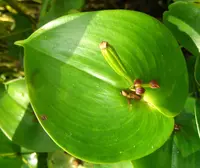
This species is named for its distinctly cordate, or heart-shaped, leaves, which are relatively large compared with many other Pleurothallis species and often form loose, attractive clumps on the mount or substrate.

Cool, cloud-forest origin

It is native to cool, moist montane forests in parts of Central and South America, where it typically grows as an epiphyte on mossy tree trunks in constantly humid, low-light conditions.

Tiny, subtle flowers

The flowers are very small, usually borne singly or in short inflorescences on slender stalks that emerge near the leaf base, and are more easily appreciated up close than from a distance, which makes growing Pleurothallis cordata especially rewarding for collectors who enjoy detailed observation.

FAQs about Pleurothallis cordata

Lack of blooms often relates to insufficient humidity, overly warm nights, or unstable temperatures. Light should be moderate, not intense. A mild, balanced orchid fertilizer at low strength during active growth also supports reliable flowering.

Grow Healthy Plants with Botan Care

Keep your plants happy and healthy with plant identification, disease detection, and easy care guidance.

Botan plant care app — identify plants on mobile

Explore More Plants