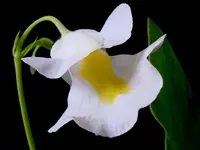
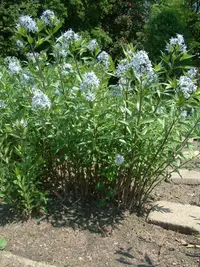
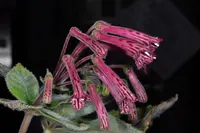
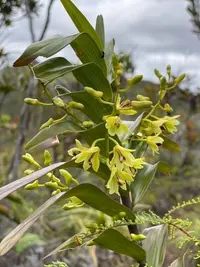
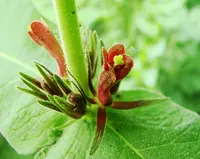
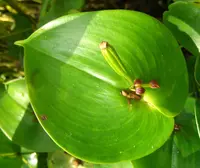
royal catchfly Care (Silene regia)

royal catchfly

About royal catchfly

Royal catchfly, Silene regia, is a long-lived herbaceous perennial native to prairies and open woodlands in the central and eastern United States. It belongs to the carnation family but is not a carnivorous plant.

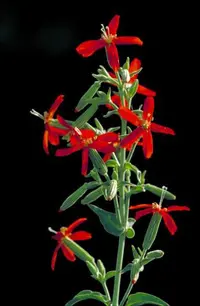
The plant forms upright clumps with stiff stems topped by showy, bright red, star-shaped flowers that attract hummingbirds and butterflies. Its leaves are medium green, opposite, and slightly sticky.

Royal catchfly prefers full sun, moderately moist but well-drained soil, and good air circulation, so site choice matters. Once established, it is fairly tough but dislikes heavy, waterlogged conditions.

Understanding these natural preferences makes it easier to care for royal catchfly in home gardens, especially in sunny prairie-style or pollinator plantings.

Main Plant Requirements

Care Difficulty

Easy Care

Light Preference

Full Sun

Water Requirements

Low Water

Temperature Preference

Cold Hardy

Hardiness Zone

4–8

Soil Texture

Sandy, Loamy, Rocky

Soil pH

Acidic (5.5–6.5), Slightly acidic (6.5–7.0)

Soil Drainage

Well-drained

Fertilization

Minimal (feed rarely)

Get Personalized Care Plan

Scan your plant to receive care tips personalized for your specific plant

Available on iOS and Android

How to Care for the royal catchfly

This sun-loving perennial thrives in open, bright sites typical of its native prairie habitat.

  • Provide 6–8 hours of direct sun daily; morning to early afternoon sun promotes compact growth and abundant blooms.
  • Tolerates light afternoon shade, especially in hotter zones, but dense shade reduces flowering and leads to weak, floppy stems in royal catchfly.
  • In regions with intense summer sun, combine full sun with slightly moist soil to prevent leaf scorch, and avoid planting where tall plants will cast shade by midsummer.

This species prefers evenly moist, well-drained soil rather than constant or heavy watering.

  • Outdoors in typical garden soil, wait until the top 3–5 cm feel dry before watering, then soak the root zone deeply.
  • Reduce watering in cool, rainy periods and during dormancy; Silene regia dislikes sitting in waterlogged clay or poorly drained low spots.
  • Watch for yellowing, soft stems as a sign of overwatering, and for drooping, dry, crisp leaves as a sign the plant has stayed dry too long.

This hardy perennial is adapted to temperate climates with warm summers and cold winters.

  • Active growth is strongest around 70–85°F (21–29°C); flowering remains good from roughly 65–90°F (18–32°C).
  • Established plants typically survive winter lows near -10°F (-23°C) with mulch, entering complete dormancy in late fall.
  • Short heatwaves to 95–100°F (35–38°C) are tolerated if soil moisture is maintained, but young plants need protection from drying winds and reflected heat.

This species is adapted to outdoor conditions and does not have special humidity requirements.

Silene regia prefers lean, well-drained mineral soils that do not stay wet after rain.

  • Use sandy or gravelly loam with low to moderate organic matter to mimic its native prairie conditions.
  • Ensure rapid drainage by blending roughly 60–70% garden soil with 30–40% coarse sand or fine gravel.
  • Keep pH slightly acidic to neutral (pH 6.0–7.2); avoid highly alkaline, compacted, or clay-heavy ground.
  • Improve aeration by raising the planting area into a low mound or berm if native soil drains slowly.

This species can be grown in containers outdoors if the pot is deep and drains freely.

  • Choose a heavy, 30–40 cm deep container so tall flowering stems stay stable in wind.
  • Use a very free-draining mix, such as 50% peat-free potting mix with 50% coarse sand or grit, to prevent root rot.
  • Elevate the pot on feet or bricks so drainage holes never sit in pooled water after rain.

Silene regia grows well in lean soils but benefits from light feeding in poor or heavily drained sites.

  • Apply a thin layer of compost around the root zone in early spring to improve soil structure and gentle nutrient supply.
  • Use a balanced, slow-release fertilizer (around 10-10-10) at half strength once in late spring if growth or flowering seems weak.
  • Avoid high-nitrogen products, which encourage floppy stems instead of flowers, especially in fertile garden soils.
  • Do not feed in late fall or winter, allowing royal catchfly to rest during dormancy.

Pruning Silene regia is simple and mainly supports strong flowering and a tidy clump.

  • Deadhead spent flower stalks in mid to late summer using clean hand pruners to encourage additional blooms and reduce self-seeding.
  • Remove any dead, diseased, or storm-damaged stems at the base as they appear to maintain plant health.
  • In late fall or very early spring, cut back dry stems to just above ground level to refresh growth.
  • Thin out crowded stems slightly during the growing season if air circulation is poor, reducing risk of foliar disease.

This species is usually grown in garden beds, where careful transplanting matters more than frequent repotting.

  • Transplant young plants in early spring or early fall, when temperatures are mild and soil is evenly moist but not waterlogged.
  • Choose a sunny, well-drained site and disturb the deep taproot of Silene regia as little as possible during planting.
  • Water thoroughly after transplanting, then keep soil slightly moist for 1–2 weeks to reduce transplant shock.
  • Container-grown plants need moving to a slightly larger pot only when roots circle the container or growth becomes noticeably stunted.

Silene regia is most often propagated from seed, with some success from careful division of young clumps.

  • Sow fresh seed in fall outdoors for natural cold stratification, or chill seed in moist medium at 35–40°F for 4–6 weeks before spring sowing.
  • Use a gritty, well-drained seed mix, barely cover the seed, and maintain light moisture and bright light until germination.
  • Transplant seedlings once they form several true leaves, handling the developing taproot gently to avoid damage.
  • Divide only younger plants in early spring, slicing small outer offsets with a sharp knife and replanting immediately.

This prairie perennial is cold hardy in much of the US and usually needs minimal winter care.

  • In zones roughly 4–8, the root system survives normal winter freezes, while top growth dies back naturally.
  • After frost, cut back dry stems to a few cm above soil level to reduce disease carryover and tidy the planting.
  • Apply a light 5–7 cm layer of mulch over the root zone in colder areas to buffer freeze–thaw cycles, keeping mulch off crowns.

Care Tips

Early staking strategy

Install slender, 60–90 cm plant supports in early spring and loosely tie young stems so tall flowering spikes stay upright and are less likely to snap in wind or heavy rain.

Targeted deadheading

Shear off spent flower stalks just above a set of healthy leaves to encourage a tidier clump and potentially extend the blooming period without stressing the crown.

Maintain open center

Every 2–3 years, thin out a few of the oldest, most crowded stems at ground level to improve air movement through the clump and reduce foliar disease pressure.

Seed pod management

If natural reseeding is not desired, remove developing seed pods promptly after flowering; if you want new plants, leave only a few seed heads on the strongest stems and collect seed when pods turn brown and dry.

Prairie-style companions

Plant alongside similarly drought-tolerant, deep-rooted prairie perennials and fine-textured grasses to create mutual wind protection and a more stable microclimate when growing royal catchfly in exposed sites.

Common Pests and Diseases

spider mites

This pest often appears in hot, dry conditions and feeds on leaf sap, causing stippling, dull foliage, and fine webbing on stems and undersides of leaves.

Solution

Rinse plants thoroughly with a strong stream of water, focusing on leaf undersides, then repeat every few days; in persistent cases, use insecticidal soap or a neem oil spray and increase humidity and airflow around plants.

leafhoppers

These insects jump from plant to plant, sucking sap and sometimes causing pale speckling, leaf curling, or transmission of leaf diseases.

Solution

Remove surrounding weeds that harbor leafhoppers, use a firm water spray to dislodge them, and, if damage continues, apply insecticidal soap or a low-impact pyrethrin product in the evening when pollinators are less active.

spotted wilt virus

This disease, often spread by thrips, causes distorted growth, ring spots, mottled leaves, and poor flowering on affected stems.

Solution

Promptly remove and destroy symptomatic plants or stems to reduce virus sources, control thrips with blue or yellow sticky traps plus insecticidal soap, and avoid moving cuttings or tools from infected plants to healthy ones without disinfecting.

powdery mildew

This disease appears as white or gray powdery patches on leaves and stems, which can lead to yellowing and reduced vigor in dense plantings of royal catchfly.

Solution

Thin crowded stems to improve airflow, avoid overhead watering, remove heavily infected leaves, and, if needed, apply a sulfur or potassium bicarbonate fungicide according to label directions at the first sign of infection as part of broader Silene regia care instructions.

crown rot (Phytophthora)

Symptoms include sudden wilting, blackened or mushy crown tissue at soil level, and plant collapse, especially in poorly drained or waterlogged sites.

Solution

Improve drainage by planting on raised beds or slopes, avoid overwatering and heavy mulching against the crown, promptly remove and discard affected plants, and do not replant Silene in the same poorly drained spot where infection occurred.

Interesting Facts

Nocturnal moth specialist

This species is primarily pollinated by nocturnal sphinx and hawk moths, which are attracted to its bright red, tubular flowers and evening nectar production.

Sticky defensive hairs

The stems and upper leaves bear sticky glandular hairs that trap small insects, which function mainly as a defensive barrier against herbivores rather than for nutrient absorption.

Tall Midwest prairie native

It is native to tallgrass prairies and open glades of the central United States, where it often grows 60–120 cm tall in full sun among warm-season grasses.

Botan icon

Did you know?

Royal catchfly is listed as endangered, threatened, or of special concern in several U.S. states because of habitat loss and prairie fragmentation, making conservation plantings an important tool to help maintain its remaining wild populations.

FAQs about royal catchfly

Lack of flowering often comes from plants being too young, overcrowded, or stressed by poor drainage or low light. Avoid high-nitrogen fertilizer, deadhead spent stems, and keep soil moderately fertile to support consistent bud and flower development.

Grow Healthy Plants with Botan Care

Keep your plants happy and healthy with plant identification, disease detection, and easy care guidance.

Botan plant care app — identify plants on mobile

Explore More Plants