


Encourage Self-Seeding
After flowering, leave some spent blooms on the plant so seed pods can mature and drop, creating natural drifts over 2–3 seasons while still deadheading the rest to control spread.

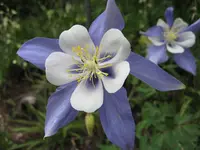
Colorado blue columbine (Aquilegia coerulea) is a hardy perennial wildflower native to the Rocky Mountains, especially Colorado’s high-elevation meadows and open woodlands. It forms clumps of delicate, divided foliage and sends up airy stems topped with nodding, two-toned blue and white flowers with long spurs. Blooms attract hummingbirds and pollinators and give the plant strong ornamental value in mixed borders and naturalistic plantings. Aquilegia coerulea prefers cool conditions, partial sun, and moist but well-drained soil, and it may self-seed in suitable sites. Once established, it is moderately easy to grow, and gardeners quickly learn how to care for Colorado blue columbine in temperate climates.

Care Difficulty
Moderate Care

Light Preference
Partial Shade

Water Requirements
Moderate Water

Temperature Preference
Cold Hardy

Hardiness Zone
3–8

Soil Texture
Loamy, Sandy, Organic-rich

Soil pH
Acidic (5.5–6.5), Slightly acidic (6.5–7.0)

Soil Drainage
Moist but well-drained

Fertilization
Minimal (feed rarely)
Scan your plant to receive care tips personalized for your specific plant
Available on iOS and Android
This mountain perennial prefers cool sun exposure that mimics open woodland or meadow edges.
This species favors consistently moist, well-drained soil rather than strict watering schedules.
This hardy perennial is adapted to cool summers and cold winters, typical of its Rocky Mountain habitat.
This species grows best in moderate outdoor humidity and usually does not need special humidity management.
This species prefers cool, moist, well-drained soil with a loose, crumbly structure.
This species can be grown in containers, though it performs best in cool, outdoor settings.
This plant grows well in modest soils, but light feeding supports stronger flowering in Colorado blue columbine.
Pruning Aquilegia coerulea is simple and mainly supports tidy growth and repeat flowering.
Aquilegia coerulea is usually grown in garden beds, so focus on careful transplanting rather than frequent repotting.
Propagation of this species is most reliable from seed, with some limited division for established clumps.
This species is cold hardy in most temperate climates and usually needs only minimal winter care outdoors.

Plant Health Check
Not sure what's wrong with your plant? Check your plant's health inside the app.
This species, commonly called Colorado blue columbine, is the official state flower of Colorado, recognized for its distinctive blue-and-white bicolor petals that match the state flag colors.
Its long, backward-pointing nectar spurs are adapted for pollination by long-tongued insects and hummingbirds, which can reach nectar that many other pollinators cannot access.
The plant is naturally found in moist mountain meadows and open woodlands of the Rocky Mountains, often between roughly 2,100–3,700 m, showing strong adaptation to cool summers and intense sunlight at high elevations.

Selective breeding of wild populations has produced numerous ornamental cultivars with variations in spur length and flower color, yet most still retain the characteristic nodding flower form that helps protect pollen from rain and wind.
Lack of blooms usually comes from too little light, excess nitrogen fertilizer, or young plants that are not yet mature. Crowded clumps and old, woody growth also reduce flowering; division and deadheading often restore performance when growing Colorado blue columbine.
Keep your plants happy and healthy with plant identification, disease detection, and easy care guidance.

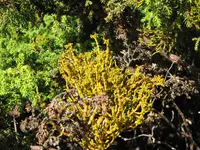
Azores Dwarf-Mistletoe
Arceuthobium azoricum
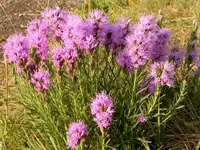
dotted blazing star
Liatris punctata
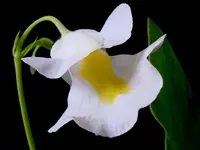
Utricularia alpina
Utricularia alpina
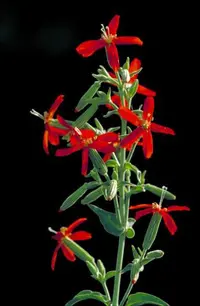
royal catchfly
Silene regia

Bell Agapanthus
Agapanthus campanulatus
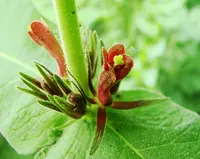
orangefruit horse-gentian
Triosteum aurantiacum
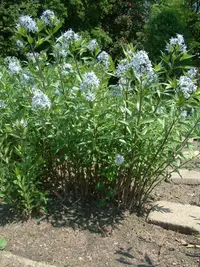
eastern bluestar
Amsonia tabernaemontana
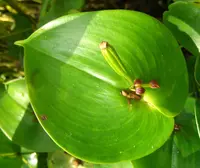
Pleurothallis cordata
Pleurothallis cordata