


Encourage Deep Roots
In the first growing season, remove most developing flower stalks so the plant directs energy into its taproot, which improves long-term drought tolerance and flowering quality in future years.

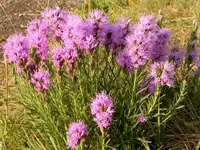
Dotted blazing star (Liatris punctata) is a hardy, long-lived perennial wildflower native to North American prairies and dry open grasslands. It forms clumps of narrow, grassy foliage and sends up tall spikes of purple, button-like flower heads that open from the top down. This species is adapted to poor, dry soils and strong sun, which makes it well suited to low-maintenance, water-wise plantings. Its deep root system provides good drought tolerance but means it resents disturbance once established. For those learning how to care for dotted blazing star, it is generally easier in well-drained, sunny sites where competition from taller, more vigorous plants is limited.

Care Difficulty
Easy Care

Light Preference
Full Sun

Water Requirements
Low Water

Temperature Preference
Cold Hardy

Hardiness Zone
3–9

Soil Texture
Sandy, Loamy, Rocky

Soil pH
Slightly acidic (6.5–7.0), Neutral (7.0)

Soil Drainage
Well-drained

Fertilization
Minimal (feed rarely)
Scan your plant to receive care tips personalized for your specific plant
Available on iOS and Android
This sun-loving prairie perennial needs strong light to bloom and stay compact.
This species is drought-tolerant and prefers infrequent, deep watering once established.
This hardy prairie plant tolerates a wide temperature range once established outdoors.
Liatris punctata thrives in dry to moderately dry air and rarely needs humidity adjustment indoors or outdoors.
Liatris punctata prefers lean, fast-draining, mineral soils that stay on the dry side between waterings.
This species can be grown in containers if the setup mimics deep, sharply drained prairie soil.
Liatris punctata thrives in lean, well-drained soil and usually needs only light feeding.
Pruning Liatris punctata is simple and mainly focuses on tidiness and encouraging flowering.
This species is usually grown in the ground; transplanting is infrequent due to its deep taproot.
Propagation of Liatris punctata is commonly done by seed and, less often, by careful division.
This prairie perennial is cold hardy and typically needs minimal winter care in the ground.

Plant Health Check
Not sure what's wrong with your plant? Check your plant's health inside the app.
This species develops a very long, woody taproot that can reach several meters into the soil, allowing it to access deep moisture and survive extended drought on North American prairies and shortgrass steppe.
Its late-summer to early-fall flowering provides an important nectar and pollen source for native bees, butterflies, and moths at a time when many other prairie plants have already finished blooming.
Healthy populations of this species are often associated with relatively undisturbed, well-drained native grasslands, so its presence can indicate high-quality prairie habitat with minimal soil disturbance.

Studies of Great Plains grasslands have found that this species often increases in abundance under moderate grazing but declines with heavy grazing or frequent tillage, making it useful for monitoring long-term rangeland management impacts.
This species is highly attractive to native bees, honeybees, and many butterfly species, including monarchs. Dense flower spikes provide abundant nectar and pollen, making it an excellent choice for supporting local pollinator populations in sunny, open plantings.
Keep your plants happy and healthy with plant identification, disease detection, and easy care guidance.

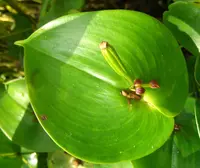
Pleurothallis cordata
Pleurothallis cordata
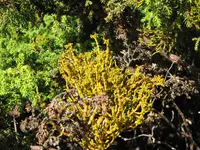
Azores Dwarf-Mistletoe
Arceuthobium azoricum
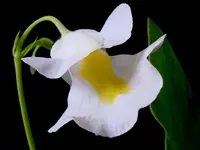
Utricularia alpina
Utricularia alpina

Bell Agapanthus
Agapanthus campanulatus
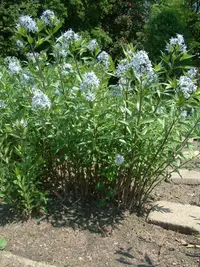
eastern bluestar
Amsonia tabernaemontana
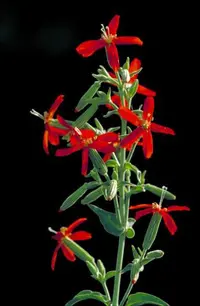
royal catchfly
Silene regia
orangefruit horse-gentian
Triosteum aurantiacum
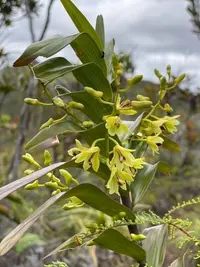
Dendrobium closterium
Dendrobium closterium