Siberian barren strawberry Care (Waldsteinia ternata)

Siberian barren strawberry

About Siberian barren strawberry

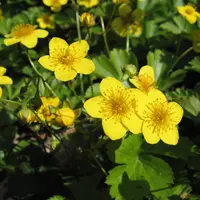
Siberian barren strawberry (Waldsteinia ternata) is a low, mat-forming perennial grown mainly as a decorative ground cover rather than for fruit. It has glossy, trifoliate leaves and small, bright yellow flowers that create a dense, tidy carpet of foliage in suitable conditions.

This species is native to woodlands and rocky slopes in parts of Europe and Asia, where it thrives in cool, partially shaded sites. Its tolerance of cold, moderate shade, and a range of soils makes it relatively easy to establish and maintain for most gardeners. Once you understand how to care for Siberian barren strawberry, it can provide long-lasting, low-maintenance coverage in borders, under shrubs, or on slopes.

Main Plant Requirements

Care Difficulty

Easy Care

Light Preference

Partial Shade

Water Requirements

Moderate Water

Temperature Preference

Cold Hardy

Hardiness Zone

3–8

Soil Texture

Loamy, Sandy, Organic-rich

Soil pH

Acidic (5.5–6.5), Slightly acidic (6.5–7.0)

Soil Drainage

Moist but well-drained

Fertilization

Minimal (feed rarely)

Get Personalized Care Plan

Scan your plant to receive care tips personalized for your specific plant

Available on iOS and Android

How to Care for the Siberian barren strawberry

This low groundcover thrives in cool, bright positions with gentle sun and reliable shade.

  • Provide 3–5 hours of morning sun with light or dappled shade in the afternoon; north or east-facing exposures suit Siberian barren strawberry best.
  • In hotter climates, protect from harsh midday and late-afternoon sun to prevent leaf scorch and dry, sparse patches.
  • In dense shade, growth thins and flowering drops; consider thinning overstory branches or shifting plants to spots with filtered light.

This plant prefers consistently moist, well-drained soil rather than alternating extremes of wet and bone-dry.

  • Water when the top 2–4 cm of soil feel dry, aiming for soil that stays slightly moist but never saturated.
  • In spring and fall, rainfall often covers needs; in summer droughts, watch for dull, drooping leaves and water more deeply but less often.
  • Avoid soggy conditions that cause yellowing leaves and root rot by using well-draining soil and avoiding low spots that hold standing water.

This hardy groundcover tolerates a wide temperature range but grows best in cool to mild conditions.

  • Optimal growth occurs around 55–75°F (13–24°C), with steady foliage and flowering in cool springs and mild summers.
  • Mature plants tolerate winter cold down to about -20°F (-29°C) under mulch or snow cover, with foliage often semi-evergreen in milder areas.
  • In hot summers above 85°F (29°C), growth may slow; provide extra shade and moisture to prevent heat stress and leaf scorch.

This groundcover tolerates a wide humidity range and rarely needs special humidity management outdoors.

  • Performs reliably at 30–60% humidity typical of most homes and temperate outdoor climates.
  • Tolerates short dry indoor air spells; Siberian barren strawberry usually shows stress only when also underwatered or heat-stressed.
  • Humidity stress appears as browning leaf edges and quicker wilting, especially in hot, exposed sites.
  • In unusually dry, hot spots, group plants close together and mulch soil to stabilize local humidity around foliage.

This species prefers loose, humus-rich soil that stays evenly moist yet drains freely.

  • Use a loamy mix with 40–60% garden soil, 30–40% compost, and 10–20% coarse sand or fine grit for structure.
  • Aim for slightly acidic to neutral pH around 6.0–7.0, avoiding strongly alkaline conditions that can limit nutrient uptake.
  • Improve drainage by incorporating coarse sand, small grit, or fine bark, especially in heavy or compacted ground.
  • Avoid dense clay, waterlogged spots, or pure sand, as these either suffocate roots or dry out too quickly for Waldsteinia ternata.

This species grows well in containers, especially for shady patios and small spaces.

  • Choose a wide, shallow pot to match its spreading habit, allowing rhizomes room to run without excessive unused depth.
  • Use a heavier clay or ceramic container outdoors so the spreading foliage does not tip the pot in wind or on slopes.
  • Fill with a peat-free, compost-based mix amended with 20–30% grit or perlite to keep moisture without creating soggy conditions.

Waldsteinia ternata is a low-demand groundcover that benefits from light feeding in poorer soils during active growth.

  • Apply a balanced slow-release fertilizer (around 10-10-10) or thin compost layer once in early spring for caring for Siberian barren strawberry.
  • Use half-strength liquid balanced NPK every 4–6 weeks in the growing season only if foliage looks pale or growth is weak.
  • Skip or greatly reduce feeding in fall and winter when growth slows or stops.
  • Always water before and after fertilizing to limit root burn and improve nutrient uptake.

Waldsteinia ternata needs only light pruning to keep the mat dense and tidy.

  • Best time for pruning is early spring or just after flowering, before new flushes of growth harden.
  • Use clean hand pruners or scissors to remove dead, damaged, or diseased leaves and stems at the base.
  • Shear back sparse or leggy patches lightly to encourage bushier, tighter groundcover growth.
  • Edge spreading clumps along paths or beds to maintain desired shape and prevent unwanted spread.

This plant is most often used as an in-ground groundcover and is transplanted rather than repotted.

  • Transplant clumps every 3–5 years or when growth becomes thin in the center or overcrowded at the edges.
  • Choose early spring or early fall, when temperatures are mild and soil moisture is steady, to limit stress.
  • Lift clumps with a trowel, keep roots shaded and moist, and replant at the same depth in well-drained soil.
  • Water thoroughly after transplanting, then keep soil evenly moist for 2–3 weeks to help roots re-establish.

This species is commonly propagated to expand groundcover or refresh older plantings.

  • Division is the most reliable method; split healthy clumps in early spring or early fall into several rooted sections.
  • Replant divisions immediately into moist, well-drained soil, spacing 20–30 cm apart for fast coverage.
  • Stem runners with small roots can be lifted and replanted shallowly, keeping crowns just at soil level.
  • Seeds may be sown in trays of light mix outdoors in fall, allowing natural cold exposure to aid germination.

Waldsteinia ternata is generally cold hardy in much of the US and needs minimal winter care in the ground.

  • In cold zones, a 3–5 cm layer of leaf mulch around the root zone helps buffer freeze–thaw cycles.
  • Container-grown plants benefit from shelter in an unheated garage or against a protected wall to reduce root freezing.
  • Avoid heavy winter watering; keep soil just barely moist to prevent root rot in cold, saturated media.

Care Tips

Use as living mulch

Plant in a 20–30 cm wide band around shrubs or under open-canopy trees to act as a living mulch that suppresses weeds and keeps soil cooler and more evenly moist.

Divide to maintain vigor

Every 4–5 years, lift and divide crowded clumps in early spring, replanting the healthiest outer sections at the original soil depth to prevent thinning and bare patches.

Edge to control spread

Once a year, slice along bed edges with a sharp spade and remove runners that cross paths or lawn borders to keep the groundcover dense but contained.

Leaf litter management

In late winter, gently rake off heavy, matted leaves and debris so new growth can emerge easily and to reduce fungal issues in shaded, still areas.

Underplanting spacing strategy

When planting beneath shrubs, leave a 10–15 cm gap around the shrub stem so air can circulate and to make future pruning, watering, and fertilizing access easier when caring for Siberian barren strawberry.

Common Pests and Diseases

Leaf spot

This disease causes irregular brown to purple spots on older leaves, sometimes with a yellow halo and premature leaf drop in dense groundcover patches.

Solution

Remove and discard affected leaves, thin crowded plantings to improve airflow, and avoid overhead watering so foliage dries quickly; in persistent wet conditions, a copper- or chlorothalonil-based fungicide labeled for ornamental groundcovers can be used according to label directions.

Powdery mildew

This disease leads to a white, powdery coating on leaves, which can cause distortion and gradual thinning of groundcover mats in shaded, humid sites.

Solution

Improve air circulation by thinning plants, reduce shade if possible, and water at soil level; remove heavily infected leaves, and if needed apply a sulfur or potassium bicarbonate fungicide labeled for powdery mildew on ornamentals.

Vine weevils

These insects feed as adults on leaf edges, leaving notched margins, while larvae chew on roots and crowns, which can cause patchy dieback in plantings.

Solution

Hand-pick adult beetles at night, use beneficial nematodes targeting vine weevil larvae in moist soil in spring or late summer, and consider replacing heavy organic mulches near the crowns with mineral mulch to reduce shelter sites.

Slugs and snails

These pests create irregular holes and ragged edges on leaves, especially in moist, shaded sites, and can disfigure young growth in early spring.

Solution

Reduce hiding places such as thick mulch and debris, set out shallow beer traps or iron phosphate pellets according to label directions, and hand-pick at night or in early morning to lower populations.

Interesting Facts

Evergreen berry mimic

This species keeps its trifoliate leaves through winter in many climates and produces small, dry, inedible fruits that visually resemble strawberries, which is why it is called barren strawberry.

Cold woodland specialist

It is naturally native to cool, shady woodlands and rocky slopes in central and eastern Europe and parts of Siberia, where it forms dense, low mats that stabilize soil and compete effectively with many herbaceous weeds.

Bee-friendly spring blooms

The bright yellow, open flowers appear in mid to late spring and provide an accessible early-season nectar and pollen source for bees and other small pollinators when few other groundcovers are in bloom.

Botan icon

Did you know?

Genetic and morphological studies have shown that Waldsteinia ternata is more closely allied to certain dry-fruited members of the rose family than to true strawberries in the genus Fragaria, despite the strong resemblance of its leaves and fruits to garden strawberries.

FAQs about Siberian barren strawberry

This species spreads steadily by short runners, forming a dense, low mat over time, but it is not typically aggressive. It is usually easy to keep within bounds using edging and occasional division of crowded clumps.

Grow Healthy Plants with Botan Care

Keep your plants happy and healthy with plant identification, disease detection, and easy care guidance.

Botan plant care app — identify plants on mobile

Explore More Plants