


Use Rainwater Trays
Stand pots in a shallow tray of rainwater or distilled water during active growth, then let the tray briefly dry between fillings to mimic bog water fluctuations and keep minerals from building up.

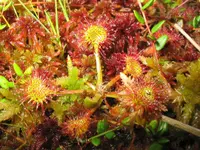
Roundleaf sundew, Drosera rotundifolia, is a small temperate carnivorous plant that traps insects with sticky, glistening hairs on its rounded leaves. The leaves form low rosettes close to the ground, often flushed red, with delicate flower stalks rising above in the growing season.
It naturally occurs in cool, nutrient-poor bogs and fens across northern North America, Europe, and parts of Asia. Because it depends on constant moisture, acidic substrates, and low-mineral water, it can be challenging for beginners who do not match these conditions.
Those who learn how to care for Roundleaf Sundew find it rewarding, as it adapts well to containers or bog gardens with strong light, very damp soil, and soft, low-mineral water.

Care Difficulty
Hard Care

Light Preference
Full Sun

Water Requirements
Aquatic

Temperature Preference
Cold Hardy

Hardiness Zone
3–9

Soil Texture
Sandy, Peaty, Organic-rich

Soil pH
Strongly acidic (4.5–5.5)

Soil Drainage
Waterlogged tolerant

Fertilization
Minimal (feed rarely)
Scan your plant to receive care tips personalized for your specific plant
Available on iOS and Android
This species needs strong light to form healthy red traps and sticky dew.
This bog species requires constantly wet, low-mineral conditions.
This temperate carnivorous plant is adapted to cool summers and cold, dormant winters.
This carnivorous bog species needs consistently high humidity to keep traps functional and leaves hydrated.
This species requires a nutrient-poor, acidic, water-retentive but airy substrate similar to natural peat bogs.
This carnivorous species is well suited to container growing when moisture and stability are controlled carefully.
This carnivorous bog species receives most nutrients from captured insects and should not be conventionally fertilized.
Pruning Drosera rotundifolia is minimal and focuses on hygiene rather than shaping.
Container-grown roundleaf sundew benefits from infrequent, careful repotting to maintain suitable acidic, low-nutrient conditions.
Drosera rotundifolia is commonly propagated by seed and leaf cuttings under consistently moist, bright conditions.
This species is cold hardy and enters a natural winter dormancy, needing only modest protection in extreme conditions.

Plant Health Check
Not sure what's wrong with your plant? Check your plant's health inside the app.
This species is one of the few carnivorous plants that naturally tolerates freezing winters, surviving under snow in a dormant hibernaculum and resuming growth when temperatures rise.
It is strongly associated with acidic, nutrient-poor Sphagnum bogs and fens, where its insect-trapping leaves help compensate for the lack of available nitrogen in the soil.
The leaf tentacles secrete a sticky mucilage that both traps insects and refracts light, creating a sparkling appearance that enhances attraction to small flying prey in full sun.

In some northern regions this species forms dense, long-lived clonal colonies by slowly spreading its short creeping stem, so a seemingly large patch can consist of many genetically identical rosettes derived from a single original plant.
Brown leaves usually result from low humidity, mineral-rich water, or intense heat and sun combined. Use rain, distilled, or reverse osmosis water, maintain consistently moist substrate, and protect from hot, drying air to reduce browning.
Keep your plants happy and healthy with plant identification, disease detection, and easy care guidance.

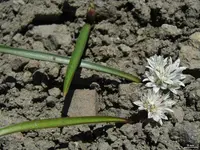
threebract onion
Allium tribracteatum
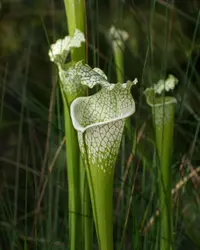
White pitcher plant
Sarracenia leucophylla

Giant Allium
Allium giganteum 'Globemaster'
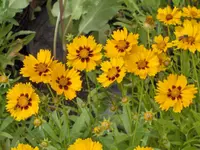
Sand coreopsis
Coreopsis lanceolata
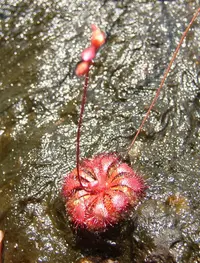 POPULAR
Spoon-Leaved Sundew
Drosera spatulata
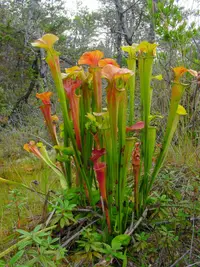
green pitcherplant
Sarracenia oreophila
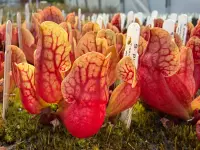 POPULAR
Purple pitcher plant
Sarracenia purpurea
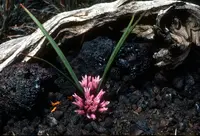
Tolmie's onion
Allium tolmiei