Support Variegated Stems
Install a sturdy moss pole or coco pole early and secure each new internode with soft ties so that heavy, variegated leaves are well supported and less prone to snapping at the nodes.

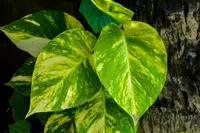
Monstera deliciosa 'Albovariegata', often called white variegated monstera, is a climbing aroid prized for its striking white and green marbled leaves. It is a naturally occurring variegated form of the common Monstera deliciosa from tropical Central America.
Mature plants develop large, fenestrated leaves with irregular white patches or sectors, and grow best when given a support to climb. The high level of variegation reduces chlorophyll, so growth is slower and the plant is more sensitive to low light and stress.
Understanding how to care for White Variegated Monstera starts with stable warmth, bright but indirect light, and a freely draining, airy substrate that stays lightly moist but not waterlogged.

Care Difficulty
Moderate Care

Light Preference
Bright Indirect Light

Water Requirements
Moderate Water

Temperature Preference
Tropical / Frost Sensitive

Hardiness Zone
11–12

Soil Texture
Loamy, Peaty, Organic-rich

Soil pH
Acidic (5.5–6.5), Slightly acidic (6.5–7.0)

Soil Drainage
Moist but well-drained

Fertilization
Light (every 4–6 weeks)
Scan your plant to receive care tips personalized for your specific plant
Available on iOS and Android
This variegated Monstera needs bright, filtered light to maintain stable white patterning without leaf damage.
This plant prefers evenly moist, fast-draining soil and reacts poorly to both drought and waterlogging.
This variegated Monstera thrives in stable, warm conditions and is sensitive to cold and temperature swings.
This variegated Monstera benefits from moderately high, stable humidity indoors.
This aroid prefers an airy, fast-draining, organic-rich substrate that still holds some moisture.
This species adapts well to container culture when given a stable, supportive setup.
This variegated Monstera responds well to moderate, consistent feeding during active growth.
Pruning helps maintain the size, shape, and health of Monstera deliciosa 'Albovariegata'.
This plant prefers occasional, thoughtful repotting to support its large root system and climbing habit.
Propagation of this variegated Monstera is usually done from stem cuttings to maintain the variegation pattern.
This tropical plant is frost-sensitive and needs indoor-style winter care in most temperate climates.

Plant Health Check
Not sure what's wrong with your plant? Check your plant's health inside the app.
The white and green pattern is caused by a chimera, where genetically different cell layers grow together in one leaf, rather than by a virus or nutrient issue.
The white leaf sections lack chlorophyll, so they cannot photosynthesize and rely on the green tissue to support the entire leaf.
Stable white variegation is uncommon in wild M. deliciosa populations, so most plants in cultivation come from selected and vegetatively propagated mutations rather than from wild-collected seed.

Because the white sectors cannot produce chlorophyll, highly variegated plants grow noticeably slower and are more prone to tissue damage under strong light than all-green Monstera deliciosa, which is a key consideration in Monstera deliciosa 'Albovariegata' plant care.
This cultivar performs best indoors or in sheltered patios in warm, frost-free climates. It dislikes strong direct sun, cold drafts, and large temperature swings. White Variegated Monstera indoor care is usually easier to control and keep consistent.
Keep your plants happy and healthy with plant identification, disease detection, and easy care guidance.