Tank water management
Keep the central rosette filled with distilled or rainwater but flush it out completely every 2–3 weeks to prevent salt buildup and mosquito larvae.

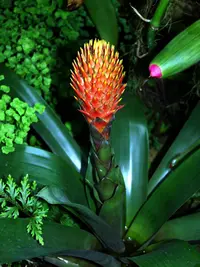
Guzmania conifera is a tropical bromeliad known for its rosette of glossy green leaves and a tall, cone-shaped flower spike with vivid bracts. It is typically grown as an ornamental indoor plant due to its compact size and striking form.
This species is native to humid forests in Central and South America, where it grows as an epiphyte on trees rather than in soil. Its slow growth, tolerance of indoor temperatures, and modest light needs make it relatively straightforward for those learning how to care for Guzmania conifera.
The plant prefers bright, filtered light, consistent moisture in the central cup, and a free-draining, airy substrate that does not stay waterlogged.

Care Difficulty
Moderate Care

Light Preference
Bright Indirect Light

Water Requirements
Keep Soil Moist

Temperature Preference
Tropical / Frost Sensitive

Hardiness Zone
11–12

Soil Texture
Peaty, Organic-rich, Loamy

Soil pH
Strongly acidic (4.5–5.5), Acidic (5.5–6.5)

Soil Drainage
Moist but well-drained

Fertilization
Light (every 4–6 weeks)
Scan your plant to receive care tips personalized for your specific plant
Available on iOS and Android
This species prefers bright, filtered light that mimics forest canopy conditions.
Watering should keep the central cup hydrated while avoiding waterlogged roots.
Stable, warm conditions support healthy growth and flowering.
This species prefers consistently moist air and reacts quickly to very dry conditions.
This bromeliad prefers a very airy, fast-draining, organic-rich medium rather than dense potting soil.
This species is well suited to container growing due to its compact root system.
This bromeliad is a light feeder, so use modest, diluted nutrition to support healthy foliage and flowering.
Pruning is minimal and focused on hygiene rather than shaping this bromeliad.
Guzmania conifera grows best slightly root-bound and is repotted infrequently.
This species is commonly propagated from offshoots (pups) produced after flowering rather than from seed.
This tropical bromeliad is frost-sensitive and needs mild, stable indoor conditions in winter.

Plant Health Check
Not sure what's wrong with your plant? Check your plant's health inside the app.
This species develops a tight, conical inflorescence with overlapping bracts that give it a pine-cone appearance, which is the origin of its name conifera, meaning cone-bearing.
In its native Andean cloud forests of Ecuador, this bromeliad usually grows as an epiphyte on tree trunks and branches, anchoring to bark rather than rooting in soil and relying on leaf rosettes to capture water and debris.
The plant is naturally adapted to cool, humid, and shaded upper montane forests, where frequent mists and low-intensity light shape its relatively thin, soft leaves and its reliance on atmospheric moisture.

Guzmania conifera is known from a restricted geographic range in the Ecuadorian Andes and is considered a threatened species in the wild due to habitat loss in its cloud forest environment, which makes conservation of its natural populations a concern for botanists.
This bromeliad usually blooms once when mature, then slowly declines while producing offsets (pups). Lack of bloom is often due to immaturity, low light, or stress after repotting rather than incorrect Guzmania conifera care instructions.
Keep your plants happy and healthy with plant identification, disease detection, and easy care guidance.

-1-200x159.webp)