


Provide climbing support
Install a sturdy trellis, fence, or wires early and tie new shoots loosely with soft ties so the long, flexible stems can be trained and spaced out for better light exposure and flowering.

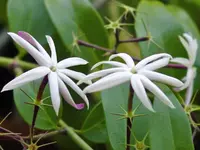
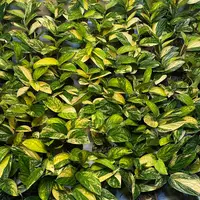
Angel-wing jasmine, Jasminum laurifolium, is an evergreen climber or sprawling shrub valued for its clusters of softly scented white flowers and glossy foliage. It often trails or climbs over supports, making it suitable for trellises, fences, and large containers.
This species is native to parts of South and Southeast Asia, where it grows in warm, frost-free conditions. It is considered moderately easy to grow if given bright light, mild temperatures, and evenly moist but well-drained soil.
Understanding how to care for angel-wing jasmine mainly involves providing enough light and avoiding waterlogged roots, which helps maintain healthy growth and regular flowering.

Care Difficulty
Moderate Care

Light Preference
Partial Sun

Water Requirements
Regular Water

Temperature Preference
Tropical / Frost Sensitive

Hardiness Zone
10–11

Soil Texture
Sandy, Loamy, Organic-rich

Soil pH
Acidic (5.5–6.5), Slightly acidic (6.5–7.0)

Soil Drainage
Moist but well-drained

Fertilization
Light (every 4–6 weeks)
Scan your plant to receive care tips personalized for your specific plant
Available on iOS and Android
This jasmine prefers bright conditions with some protection from intense midday sun.
This species prefers evenly moist, well-drained soil that never stays soggy.
This jasmine grows best in warm, frost-free conditions with mild seasonal variation.
This species benefits from moderately humid air but adapts to typical home conditions.
Soil for this jasmine should be loose, well-drained, and moderately rich in organic matter.
This species is well suited to container growing when its root space and support needs are considered.
This jasmine responds well to moderate feeding during active growth, especially in pots.
Thoughtful pruning keeps Jasminum laurifolium compact, flowering well, and within its space.
Container-grown plants benefit from occasional repotting to maintain root health and steady growth.
This species is commonly propagated from vegetative material for reliable, uniform plants.
Winter needs depend on climate, since this jasmine dislikes hard frost and prolonged freezing.

Plant Health Check
Not sure what's wrong with your plant? Check your plant's health inside the app.
This species has relatively broad, leathery leaves that resemble those of laurel, which is reflected in the name laurifolium meaning laurel leaved. The leaf texture helps reduce water loss in its native warm climates.
The white, star shaped flowers are most fragrant in the evening and at night, when they attract moth pollinators. The increased scent after dusk is a common adaptation in night pollinated shrubs and vines.
In suitable climates this plant forms a semi climbing shrub, scrambling over supports rather than twining tightly like some other jasmines. It often produces long, arching stems that can be trained on trellises or along fences.
Lack of blooms usually comes from insufficient light, heavy pruning at the wrong time, or excess nitrogen fertilizer. Ensure strong but not extreme light, avoid cutting new flower shoots, and use a balanced or slightly phosphorus-leaning feed.
Keep your plants happy and healthy with plant identification, disease detection, and easy care guidance.

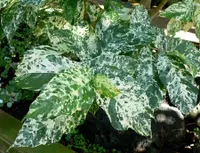
Clown fig
Ficus aspera
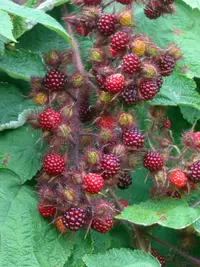
wine raspberry
Rubus phoenicolasius
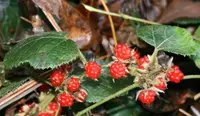
Rubus buergeri
Rubus buergeri
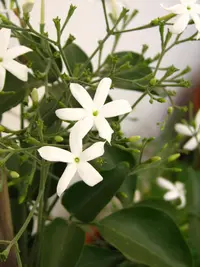
Lemon-scented jasmine
Jasminum azoricum
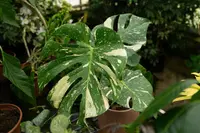
Monstera deliciosa 'Thai Constellation'
Monstera deliciosa 'Thai Constellation'
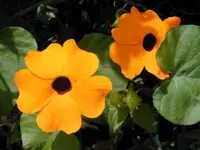
Black-eyed Susan vine
Thunbergia alata
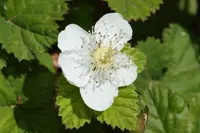
roughfruit berry
Rubus lasiococcus
Monstera 'Karstenianum'
Monstera 'Karstenianum'