gray sheoak Care (Casuarina glauca)

Also known as: Swamp sheoak, longleaf casuarina, suckering Australian pine
gray sheoak

About gray sheoak

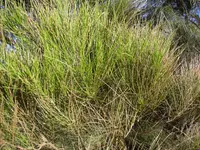
Gray sheoak, Casuarina glauca, is an evergreen tree or large shrub known for its fine, needle-like branchlets and smooth, furrowed bark. It often forms a narrow, upright crown that can become broader with age.

This species is native to coastal eastern Australia, where it tolerates wind, salt spray, and sandy or poor soils. These traits make it useful for coastal shelterbelts, erosion control, and tough landscape sites.

It grows quickly and can fix nitrogen, which helps it cope with low-fertility substrates but also means it can become invasive in some regions. To care for gray sheoak, provide sun, good drainage, and avoid waterlogged conditions.

Main Plant Requirements

Care Difficulty

Easy Care

Light Preference

Full Sun

Water Requirements

Low Water

Temperature Preference

Warm Climate

Hardiness Zone

9–11

Soil Texture

Sandy, Loamy, Rocky

Soil pH

Slightly acidic (6.5–7.0), Slightly alkaline (7.0–7.5)

Soil Drainage

Well-drained

Fertilization

Minimal (feed rarely)

Get Personalized Care Plan

Scan your plant to receive care tips personalized for your specific plant

Available on iOS and Android

How to Care for the gray sheoak

This coastal tree prefers bright, open conditions with long daily sun exposure for dense, healthy growth.

  • Provide full sun for 6–8 hours per day; gray sheoak handles intense coastal light better than shaded inland sites.
  • Accepts light or high, filtered shade for a few hours, but prolonged shade leads to sparse, weak, and elongated shoots.
  • Young trees benefit from some protection from harsh late-afternoon summer sun in hot, inland climates to reduce scorching and stress.

This species is drought-tolerant once established but still responds best to occasional, deep watering in well-drained soil.

  • For in-ground trees, water deeply when the top 5–8 cm of soil feels dry, then allow soil to drain fully before the next watering.
  • During the first 1–2 growing seasons, increase frequency in hot, dry periods; reduce watering in cool or rainy seasons to avoid waterlogging.
  • Casuarina glauca shows overwatering stress as yellowing, limp foliage and dieback, while underwatering causes browning tips and premature needle drop.

This tree thrives in warm, mild climates and tolerates both coastal exposure and urban heat when roots are not waterlogged.

  • Ideal growth occurs around 65–85°F (18–29°C), with sustained warmth supporting faster shoot extension and denser canopy formation.
  • Mature trees tolerate brief drops near 25–28°F (-4 to -2°C), but young plants are safer above 32°F (0°C) to prevent cambium and root damage.
  • Handles hot spells up to about 100°F (38°C) if soil moisture is adequate; mulch the root zone to buffer temperature swings and reduce stress.

This species tolerates a wide humidity range and usually needs no special humidity management.

  • Performs well in 30–60% humidity, similar to typical indoor air in most homes.
  • Handles dry air better than many species, but prolonged very low humidity with heat may slow growth.
  • Humidity stress appears as fine needle-like foliage browning at tips and edges rather than wilting.

This coastal species prefers lean, very free-draining soil and copes well with low fertility.

  • Use a sandy or sandy-loam mix with plenty of mineral content; aim for at least 50–70% coarse sand or fine grit for structure.
  • Ensure rapid drainage by blending in perlite or small horticultural grit and avoiding high peat content that holds excess water.
  • Target a slightly acidic to neutral pH around 6.0–7.5; avoid strongly acidic or highly alkaline, compacted ground.
  • For containers, mix coarse sand, perlite, and a small portion of composted bark to improve aeration while keeping nutrients modest for Casuarina glauca.

This species can be grown in containers, especially when managed as a small tree or shrub.

  • Choose a deep, heavy container that adds stability against wind and prevents the narrow crown from toppling.
  • Select a pot material like ceramic or thick plastic that slows moisture loss but still allows a sharply draining mix to dry between waterings.
  • Position the container where it cannot be knocked over, as the fine, needle-like foliage creates a sail effect in exposed sites.

Casuarina glauca usually manages in poor soils, but light, targeted feeding can support faster growth in young or container plants.

  • Use a balanced slow-release NPK fertilizer or well-rotted compost in spring to support new growth.
  • Feed young or potted gray sheoak every 6–8 weeks during the growing season at half the label strength.
  • Reduce or stop fertilizing in fall and winter when growth slows markedly.
  • Avoid high-nitrogen products or overfeeding, which can cause weak, overly lush shoots.

Casuarina glauca responds well to measured pruning that maintains structure and safety without removing too much live growth.

  • Schedule main pruning in late winter or early spring before vigorous new growth starts.
  • Remove dead, diseased, storm-damaged, or crossing branches with clean, sharp bypass pruners or a pruning saw.
  • Thin crowded interior twigs to admit light and air, which supports denser but healthier canopy growth.
  • Limit height or shape windbreaks by shortening selected leaders, keeping cuts just above outward-facing side branches.

This species is usually grown in the ground, so focus on careful transplanting rather than frequent repotting.

  • Transplant in late winter or early spring when temperatures are mild and soil is workable.
  • Look for signs such as roots circling the pot, water running off quickly, or slowed growth to judge when a container plant must be shifted.
  • Move up only 1 pot size and plant into a deep, sharply drained mix to limit waterlogging and root stress.
  • Water thoroughly after transplanting, then keep soil evenly moist for several weeks while shading from harsh sun to aid recovery.

Casuarina glauca is most often propagated from seeds or semi-hardwood cuttings under controlled conditions.

  • Collect ripe cones, extract seeds, and sow in late winter to early spring in a free-draining, sandy mix.
  • Provide bright light, 68–77°F warmth, and consistent but light moisture to encourage even germination.
  • Take semi-hardwood cuttings in late spring or early summer and dip bases in rooting hormone to improve success.
  • Place cuttings under high humidity with bottom heat and good air movement to reduce rot while roots form.

Established Casuarina glauca in mild climates needs little winter care, but young or potted plants benefit from basic protection.

  • In USDA zones below about 9, grow in a sheltered site with well-drained soil to reduce freeze damage risk.
  • Apply a 5–8 cm mulch layer around the root zone, keeping it off the trunk, to moderate soil temperature.
  • Move container plants to a bright, frost-free location or unheated greenhouse when hard frosts are forecast.
  • Avoid heavy winter watering; keep soil just barely moist so roots do not sit cold and saturated.

Care Tips

Wind-hardening young trees

Expose young plants gradually to stronger wind over several weeks, starting with sheltered positions, so their flexible branchlets and roots strengthen before planting in a fully exposed coastal or open site.

Root-zone containment

When planting near drains, paving, or structures, install a vertical root barrier 45–60 cm deep around the planting area to limit lateral root spread and reduce the risk of damage from this vigorous species.

Nitrogen-fixation support

Avoid frequent disturbance or deep cultivation under the canopy so the fine roots and nitrogen-fixing nodules can function well, then use a light mulch layer to maintain soil biology that benefits this process.

Salt-spray management

In very exposed coastal locations, plant a first row of more salt-tolerant shrubs as a shelterbelt so the main trees receive filtered salt spray rather than direct, harsh exposure.

Fire-risk reduction

In fire-prone areas, regularly remove dry fallen branchlets and thin crowded lower branches to reduce fine fuel accumulation while still keeping the canopy structure needed for growing gray sheoak as a windbreak or screen.

Common Pests and Diseases

Scale insects

This pest feeds on twigs and small branches, sucking sap and often clustering along the fine, leaf-like branchlets. Symptoms include sticky honeydew, sooty mold growth, and gradual thinning or yellowing of foliage.

Solution

Prune and dispose of heavily infested twigs, then hose down branchlets to remove remaining crawlers. For ongoing Casuarina glauca care, use horticultural or neem oil directed at the undersides and joints of branchlets, repeating every 7–14 days until new growth appears clean, and reduce plant stress by avoiding drought or waterlogging.

Aphids

These insects congregate on new shoot tips and soft growth, sucking sap and causing distortion and stunting. Symptoms include curled or twisted young cladodes, sticky honeydew, and attraction of ants.

Solution

Spray affected shoots with a strong stream of water to dislodge colonies, then follow with insecticidal soap or a light horticultural oil, ensuring thorough coverage of shoot tips. Control ants around the base and maintain good plant vigor through appropriate watering to help the tree outgrow mild damage.

Casuarina twig borer

This pest is a group of wood-boring moth or beetle larvae that tunnel into young casuarina twigs and small stems. Symptoms include dieback of branch tips, entry or exit holes, and brittle, easily snapped twigs.

Solution

Prune out and destroy affected twigs 10–15 cm below visible damage to remove larvae, disinfecting tools between cuts. Encourage overall vigor with proper watering and avoid unnecessary wounding of stems, and where pressure is high, consult local extension services about timing of targeted biological or pheromone-based controls.

Armillaria root disease

This disease, caused by Armillaria fungi, attacks roots and lower stems, especially in poorly drained or previously infested soils. Symptoms include progressive canopy thinning, yellowing, branch dieback, and, in advanced cases, white fungal sheets under the bark at the root collar.

Solution

Remove and destroy severely affected plants including as much root material as possible, and avoid replanting casuarina in the same spot if Armillaria is confirmed. Improve drainage, avoid deep mulching against the trunk, and choose planting sites away from known Armillaria hosts or old tree stumps.

Needle blight

This disease affects the fine, needle-like branchlets (cladodes), causing scattered yellowing that progresses to browning and premature shedding. Symptoms include patchy discolored tufts within the canopy, often in humid or overcrowded conditions.

Solution

Thin crowded branches to improve airflow and remove badly affected branchlets, disposing of debris away from healthy trees. In persistent, humid climates, preventive copper-based fungicides may be applied according to label directions, combined with avoiding overhead irrigation and maintaining adequate spacing between trees.

Interesting Facts

Evergreen nitrogen fixer

Casuarina glauca forms root nodules with Frankia bacteria, which convert atmospheric nitrogen into forms the tree can use, allowing it to thrive on poor, sandy, or saline soils where many other trees struggle.

High salt tolerance

This species tolerates brackish water and saline spray and is often found along estuaries and coastal wetlands in eastern Australia, where its deep roots help stabilize shorelines and reduce erosion.

Invasive in some regions

Outside its native range, especially in parts of Florida and other warm coastal areas, this species has become invasive, outcompeting native vegetation and altering coastal ecosystems, which has led to active control and removal programs.

Botan icon

Did you know?

In its native Australian range, Casuarina glauca provides critical roosting and nesting habitat for several bird species, including the threatened glossy black cockatoo, which relies heavily on sheoaks for both shelter and nearby food resources.

FAQs about gray sheoak

This species is generally fast-growing. Young plants can add 60–120 cm per year in favorable conditions, slowing as they mature. Growth is quickest in full sun, with adequate water during establishment, and well-drained soil.

Grow Healthy Plants with Botan Care

Keep your plants happy and healthy with plant identification, disease detection, and easy care guidance.

Botan plant care app — identify plants on mobile

Explore More Plants