cabbagebark tree Care (Andira inermis)

Also known as: Brown Heart, Cabbage Tree
cabbagebark tree

About cabbagebark tree

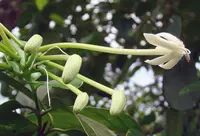
The cabbagebark tree, Andira inermis, is a medium to large evergreen tree from tropical America, often used as a shade or street tree. It develops a dense, rounded crown with thick, pinnate foliage and can produce clusters of pink to purple pea-like flowers followed by hard, woody pods.

In its native range, it typically grows in coastal forests and lowland tropical woodlands. It is considered relatively tough once established but is not suited to small gardens or containers due to its size and strong root system.

Those who care for cabbagebark tree should know it prefers warm climates, sun to light shade, and reasonably well-drained soil.

Main Plant Requirements

Care Difficulty

Moderate Care

Light Preference

Full Sun

Water Requirements

Moderate Water

Temperature Preference

Tropical / Frost Sensitive

Hardiness Zone

10–12

Soil Texture

Sandy, Loamy, Organic-rich

Soil pH

Slightly acidic (6.5–7.0), Neutral (7.0)

Soil Drainage

Well-drained

Fertilization

Minimal (feed rarely)

Get Personalized Care Plan

Scan your plant to receive care tips personalized for your specific plant

Available on iOS and Android

How to Care for the cabbagebark tree

This tropical tree prefers bright, direct sun for strong growth and flowering.

  • Provide 6–8 hours of direct sun daily; full sun from morning through midafternoon suits mature cabbagebark tree best in most US warm climates.
  • Young trees tolerate light partial shade, especially with harsh western sun; 3–4 hours of morning sun plus bright open shade helps reduce leaf scorch.
  • In summer, monitor for pale, scorched leaves as a sign of excessive exposure; sparse flowering or elongated, weak shoots indicate insufficient light and too much shade.

This species prefers deep, infrequent watering once established, with time for the soil surface to dry between events.

  • In the ground, allow the top 5–8 cm of soil to dry, then water slowly and deeply so moisture reaches 20–30 cm; sandy soils may need more frequent soaking than clay.
  • During the first 1–2 years, Andira inermis benefits from consistent moisture; in hot, dry periods watch for slight leaf droop or dull foliage as a cue to water.
  • Avoid soggy conditions; yellowing leaves, dieback at the tips, or foul-smelling soil indicate overwatering or poor drainage and require reduced watering and improved runoff.

This tropical tree thrives in warm, frost-free climates with stable temperatures.

  • Optimal growth occurs around 70–90°F (21–32°C); sustained warmth promotes faster canopy development and flowering.
  • The tree is highly frost-sensitive and should not be exposed below about 40°F (4°C); brief dips near this level can slow growth, while freezing temperatures can kill young tissue.
  • In hot regions above 95°F (35°C), ensure adequate soil moisture and, for young trees, some protection from reflected heat to reduce stress and leaf scorch.

Andira inermis handles a wide humidity range but grows best with moderate air moisture.

  • Aim for 40–60% humidity; the cabbagebark tree tolerates drier air but may grow more slowly indoors.
  • Watch for crisp leaf edges, slow leaf expansion, and tip browning as signs of low humidity stress.
  • Increase humidity with grouped plants, a nearby open tray of water and stones, or a room humidifier rather than misting leaves.

Andira inermis prefers deep, well-drained, moderately fertile soil that does not stay waterlogged.

  • Use a loamy, slightly sandy mix with moderate organic matter to balance moisture retention and drainage.
  • Keep pH roughly neutral to slightly acidic, around 6.0–7.0, avoiding very alkaline or saline conditions.
  • Combine garden loam with coarse sand and compost in roughly equal parts to improve structure and aeration.
  • Avoid heavy, compacted clay or spots where water stands after rain, as roots are sensitive to prolonged saturation.

This species can be grown in large containers for juvenile stages or patio use, but long-term culture is challenging due to size and root vigor.

  • Choose a tall, heavy container to counteract wind leverage from the developing canopy and prevent tipping.
  • Select a thick-walled material such as ceramic or concrete to buffer rapid moisture swings and heat around the root zone.
  • Use a deep, free-draining potting mix over a coarse bottom layer so structural roots can anchor without sitting in residual water.

Andira inermis benefits from modest, balanced nutrition when grown in managed landscapes or containers.

  • Apply a balanced slow-release NPK fertilizer (around 10-10-10) at the start of the warm growing season.
  • Use a light rate only, following label instructions, since the cabbagebark tree is adapted to low-nutrient soils.
  • Supplement with a thin layer of well-rotted compost over the root zone once per year.
  • Stop feeding in late fall to avoid tender growth that may be damaged by cooler temperatures.

Andira inermis responds well to light structural pruning to maintain a safe, healthy canopy.

  • Carry out main pruning in late winter or early dry season, before vigorous new growth starts.
  • Remove dead, diseased, or storm-damaged branches first, cutting back to healthy wood with clean, sharp tools.
  • Thin crowded interior branches to improve light penetration and air movement, reducing pest and disease issues.
  • Limit heading cuts; use selective thinning cuts instead to preserve natural form and stable branch structure.

This species is usually grown as a landscape tree, so focus on careful transplanting of young specimens rather than frequent repotting.

  • Transplant field or container-grown Andira inermis at the beginning of the rainy season or mild spring weather.
  • Look for circling roots, root-bound containers, or stalled growth as signs that a young tree needs a larger space.
  • Move into a hole or container only 1–2 sizes larger, loosening outer roots gently to reduce future girdling.
  • Water deeply after transplanting, mulch 5–8 cm over the root zone, and keep soil evenly moist until establishment.

Andira inermis is most commonly propagated from seeds, which require warmth and time to germinate.

  • Collect mature, fully ripened seeds and sow them in late spring or early summer in a free-draining mix.
  • Scarify hard seed coats lightly or soak seeds in warm water for 12–24 hours to improve germination.
  • Keep the seed tray at 70–85°F with consistent, slightly moist (not waterlogged) substrate and bright indirect light.
  • Transplant seedlings carefully once they form several true leaves, handling roots gently to prevent long-term setback.

This tropical to subtropical tree has low frost tolerance and needs protection in climates with cold winters.

  • In ground, grow only in frost-free or very mild zones; young trees are especially sensitive to freezing.
  • Apply 5–8 cm of organic mulch around the root zone, keeping it a few cm away from the trunk base.
  • For container plants, move pots indoors or into a heated greenhouse before temperatures fall below 40°F.

Care Tips

Deep root establishment

During the first 2–3 years, water more heavily but less often to encourage deep rooting, then gradually extend the interval between irrigations so the tree develops a drought-resilient root system suited to its mature size.

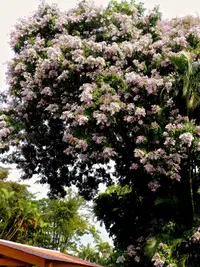
Wind and canopy training

Install a sturdy stake only in the first 1–2 years in windy sites and lightly tie the trunk, then remove the stake once the trunk thickens and begin selective pruning to develop a single strong leader and balanced scaffold branches.

Root space management

Plant away from pavements, septic systems, and small planting strips, and use a wide, mulch-covered soil area (1.5–2× the canopy diameter) to give the extensive root system room to spread without causing structural conflicts.

Pod and litter control

Schedule periodic ground cleanups when flowers and pods drop, especially near walkways or patios, to reduce slipping hazards, discourage rodents, and allow easier monitoring for fungal issues on fallen material.

Preventive pest scouting

Inspect young foliage and pods every 2–4 weeks for borers, scale insects, or chewing damage, and if pests are found, use targeted treatments such as horticultural oil or species-appropriate biological controls rather than broad-spectrum chemicals when caring for cabbagebark tree.

Common Pests and Diseases

Leaf-eating caterpillars

This pest often feeds on young foliage of cabbagebark tree, creating irregular holes and ragged leaf edges. Damage is usually seasonal and may be concentrated on new growth flushes.

Solution

Hand-pick caterpillars where reachable, prune heavily infested shoots, and encourage natural predators such as birds by avoiding broad-spectrum insecticides. For heavier outbreaks, use a targeted biological product containing Bacillus thuringiensis (Bt) on the foliage, applied in the evening according to label directions.

Seed beetles

These insects infest the seeds inside pods, boring into them and reducing viable seed production. Symptoms include small exit holes in dried pods and poor germination of collected seed.

Solution

Collect pods promptly as they mature and dry them in well-ventilated, insect-proof conditions, then remove and discard any with visible holes. For seed storage, freeze thoroughly dried seed in sealed containers for several days to kill internal beetle stages, and avoid leaving fallen pods on the ground where populations can build up.

Wood-boring beetles

This pest attacks stressed or damaged trunks and branches, leaving small round or oval exit holes and powdery frass on bark or at the tree base. Infestations can weaken limbs and increase risk of branch dieback or breakage.

Solution

Improve overall tree vigor with appropriate watering, mulching, and avoidance of trunk wounds, since healthy trees resist borer attack better. Prune and destroy heavily infested or dying branches, and in high-value trees consult a local arborist about timing-targeted systemic or trunk-spray treatments if beetle pressure is severe.

Leaf spot

This disease causes scattered brown to dark purple lesions on leaves, which may coalesce and lead to premature yellowing and leaf drop in humid climates. Symptoms include more severe spotting on crowded, shaded foliage with poor air movement.

Solution

Rake and remove fallen leaves to reduce inoculum, and thin surrounding vegetation to improve air circulation around the canopy. Where leaf spot is recurrent and severe, use a copper-based or other registered fungicide at the beginning of the wet season, following local label directions, as part of broader Andira inermis care.

Sooty mold

This disease appears as a black, soot-like coating on leaves and twigs that grows on honeydew excreted by sap-sucking insects such as scale or aphids. Symptoms include reduced photosynthesis and dull, dirty-looking foliage, though underlying tissues are usually not directly infected.

Solution

Identify and control the honeydew-producing insects with horticultural oil or insecticidal soap, making thorough contact with the pests on leaves and stems. After pest numbers decline, gently wash affected foliage with clean water or a mild soap solution to remove mold, and improve canopy airflow so surfaces dry more quickly after rain.

Interesting Facts

Toxic yet timber‑valued

The seeds and bark are highly toxic to humans and animals, yet the wood is durable and has been traditionally used in tropical regions for construction, furniture, and boat building.

Deep nitrogen-fixing roots

As a legume, this tree forms nodules on its roots that host nitrogen-fixing bacteria, improving soil fertility and sometimes being used in reforestation or shade plantings in degraded tropical sites.

Dense maritime canopy

It naturally forms a dense, broad crown and is tolerant of coastal conditions, so it is often planted as a shade and street tree in tropical seaside towns where many species struggle with salt and wind.

Botan icon

Did you know?

In several parts of the Caribbean and Central America, the tree has been historically planted around plazas and along streets not only for shade but also because its heavy, fragrant purple flower clusters and large pods make it a conspicuous seasonal marker of the dry-to-wet transition in the local climate.

FAQs about cabbagebark tree

Growth is moderate. Young trees can add about 30–60 cm per year in height under warm, frost-free conditions with adequate moisture and space, but growth slows as the canopy develops and roots fill the available soil volume.

Grow Healthy Plants with Botan Care

Keep your plants happy and healthy with plant identification, disease detection, and easy care guidance.

Botan plant care app — identify plants on mobile

Explore More Plants