mung bean Care (Vigna radiata)

Also known as: Green Gram
mung bean

About mung bean

Mung bean, Vigna radiata, is a warm-season annual legume grown for its edible seeds and crunchy sprouts. It has slender, branching stems, trifoliate leaves, and small yellow flowers that develop into narrow pods.

This plant likely originated in South or Southeast Asia and is now cultivated in many warm and subtropical regions. It grows quickly and has a relatively shallow root system, which makes it responsive to soil moisture and drainage.

Mung bean is generally considered easy to grow, provided it receives good light, moderate watering, and loose, well-drained soil. Understanding these basics helps when learning how to care for mung bean at home or in small gardens.

Main Plant Requirements

Care Difficulty

Easy Care

Light Preference

Full Sun

Water Requirements

Moderate Water

Temperature Preference

Tropical / Frost Sensitive

Hardiness Zone

10–12

Soil Texture

Sandy, Loamy, Organic-rich

Soil pH

Acidic (5.5–6.5), Slightly acidic (6.5–7.0)

Soil Drainage

Well-drained

Fertilization

Light (every 4–6 weeks)

Get Personalized Care Plan

Scan your plant to receive care tips personalized for your specific plant

Available on iOS and Android

How to Care for the mung bean

Vigna radiata grows best with strong, direct light during the main growing season.

  • Provide 6–8 hours of full sun daily; morning sun and early afternoon exposure support compact growth and good pod set.
  • The plant tolerates light partial shade (3–4 hours sun), but stems may stretch and flowering can drop if light is much lower.
  • In very hot summers, protect from harsh late-afternoon sun with light shade cloth to reduce leaf scorch and moisture stress.

Watering for Vigna radiata focuses on steady soil moisture without waterlogging.

  • Irrigate when the top 3–5 cm of soil feels dry, aiming for consistently moist but not saturated soil during germination and flowering.
  • Use well-drained soil or raised beds so excess water can escape; standing water increases root rot and yellowing leaves.
  • In hot, dry weather, expect faster drying and more frequent watering, while cooler or rainy periods require reduced watering to avoid swollen, splitting pods.

This warm-season legume requires stable heat for reliable germination, flowering, and pod development.

  • Optimal growth occurs around 77–95°F (25–35°C); seeds germinate best once soils are consistently warm in late spring or early summer.
  • Avoid exposure below 59°F (15°C), as growth slows; light frost near 32°F (0°C) can kill young plants outright.
  • The plant tolerates brief highs near 100–104°F (38–40°C) if soil moisture is adequate, but prolonged extreme heat can reduce flowering and pod set.

Humidity is not critical for Vigna radiata, which tolerates a wide range of household and outdoor conditions.

Vigna radiata prefers loose, well‑drained mineral soil that stays evenly moist but not waterlogged.

  • Use a loamy or sandy-loam soil with moderate organic matter to support root development and nodulation by nitrogen-fixing bacteria.
  • Aim for slightly acidic to neutral pH around 6.0–7.0 to optimize nutrient availability and microbial activity.
  • Improve drainage and aeration by blending native soil or potting soil with coarse sand or fine grit at 20–30%.
  • Avoid heavy clay, compacted soil, or sites that stay wet for more than 24 hours after rain to prevent root rot.

This species is suitable for short-term container growing, especially for sprouts or small bushy plants.

  • Choose a container at least 20–25 cm deep so roots can extend downward without circling tightly.
  • Use a relatively wide, stable pot so the top growth and any simple support stakes do not tip the container in wind.
  • Select a breathable material such as unglazed terracotta if outdoor conditions are humid, to reduce excess moisture around the roots.

This warm-season legume grows well in average soil but benefits from light feeding during active growth.

  • Use a balanced liquid fertilizer (for example 10-10-10) at 1/4–1/2 strength every 2–3 weeks while plants are flowering and forming pods.
  • Alternatively, apply a thin layer of mature compost around the base at planting to support steady growth.
  • Avoid high-nitrogen products, since Vigna radiata fixes atmospheric nitrogen through its root nodules.
  • Stop feeding once pods mature and withhold fertilizer completely in cool, dormant conditions.

Vigna radiata needs only light pruning to stay healthy and manageable.

  • Pinch soft shoot tips in early growth to encourage bushier branching and more flowering sites.
  • Remove dead, yellowing, or damaged stems and leaves whenever noticed to reduce disease risk.
  • Thin out crowded interior shoots to improve air flow and light penetration in dense plantings.
  • Use clean, sharp scissors or small pruners, cutting just above a node to avoid tearing stems.

This fast-growing annual is usually started from seed and transplanted once rather than repeatedly repotted.

  • Transplant seedlings outdoors after frost when soil is warm and roots lightly fill cell trays or small pots.
  • Signs they are ready include roots just circling the plug and slowed top growth in a cramped container.
  • Handle roots gently, keep the root ball intact, and plant at the same depth into loose, well-drained soil.
  • Water thoroughly after transplanting, then keep soil evenly moist and shaded for 2–3 days to limit transplant shock.

Vigna radiata is most commonly propagated from seeds, which germinate quickly in warm conditions.

  • Sow seeds in late spring or early summer once soil remains above about 60–65°F.
  • For growing mung bean indoors or in trays, use a sterile, well-drained seed-starting mix kept evenly moist.
  • Place seeds 2–3 cm deep, spaced so seedlings have good air flow and light from the start.
  • Provide bright light and avoid waterlogging to reduce damping-off, a fungal disease that kills young seedlings.

This species is a tender warm-season annual that does not tolerate frost or prolonged cold.

  • Plan to grow and harvest it within a single warm season; plants usually die back after frost.
  • In cooler regions, grow in containers and move them indoors or under cover before temperatures drop near 40°F.
  • If early cold is forecast, use row covers or cloches to retain warmth around foliage and soil.

Care Tips

Use modest trellising

Provide low, simple supports such as horizontal strings or 30–45 cm stakes so plants climb slightly, improve air flow, and keep pods cleaner and easier to harvest.

Staggered sowing windows

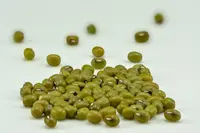
Sow small batches every 7–10 days during the warm season to spread flowering and pod set, which reduces stress on individual plants and gives a longer, more manageable harvest period.

Targeted inoculation

Before planting, dust seeds with a Rhizobium leguminosarum or other mung-compatible rhizobial inoculant to improve nitrogen fixation, especially in beds that have not grown legumes for several years.

Pod maturity checks

Harvest when most pods on a plant turn dark and feel dry and rattly, then finish drying the pods in a shaded, ventilated place to minimize mold risk and seed loss when you grow Vigna radiata for dry beans.

Prevent lodging in rows

In windy or exposed sites, run twine along both sides of each row at 15–20 cm height to keep stems upright, reduce lodging, and limit pod contact with wet soil that encourages rot.

Common Pests and Diseases

Mungbean yellow mosaic virus

This disease causes bright yellow patches or mosaic patterns on leaves, often with distorted growth and poor pod formation.

Solution

Remove and destroy infected plants promptly, control whitefly vectors using yellow sticky traps and insecticidal soap, and avoid planting new mung bean near old infected crop residues; use virus-tolerant seed where available and practice crop rotation with non-legume crops.

Powdery mildew

This disease leads to white, powdery fungal growth on leaves, stems, and pods, which can cause yellowing, leaf drop, and reduced yield.

Solution

Improve air circulation by proper spacing, avoid overhead watering, remove heavily infected leaves, and apply a labeled sulfur or potassium bicarbonate fungicide early when the first white spots appear, following all product directions for safe Vigna radiata care.

Bacterial leaf spot

This disease produces small, water-soaked spots on leaves that turn brown with yellow halos and can merge into larger dead patches.

Solution

Avoid working with plants when foliage is wet, water at soil level, remove and destroy infected leaves, and use clean, disease-free seed; in repeated problem areas, rotate away from mung bean for at least 2–3 seasons and disinfect tools with a 10% bleach solution after use.

Bean fly

This pest is a small fly whose larvae tunnel inside stems near the soil line, causing wilting, stunting, and sometimes plant death, especially in seedlings.

Solution

Inspect stems regularly for swelling or cracking, remove and destroy heavily damaged plants, use fine insect netting over young plants if feasible, and apply a soil-targeted systemic insecticide or neem-based drench around seedlings according to label directions in areas with a known history of bean fly damage.

Pod borer

These insects are caterpillars that bore into flower buds and green pods, feeding on developing seeds and leaving webbing and frass inside pods.

Solution

Handpick and destroy visible caterpillars and damaged pods, encourage natural predators by minimizing broad-spectrum insecticides, use pheromone or light traps where practical, and, if damage is high, apply a biological insecticide containing Bacillus thuringiensis (Bt) to flowers and young pods in the late afternoon when larvae are actively feeding.

Interesting Facts

Domesticated from Indian wild types

Genetic studies show that cultivated mung bean was domesticated in the Indian subcontinent from local wild Vigna populations, with clear changes selected for larger, more easily harvested seeds and pods.

Exceptional nitrogen fixer

As a warm-season legume, mung bean forms symbiosis with Rhizobium bacteria in root nodules, allowing it to convert atmospheric nitrogen into forms usable by plants and improving soil fertility for following crops.

Fast life cycle crop

Under suitable tropical or subtropical conditions, mung bean can complete its life cycle in roughly 60–90 days, which makes it a valuable short-duration rotation crop in many smallholder and intensive farming systems.

Botan icon

Did you know?

Mung bean seeds are one of the few common food legumes that reliably produce long, crisp sprouts in low-light indoor conditions, which is why growing mung bean sprouts in controlled environments has become a standard model system in plant physiology and food science research.

FAQs about mung bean

Yellowing leaves often result from nitrogen deficiency, overwatering, or natural aging of lower foliage. Check drainage, avoid waterlogged soil, and consider a balanced fertilizer. Pests such as spider mites or aphids can also cause stress-related yellowing.

Grow Healthy Plants with Botan Care

Keep your plants happy and healthy with plant identification, disease detection, and easy care guidance.

Botan plant care app — identify plants on mobile

Explore More Plants