Successive sowing
Stagger sowings every 10–14 days in spring and early summer so foliage stays tender and young instead of maturing all at once.

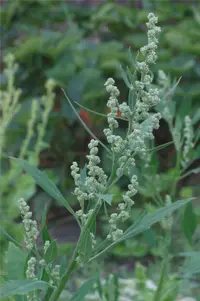
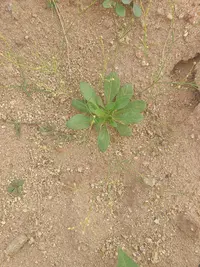
Fat-hen, or Chenopodium album, is an annual herb often seen as a common field and garden weed. It belongs to the amaranth family and grows upright with many branched stems and small, gray-green, mealy leaves.
This plant occurs widely across Europe, Asia, and North America, especially in disturbed soils, fields, and vegetable beds. It grows quickly and produces many seeds, which makes it persistent but also easy to establish.
It prefers full sun, moderately moist but well-drained soil, and thrives in nutrient-rich ground. Good basic knowledge of how to care for Fat-hen helps keep it controlled or purposefully grown.

Care Difficulty
Easy Care

Light Preference
Full Sun

Water Requirements
Moderate Water

Temperature Preference
Cold Hardy

Hardiness Zone
2–9

Soil Texture
Sandy, Loamy, Silty

Soil pH
Slightly acidic (6.5–7.0), Slightly alkaline (7.0–7.5)

Soil Drainage
Well-drained

Fertilization
Minimal (feed rarely)
Scan your plant to receive care tips personalized for your specific plant
Available on iOS and Android
Chenopodium album grows best in open, bright conditions with direct sun for strong, leafy growth.
Chenopodium album prefers moderately moist, well-drained soil and copes better with brief dryness than with standing water.
This species is a cool- to warm-season annual that tolerates a wide range of outdoor temperatures.
Chenopodium album tolerates a wide humidity range and usually does not need special humidity management.
Chenopodium album grows best in loose, well-drained mineral soil with moderate fertility.
This species is suitable for container growing outdoors when managed to prevent overcrowding and nutrient depletion.
Chenopodium album, often called Fat-hen, usually needs minimal fertilization when grown in decent garden soil.
Chenopodium album benefits from simple pruning to manage size and encourage leafy growth.
Chenopodium album is usually grown as a direct-sown annual but can be transplanted when handled gently.
Chenopodium album is most commonly propagated from seed, which germinates well in average conditions.
Chenopodium album is an annual and generally does not require dedicated winter care in temperate climates.

Plant Health Check
Not sure what's wrong with your plant? Check your plant's health inside the app.
Chenopodium album is one of the most widespread agricultural weeds in temperate regions and occurs on every continent except Antarctica, thriving especially in nutrient-rich, disturbed soils such as crop fields and construction sites.
Individual plants can produce tens of thousands of small, long-lived seeds that form persistent soil seed banks, which is a key reason this species is difficult to control in farming systems.
Although classified as a C3 plant, Chenopodium album shows some anatomical and physiological traits that resemble C4 photosynthesis, which helps it tolerate high light and warm conditions compared with many other C3 weeds.

Archaeological evidence shows that Chenopodium album seeds were intentionally collected and used as a food resource by prehistoric peoples in Europe and North America, indicating that this now-common weed once formed part of early human diets.
Young leaves and tender shoots are edible when cooked or eaten raw in moderation, similar to spinach. Seeds are also edible when thoroughly cleaned and cooked. Always avoid plants from contaminated sites, such as roadsides or recently treated fields.
Keep your plants happy and healthy with plant identification, disease detection, and easy care guidance.