lambsquarters Identification (Chenopodium album)

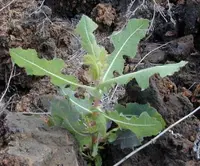
To recognize lambsquarters, look for alternate, goosefoot-shaped leaves with shallow, irregular teeth and a pale, powdery coating, especially on new growth and leaf undersides.

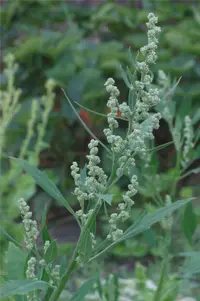
Chenopodium album usually grows as a single upright annual with grooved stems and dense clusters of tiny green flowers at the stem tips and upper leaf axils.

Chenopodium album Identification

Check Your Plant ID

Upload a clear image to check whether your plant ID is correct.

Clear images work best. Avoid photos taken too close or too far away

Check the plant’s overall shape, leaves, and flower clusters first.

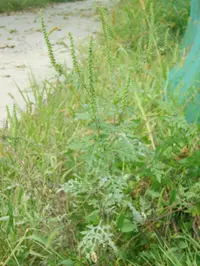
  • Upright annual with a branching habit, often 1-5 feet (30 cm-1.5 m) tall.
  • Leaves are alternate, usually diamond- to goosefoot-shaped, with uneven shallow teeth or lobes.
  • Leaf blades are often 1-4 inches (2.5-10 cm) long, with longer stalks on lower leaves.
  • Young leaves and stem tips often look dull white or mealy, as if dusted with flour.
  • Flowers are tiny, green, petal-less, and packed into dense clusters at stem tips and upper leaf axils.

The pale, powdery new growth is one of the most useful quick clues.

Lambsquarters shows clear visual shifts from seedling rosettes to branched, seed-bearing adult plants.

  • Seedling: First leaves are narrow and smooth-edged, unlike later leaves. Early foliage often shows a pale, mealy coating, and stems are still unbranched.
  • Young plant: Lower leaves become triangular to diamond-shaped with irregular teeth or shallow lobes. Plants stand upright and may reach 12 inches (30 cm) before heavy branching.
  • Flowering stage: Upper stems and branch tips carry tight, green flower clusters. Leaves near the top become narrower and less toothed than the broader lower leaves.
  • Fruiting stage: Flower clusters turn denser and more granular-looking as tiny enclosed fruits form. The plant keeps its branched outline, but attention shifts to the crowded seed heads.

In spring and early summer, lambsquarters emerges with gray-green young leaves that often look dusted or mealy, a useful early clue. Plants stay leafy through summer rather than developing woody stems. By mid to late summer, small green flower clusters become visible at stem tips and upper leaf axils. In fall, these mature into dense seed clusters, while leaves often yellow and the annual plant dies back after frost.

Several weeds can be mistaken for lambsquarters at a glance.

redroot pigweed(Amaranthus retroflexus)

Often confused when young because both have dull green, triangular to oval leaves and branched seed clusters. Pigweed lacks the whitish, mealy coating on new leaves and stems, and its flower spikes are denser and bristly rather than powdery.

epazote(Dysphania ambrosioides)

This species can resemble it through its irregularly toothed leaves and upright habit. Epazote leaves are usually longer and narrower, and the plant lacks the pale farinose coating. Crushed foliage also has a strong resinous odor, unlike Chenopodium album.

Chenopodium album is widely treated as native across much of Europe and temperate Asia, though its original range is complicated by long human movement. For identification, habitat is more useful than geography. It commonly appears in disturbed ground such as fields, gardens, roadsides, waste places, and riverbanks, usually at low to middle elevations. Finding it in open, nutrient-rich, heavily disturbed sites helps separate it from superficially similar plants more typical of intact prairie, wetland, or woodland habitats.

  • Nitrate and oxalate buildup: Leaves and stems can accumulate nitrates and oxalates. Ingestion is the concern for humans and pets, especially if plants grow on heavily fertilized or stressed sites.
  • Seed contamination risk: The seeds are very small and can occur among grain or birdseed. Accidental ingestion is the main concern for pets and livestock because Chenopodium album is documented as harmful in quantity.

Does Your Plant Match?

Use Botan to compare a photo and help identify or confirm the plant before you rely on a name.

FAQ

The quickest check is the whitish, powdery coating on new leaves and shoot tips. Combined with alternate, diamond-to-goosefoot-shaped leaves, this is one of the strongest clues for identifying lambsquarters.

More Plant Identification Guides

Identify Your Plant and Learn More

Use Botan to identify a plant from a photo, then get species-specific care information, safety notes, and common problems.

Botan app identifying a plant from a photo
Dill Companion Plants – What to Grow Next to Dill

9 min read · 17 Jul 2026

Dill Companion Plants – What to Grow Next to Dill

Dill is an easy-to-grow plant that gets along well with many vegetables. This guide describes 15 plants that can be planted alongside it, a few to avoid, and mistakes that can quietly sabotage the entire process.

Plant Recommendations
Dill Companion Plants – What to Grow Next to Dill
How Long Can Flowers Go Without Water? Everything You Need to Know

6 min read · 10 Jul 2026

How Long Can Flowers Go Without Water? Everything You Need to Know

Flowers can survive without water anywhere from 1-2 hours to several months, depending on the plant type, species, and growing conditions. Some strong-looking flowers are drought-sensitive, while delicate-looking plants may tolerate long dry periods surprisingly well.

Plant Care
How Long Can Flowers Go Without Water? Everything You Need to Know
Best Fertilizer for Vegetable Gardens – What to Use for Each Plant

11 min read · 20 Jul 2026

Best Fertilizer for Vegetable Gardens – What to Use for Each Plant

Here, you’ll find the right fertilizer formula for vegetables in your garden. Learn how to adjust feeding correctly throughout the growing cycle, spot nutrient deficiencies by their symptoms, and keep your plants healthy and prolific.

Plant Recommendations
Best Fertilizer for Vegetable Gardens – What to Use for Each Plant