bird vetch Care (Vicia cracca)

Also known as: cow vetch, tufted vetch, blue vetch, boreal vetch
bird vetch

About bird vetch

Bird vetch, Vicia cracca, is a scrambling perennial legume often found in meadows, roadsides, and open woodland edges. It naturally occurs across Europe and Asia and is now widespread in North America.

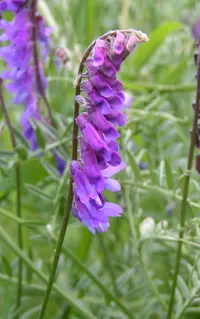
The plant climbs or trails using tendrils, forming dense mats with slender stems, paired leaflets, and showy clusters of purple to bluish pea-like flowers. As a nitrogen-fixing species, it improves soil fertility but can spread aggressively in suitable conditions.

It generally prefers full sun to light shade, moderate moisture, and well-drained soils. These traits make it reasonably easy to establish but sometimes challenging to control, so learning how to care for bird vetch includes understanding its spreading habit.

Main Plant Requirements

Care Difficulty

Easy Care

Light Preference

Full Sun

Water Requirements

Moderate Water

Temperature Preference

Cold Hardy

Hardiness Zone

3–8

Soil Texture

Sandy, Loamy, Clay

Soil pH

Acidic (5.5–6.5), Slightly acidic (6.5–7.0)

Soil Drainage

Well-drained

Fertilization

Minimal (feed rarely)

Get Personalized Care Plan

Scan your plant to receive care tips personalized for your specific plant

Available on iOS and Android

How to Care for the bird vetch

This scrambling perennial prefers bright, open conditions but adapts to light shade in many climates.

  • Provide 6–8 hours of direct sun daily; morning sun with light afternoon shade helps reduce leaf scorch in hot summers.
  • Plant bird vetch where taller grasses or shrubs offer filtered light during the hottest 1–3 afternoon hours in warm regions.
  • In cooler or northern areas, full sun all day promotes sturdier growth and flowering, while deep shade leads to weak, elongated stems and fewer blooms.

This nitrogen-fixing legume prefers moderately moist, well-drained soil rather than constant saturation.

  • Allow the top 3–5 cm of soil to dry slightly before watering, then moisten the root zone deeply instead of giving shallow splashes.
  • During hot, dry spells, watch for wilting or dull, folding leaves as a cue to water; in cool seasons, reduce frequency as evaporation slows.
  • Choose soil or sites with good drainage; pale, yellowing foliage and soft stems suggest overwatering, while crisp, browning tips signal prolonged dryness.

This hardy perennial tolerates a wide temperature range but grows most vigorously in mild conditions.

  • Active growth occurs best at 60–75°F (16–24°C), with strong shoot and root development in cool to mild spring and early summer weather.
  • Established Vicia cracca plants survive winter cold down to about 0°F (−18°C) in many regions, dying back above ground and resprouting from the crown.
  • Heat tolerance is moderate; in extended periods above 86°F (30°C), growth may slow, so soil moisture and light afternoon shade help limit stress and leaf scorch.

This species prefers moderate outdoor humidity and usually does not need special humidity control.

  • Performs reliably in 40–70% humidity typical of most temperate outdoor climates.
  • Tolerates short dry-air periods if soil moisture is maintained and roots do not dry out completely.
  • Low humidity stress shows as limp, prematurely yellowing foliage combined with dry soil rather than leaf spotting.
  • If bird vetch shows stress during very dry, hot spells, lightly mulch soil and water early or late to reduce evaporation.

Vicia cracca grows best in moderately fertile, loose, well-aerated ground.

  • Use a loamy or sandy-loam substrate that crumbles easily and does not compact around the roots.
  • Ensure rapid drainage; aim for soil that drains within a few minutes and never stays waterlogged after rain or irrigation.
  • Target slightly acidic to neutral pH around 6.0–7.2, adding garden compost to improve structure and moderate pH.
  • Blend in coarse sand or fine grit where soil is heavy to increase aeration, and avoid sites with standing water or very dense clay.

This species can be grown in containers, but only with attention to support and root space.

  • Choose a deep, heavy pot to prevent tipping as vines climb and to give roots room to anchor.
  • Use a wide container to accommodate spreading growth and allow for multiple support stakes or a small trellis.
  • Position the pot where wind exposure is reduced so climbing stems do not act as a sail and destabilize the container.

This wild legume fixes its own nitrogen, so bird vetch needs only light feeding in poor soils.

  • Use a thin topdressing of mature compost in early spring rather than heavy synthetic feeding.
  • If needed, apply a balanced NPK fertilizer at 1/4–1/2 strength once at the start of the growing season.
  • Avoid summer overfeeding, which encourages weak, lush growth and reduces flowering.
  • Do not fertilize in late fall or winter, when growth is naturally slow or dormant.

Thoughtful pruning keeps Vicia cracca productive, manageable, and flowering well.

  • Cut back dead, winter-killed, or damaged stems in late winter or very early spring using clean hand pruners.
  • Lightly trim back overly long or tangled shoots after flowering to control spread and maintain shape.
  • Remove crowded or smothering stems from nearby plants to prevent competition and shading.
  • Avoid cutting all stems to the ground mid-season, which can reduce flowering and habitat value.

This species is usually grown in the ground, so focus on careful transplanting rather than frequent repotting.

  • Transplant young plants in early spring or early fall when temperatures are mild and soil is workable.
  • Move plants if root growth circles the container, growth slows, or soil dries out very quickly.
  • Lift with a generous soil ball, disturbing roots as little as possible to reduce transplant shock.
  • Water thoroughly after transplanting and keep soil evenly moist for 1–2 weeks while roots re-establish.

Vicia cracca is most commonly propagated from seed, with division used occasionally in established patches.

  • Sow fresh or scarified seeds in early spring or fall, directly in the ground or in deep trays.
  • Provide full sun, consistent moisture, and well-drained soil for reliable germination and seedling growth.
  • Where clumps are dense, divide sections with healthy roots in early spring and replant immediately.
  • Avoid moving very mature, deep-rooted plants, which respond poorly to disturbance compared with seedlings.

This hardy perennial tolerates freezing conditions and usually needs minimal winter care in most temperate climates.

  • In cold regions, allow top growth to die back naturally; it insulates the crown and provides wildlife habitat.
  • Where desired, add a light 2–5 cm mulch after ground freezes to stabilize soil temperature around roots.
  • For container-grown plants in very cold zones, move pots to a sheltered, unheated but frost-moderated spot.

Care Tips

Provide climbing support

Install mesh fencing, wires, or a pea trellis before stems elongate so the plant can climb cleanly and avoid lodging or smothering neighboring plants.

Use as living mulch

Sow in strips between vegetable rows and mow or cut back before seed set to create an in-place mulch that suppresses weeds and adds organic matter without competing strongly for light.

Time mowing carefully

If using the plant as a cover crop, mow or trim when roughly half the flowers have opened to maximize biomass and nitrogen fixation while greatly reducing self-seeding.

Control spread edges

Edge beds or paths with a shallow spade cut or barrier and pull young seedlings at the margins regularly to prevent unwanted spread into lawns or perennial borders.

Pair with cereals

For more stable, upright growth when growing bird vetch as a cover crop, interplant with oats, rye, or another grass so the grass provides a scaffold and reduces tangling and lodging.

Common Pests and Diseases

Pea aphids

This pest feeds on young stems, leaves, and flower buds, sucking sap and often clustering on tender growth. Symptoms include curling leaves, sticky honeydew, and reduced flowering or pod set.

Solution

Prune off heavily infested tips, then wash remaining plants with a firm water spray to remove colonies. If needed, use insecticidal soap or a neem oil spray, applied in the early morning or evening, and encourage natural predators like lady beetles by avoiding broad-spectrum insecticides.

Pea weevils

These insects chew notches in leaves and can damage developing seeds in pods, leading to poor seed quality and reduced reseeding. This pest is more active in warm, dry periods and in areas with repeated pea or vetch plantings.

Solution

Hand-pick adult beetles when numbers are low and destroy infested pods after harvest to reduce future populations. Rotate away from other legumes for 2–3 years in small plantings and keep plant debris well cleaned up to remove overwintering sites.

Powdery mildew

This disease causes white, powdery patches on leaves, stems, and sometimes pods, leading to yellowing and early leaf drop. Symptoms include reduced vigor and lower seed production, especially in dense, shaded stands.

Solution

Improve airflow by avoiding overcrowding and cutting back dense or heavily affected growth. Remove and discard infected plant material and, if the problem is persistent, use a sulfur or potassium bicarbonate fungicide labeled for legumes, applied according to label directions.

Downy mildew

This disease produces pale yellow or light green spots on upper leaf surfaces and gray to violet fuzzy growth on the undersides, especially in cool, damp weather. Symptoms include distorted leaves and stunted growth in severe cases.

Solution

Water at soil level rather than overhead and avoid working around plants when foliage is wet. Remove and destroy infected plants or plant parts and improve drainage and spacing; in recurrent cases, consider rotating away from legumes in that area for at least 2 years.

Pea leaf weevils

These insects create characteristic U-shaped notches along leaf margins and their larvae feed on root nodules, which can reduce nitrogen fixation. Symptoms include pale foliage and reduced growth in nutrient-poor soils.

Solution

Monitor young plants closely and use floating row covers early in the season to exclude adults where feasible. Encourage beneficial ground beetles by maintaining some undisturbed ground nearby, and rotate planting sites to limit buildup in the soil over successive years while following general Vicia cracca care guidelines.

Interesting Facts

Specialized bee partnerships

The flowers are mainly pollinated by long-tongued bumblebees that can easily access the deep corolla, so its seed set often depends on the presence of specific Bombus species in the area.

Nitrogen-fixing powerhouse

As a legume with root nodules containing Rhizobium bacteria, it can convert atmospheric nitrogen into plant-available forms, which helps enrich poor soils and support neighboring plants in natural grasslands.

Climbing by tendrils

It uses branched tendrils at the tips of its compound leaves to hook onto surrounding vegetation, allowing stems to climb up to around 1–2 m and form dense, intertwined patches.

Botan icon

Did you know?

In some North American habitats, this Eurasian native has become locally invasive, where its vigorous climbing and dense growth can overtop and shade out native forbs and grasses, altering plant community structure and pollinator foraging patterns.

FAQs about bird vetch

This species spreads readily by seed and creeping rhizomes, especially in open or disturbed ground. In many regions it is considered invasive. Regular mowing, pulling seedlings, and avoiding unchecked seeding help keep patches contained.

Grow Healthy Plants with Botan Care

Keep your plants happy and healthy with plant identification, disease detection, and easy care guidance.

Botan plant care app — identify plants on mobile

Explore More Plants